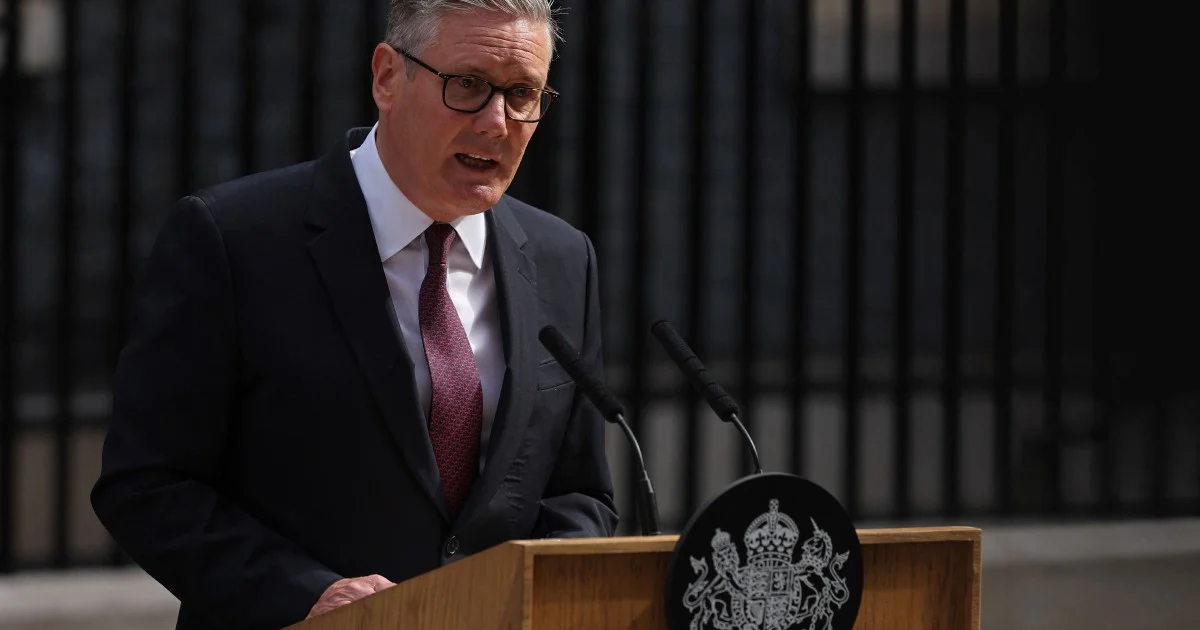
Prime Minister Keir Starmer announced on Monday that he would resign from his position, marking another turning point in British politics. The transition will take place before parliament reconvenes in September, ensuring that the United Kingdom continues to have a functioning government through the parliamentary recess. This development means Britain will experience its seventh prime ministerial change within the past ten years—a striking illustration of the political instability that has gripped the nation since the European Union referendum of 2016.
The resignation triggers a formal leadership election process within the Labour Party, which currently commands a majority in the House of Commons. Unlike the process in some other democracies, British prime ministers need not face a national election to be replaced; instead, the governing party holds an internal ballot to select a new leader, who then automatically becomes prime minister. This mechanism allows for relatively swift transitions of power while maintaining parliamentary continuity, though critics argue it undermines democratic accountability by allowing the voting public to be effectively bypassed.
The Labour Party's leadership contest will unfold according to established rules laid out in its constitution. Party members—those who have paid their membership fees and met residency requirements—will have the opportunity to vote alongside Members of Parliament and registered supporters. This system aims to balance grassroots democracy with parliamentary representation, though the practical mechanics of these contests often produce intense internal campaigns that can leave the party fragmented regardless of the final outcome.
Potential candidates must clear a significant hurdle before their names appear on the ballot. They require nominations from a minimum number of Labour MPs, a threshold designed to ensure that only candidates with substantial parliamentary support can proceed. This requirement typically eliminates long-shot contenders and forces the race into a relatively structured competition between established figures within the party leadership hierarchy. The nomination process itself becomes a crucial battleground, revealing factional alignments and power dynamics within the parliamentary Labour Party.
The timing of this transition is particularly significant for Malaysia and other Commonwealth nations that maintain connections to British political institutions. The rapid cycling through prime ministers in the United Kingdom has created uncertainty about foreign policy continuity and Britain's engagement with international partners. Southeast Asian nations, particularly those with substantial British investment or historical Commonwealth ties, have found themselves navigating shifting priorities and diplomatic approaches as successive prime ministers articulate different visions for post-Brexit Britain.
Starmer's decision to announce his resignation well in advance of parliament's return provides the Labour Party several weeks to conduct its internal selection process. This extended timeline differs markedly from previous contests, where the pressure to move quickly sometimes compressed campaigns into just two weeks. The compressed nature of past races frequently left the winner without adequate time to build party unity or develop comprehensive policy platforms, handicapping them from their first day in office.
The upcoming race will unfold against the backdrop of challenging economic and social circumstances. Whoever emerges as the next Labour leader will inherit an administration facing significant public dissatisfaction, suggesting that the contest itself will focus heavily on perceptions of competence and ability to reset the party's political fortunes. Candidates will likely emphasize their capacity to build party morale, reconnect with voters, and offer a credible alternative vision for British governance.
The rapid succession of prime ministers over the past decade reflects deeper structural challenges within British politics. The emergence of polarized opinion on issues like European Union membership, coupled with the rise of social media-driven political movements and the fragmentation of traditional party loyalty, has made it increasingly difficult for any leader to command stable parliamentary majorities or sustained public confidence. Each incoming prime minister arrives with high hopes for renewal but often finds themselves constrained by circumstances beyond their control.
For Malaysia and regional observers, the British leadership transition underscores how institutional frameworks designed for different eras may struggle to adapt to contemporary political realities. While the British system allows for rapid changes of leadership without requiring national elections, this flexibility has also enabled the kind of serial leadership changes that can undermine governmental effectiveness and public trust. The contrast with more rigid systems that require electoral resets in such circumstances invites comparative analysis of different democratic models.
The new Labour leader will face immediate pressures regarding policy direction. This includes decisions about taxation, healthcare funding, relations with Scotland and Wales, and Britain's strategic positioning in international affairs. Each of these domains affects Britain's engagement with Commonwealth partners and Southeast Asian nations with whom the UK maintains diplomatic and trade relationships. The incoming prime minister's approach to these issues will shape Britain's role in the region for years to come.
Previous Labour leadership contests have demonstrated the significance of narrative and media dynamics in shaping outcomes. Candidates who successfully present themselves as agents of change while maintaining connection to party traditions tend to perform well, as do those who can articulate compelling visions of party renewal. The television debates and hustings that characterize these races have become crucial moments for candidates to differentiate themselves and establish their credentials with both parliamentary and grassroots audiences.
The selection of a new prime minister before parliament returns will allow the government to signal continuity of governance while managing the internal Labour Party reorganization. This timing also provides the new leader with opportunities to reshuffle the cabinet, articulate fresh priorities, and set the tone for the government's direction in the autumn parliamentary session. The transition thus becomes a moment of potential reinvention, though past experience suggests the constraints of governing often limit how dramatically any new leader can reshape policy directions.