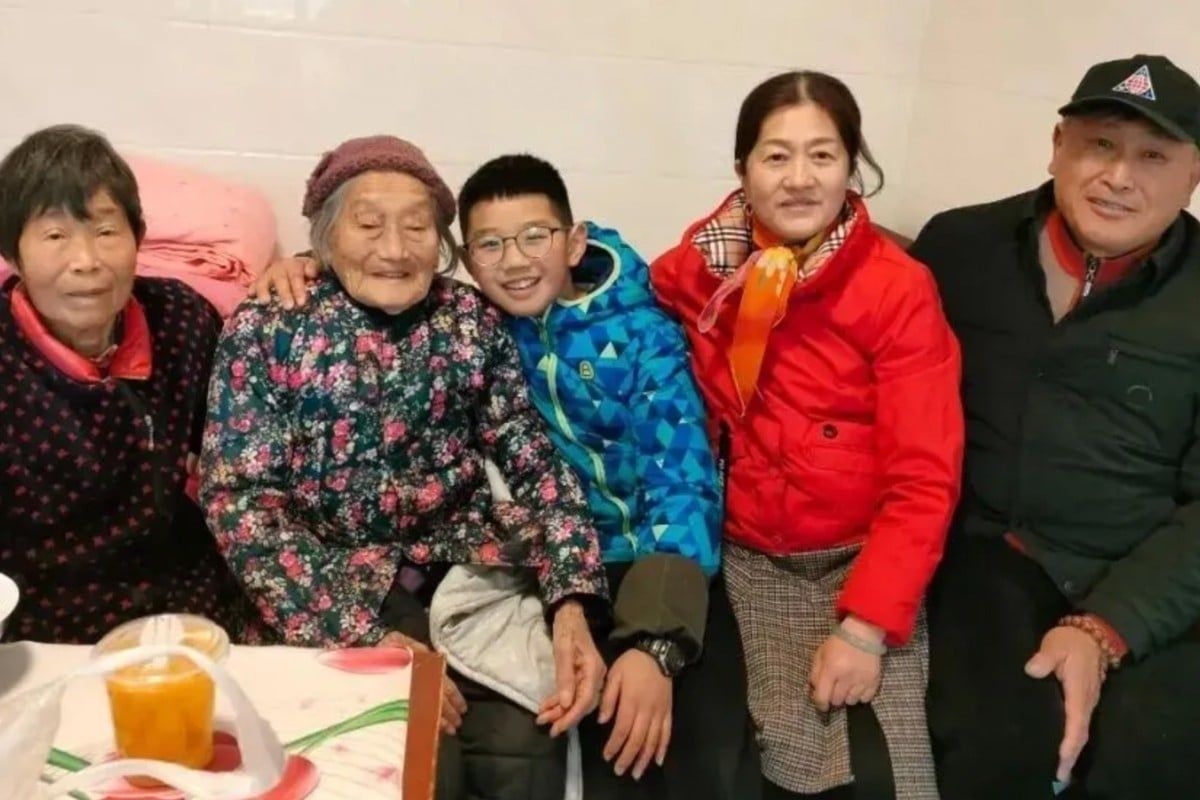
Wang Gaiying, a 111-year-old resident of Rugao in Jiangsu province in eastern China, has become an unlikely social media sensation by offering an unexpectedly straightforward explanation for her remarkable lifespan: she treats mundane household chores as daily physical activity. Her case provides compelling insights into the intersection of lifestyle, environment, and genetics that research increasingly suggests underpins exceptional longevity, a pattern particularly pronounced in her region.
Rugao has earned recognition as one of China's premier "longevity capitals," a designation grounded in demographic reality. As of February, the city was home to 672 centenarians according to the Jianghai Evening News, a concentration that has attracted the attention of longevity researchers globally. The phenomenon is not merely anecdotal; scientists at the Chinese Academy of Sciences' Institute of Soil Science in Nanjing have identified a tangible environmental factor contributing to this remarkable prevalence. The region's mineral-rich soil produces crops abundant in trace elements that research suggests offer significant health benefits to long-term consumers. This geological advantage means that residents of Rugao have been consuming nutrient-dense foods for generations, a compounding advantage that may partially explain the city's outsized population of over-century-old residents.
Wang's own living situation exemplifies traditional family structures that research increasingly associates with longevity outcomes. She resides in a five-generation household alongside her grandson, now aged 60, an arrangement that provides continuous social engagement and practical support systems often missing in more atomised modern living arrangements. Her family structure creates natural incentives for physical and cognitive engagement, factors epidemiologists consistently identify as protective against age-related decline.
Even as a centenarian, Wang remains actively engaged in physical labour, though age has necessarily moderated her intensity. During earlier decades of her life, she worked regularly in agricultural fields, harvesting crops including peanuts and watermelons, the kind of sustained physical activity that fitness researchers now recognise as superior to gym-based exercise for metabolic health and longevity. Rather than retiring entirely, she has transitioned to lighter household tasks, including wiping tables and folding clothes, activities she deliberately frames as movement rather than obligation. This psychological reframing—viewing necessary housework as exercise rather than burden—represents a subtle but psychologically significant shift that research on successful ageing suggests matters considerably.
Wang's philosophy about movement directly contradicts assumptions embedded in modern retirement culture. When family members suggest she rest, she explains that continuous light activity maintains limb mobility and circulation, a perspective supported by gerontological research emphasising that sedentary retirement often accelerates physical decline. She maintains that movement itself represents the pathway to graceful ageing, a perspective particularly relevant for Malaysian and Southeast Asian societies where traditional multigenerational households still facilitate the kind of continuous light activity that modern sedentary lifestyles eliminate.
Her dietary approach combines simplicity with deliberate variety. Her family rotates staples including dumplings and steamed buns, ensuring nutritional diversity across weeks rather than days. Fish represents her preferred protein, a choice grounded in both palatability and digestive practicality; she recognises that tender, easily digestible foods suit her changed nutritional needs. Significantly, she adheres to a principle of variety over excess, consciously moderating portions to avoid overeating. This restraint, though attributed to personal discipline, aligns precisely with caloric restriction research, which consistently demonstrates that moderate eating extends both healthspan and lifespan across multiple species and populations.
A notable chapter in her dietary history involved rice soaked in baijiu, a traditional Chinese spirit. This practice ceased approximately five years ago when her family assessed the risk-benefit calculus; while moderate alcohol consumption offers some cardiovascular benefits, the fall risk and intoxication potential outweighed those advantages for a person of her advanced age. This decision illustrates how longevity practices must adapt across lifespan phases, a consideration often overlooked in discussions of healthy ageing.
Beyond physical and dietary factors, Wang attributes her longevity explicitly to emotional and ethical practices. She maintains a personal discipline of performing one small good deed daily, whether complimenting family members or sending greetings to elderly friends. This practice reflects what gerontologists term "purpose maintenance," the sense that one's life continues generating value and meaning. Psychological research increasingly demonstrates that individuals who maintain purpose and engage in prosocial behaviour show measurably better health outcomes and longer lifespans than peers engaged in similar physical and dietary practices but lacking this psychological dimension.
Her approach to emotional regulation reveals another sophisticated longevity practice. Rather than ruminating on difficulties, Wang explicitly uses sleep as a reset mechanism, consciously refusing to carry troubles to bed. Her morning self invariably recognises that overnight perspective transforms perceived crises into manageable concerns. This emotional hygiene practice, though expressed in colloquial terms, reflects what contemporary sleep science identifies as crucial: quality sleep's role not merely in physical restoration but in emotional regulation and perspective-building.
Wang's daily routine demonstrates remarkable discipline and consistency, hallmarks of longevity studies across cultures. She maintains a fixed schedule of nighttime sleep from 7pm through 7am, supplemented by one or two daytime naps, totalling approximately 12 hours of sleep daily. This sleep architecture may seem excessive by modern standards but aligns with research suggesting that older adults benefit from extended sleep periods, particularly when combined with daytime rest. The consistency itself matters; her body operates on predictable rhythms that optimise circadian alignment, increasingly understood as fundamental to healthy ageing.
The social media attention surrounding Wang's life reflects broader Asian cultural interest in longevity secrets, a fascination particularly pronounced in Southeast Asia where ageing populations prompt urgent inquiry into optimal ageing practices. Comments from online observers emphasise the interplay between genetic inheritance, environmental advantage, and deliberate lifestyle choices, capturing the complexity of how centenarians emerge. One commenter noted that Rugao residents likely possess "strong longevity genes," recognising that genetic predisposition establishes baseline potential, but this potential only manifests through consistent engagement with health-promoting practices and residence in an environment providing nutritional and social advantages.
For Malaysian readers, Wang's example offers several relevant considerations. The significance of multigenerational household structures in facilitating both practical support and psychological engagement stands in contrast to increasing nuclear family isolation in urban centres. Her framing of necessary household labour as beneficial exercise challenges retirement narratives emphasising absolute leisure, instead suggesting that purposeful, varied light activity sustains health more effectively than either intensive exercise or sedentary rest. Most compellingly, her integration of ethical practice, emotional discipline, and physical activity into a coherent longevity framework suggests that exceptional ageing results not from optimising any single factor but from coordinating multiple life domains toward a common goal of sustained health and purpose.

