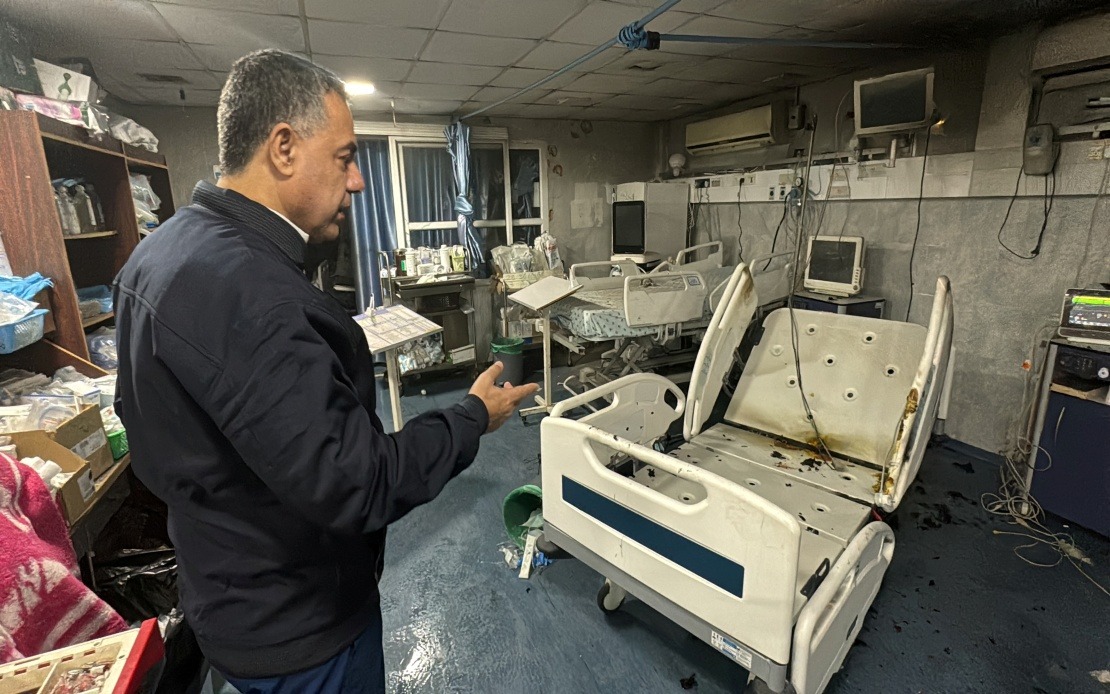
A prominent international medical advocacy group has sounded urgent warnings about the wellbeing of Dr Hussam Abu Safiya, the director of Kamal Adwan Hospital in northern Gaza, claiming that his health has sharply declined since being transferred into Israeli custody at Nitzan Prison. The allegations, documented through a legal visit earlier this month, paint a troubling picture of the detained hospital administrator's current physical state and raise significant questions about conditions of detention in the ongoing conflict.
According to Physicians for Human Rights, their legal representative Nasser Odeh conducted a prison visit on July 2 where he observed Dr Abu Safiya bearing what appeared to be fresh injuries consistent with physical assault. The documented observations included swelling and bruising across his head, face, and neck regions, breathing complications, and multiple instances of losing consciousness during the meeting itself. These findings have prompted the international organisation to assert that the hospital director's life faces immediate peril while incarcerated.
The circumstances surrounding Dr Abu Safiya's detention and the manner in which he was presented during the legal visit underscore broader concerns about detainee treatment. Prison officials reportedly kept him shackled at both wrists and ankles throughout the meeting, with armed guards wearing face coverings present at all times. The visible injuries were reportedly so extensive that legal observers noted difficulty in recognising the man they had previously encountered, suggesting a significant change in his physical appearance within a compressed timeframe.
Physicians for Human Rights, which maintains extensive documentation on health conditions in conflict zones, has renewed calls for Dr Abu Safiya's immediate release, alongside several other medical professionals the group claims are similarly detained without formal charges or legal proceedings. The organisation emphasises that the situation represents a departure from established legal standards and international humanitarian conventions governing treatment of healthcare workers during armed conflicts.
Naji Abbas, who heads the Prisoners and Detainees Department at Physicians for Human Rights Israel, characterised the attorney's account as exceptionally disturbing compared to other testimonies collected since the commencement of hostilities. Abbas revealed that Dr Abu Safiya himself expressed fear of potential harm while in custody, a statement that carries particular weight coming from someone with direct knowledge of his circumstances. The hospital director allegedly attributed his deteriorating condition to complications arising after he contested his continued detention before a court.
The timing of Dr Abu Safiya's health decline is particularly significant given that it appears to have accelerated following his legal challenge to the detention order. This sequence of events has prompted human rights advocates to question whether there exists a causal relationship between challenging his incarceration and the subsequent physical injuries. Abbas called explicitly for an immediate, independent investigation into these circumstances, suggesting that the pattern warrants external scrutiny beyond standard prison oversight mechanisms.
International humanitarian law and established conventions on the treatment of medical personnel during conflicts remain relevant to this situation. Healthcare workers, including hospital administrators, traditionally receive specific protections under the Geneva Conventions, with obligations extending to all parties in a conflict to ensure their safety and humane treatment. The allegations against Dr Abu Safiya's detention therefore raise questions about compliance with these international standards.
Physicians for Human Rights Israel emphasised that Israeli authorities retain full legal and moral responsibility for the safety, physical integrity, and continued survival of all individuals held in their custody. The organisation's statement carries implicit suggestion that accountability mechanisms exist and that officials cannot claim ignorance of conditions within facilities under their direct control. This framing positions the responsibility squarely with detention authorities rather than external actors.
For medical professionals and hospital administrators throughout the Middle East and beyond, the case highlights vulnerabilities faced by healthcare sector leadership during periods of military conflict. The arrest and detention of Kamal Adwan Hospital's director, coupled with documented injuries in custody, creates a chilling effect on medical institutional governance in active conflict zones. Other healthcare administrators and senior hospital staff may view the situation as indicative of broader risks to their personal safety and legal standing.
The broader implications extend to questions about how international pressure and advocacy campaigns function in advocating for detainee welfare. Physicians for Human Rights, as an established organisation with credibility in human rights documentation, provides external validation of injuries and conditions that might otherwise remain unverified. Yet the organisation's ability to facilitate improvement depends partly on receptiveness from authorities and willingness of international bodies to prioritise these concerns within their agendas.
For Southeast Asian readers following these developments, the situation exemplifies how detention practices during military operations can diverge significantly from peacetime legal standards. The case also demonstrates mechanisms through which international organisations attempt to monitor and publicise conditions affecting vulnerable populations, offering potential models for similar advocacy efforts in other conflict contexts affecting the region.

