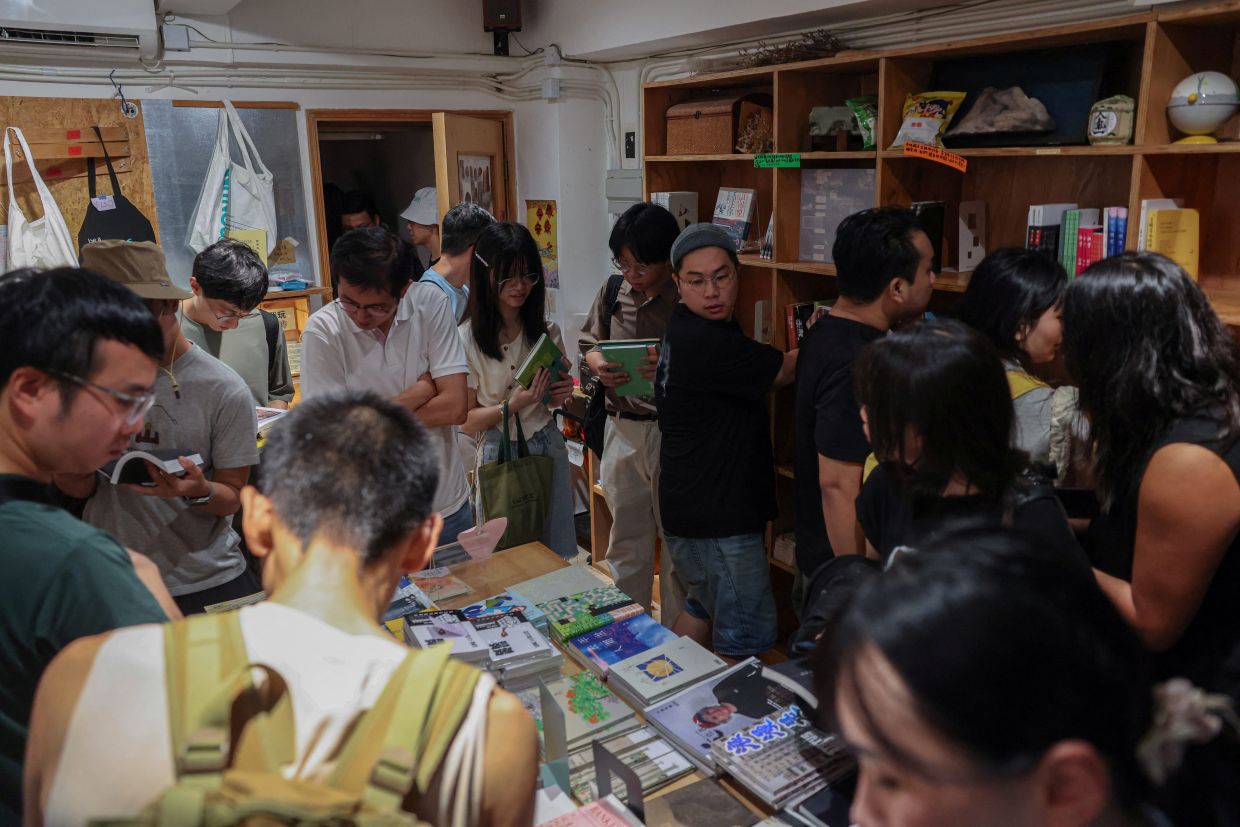
When Fleming Cheng, a mainland Chinese university student, stepped into Greenfield Book Store in Hong Kong last year, he encountered something his native internet could not freely offer: rows of politically sensitive titles that challenged Beijing's official narratives. Books examining China's reform-era leaders and chronicling the Tiananmen Square pro-democracy movement sat openly on shelves. For Cheng and countless other mainland readers, these tucked-away shops represented something increasingly rare in the Chinese-speaking world—spaces where diverse viewpoints circulated without state interference.
Hong Kong's independent bookstores have functioned as vital conduits for intellectual exchange across the Strait for decades, particularly since the city's return to Chinese sovereignty in 1997. Operating in nondescript locations within residential buildings, away from commercial thoroughfares, these establishments became sanctuaries for readers from the mainland seeking perspectives diverging fundamentally from state-approved narratives. The bookstores operated within Hong Kong's distinctive legal framework, which historically preserved freedoms of expression and publication that mainland China restricted. Yet this sanctuary status now faces existential pressure from a cascade of security legislation designed to align the territory more closely with Beijing's governance model.
The transformation accelerated dramatically following mass arrests of independent booksellers in early 2024. Police targeted Book Punch in March, Hunter Bookstore in June, and then Greenfield and Have A Nice Stay within weeks of each other in July—four separate operations within a compressed timeframe. Authorities levelled sedition charges under provisions of the 2024 national security law, accusing the detained booksellers of trafficking in materials intended to incite hatred or overthrow state authority. Greenfield, operating for fifty years, announced closure at lease's end despite bail being granted to detained staff. Have A Nice Stay, established by former journalists, ceased operations on August 30, citing ambiguous regulatory "red lines" and mounting financial pressures that made continued operation untenable.
This enforcement wave represents a dramatic escalation from earlier restrictions. The 2015 disappearance of Lam Wing-kee and four colleagues from Causeway Bay Books marked the first major sign of vulnerability, with Lam later revealing he had been detained by mainland authorities—an extraordinary extraterritorial reach that terrified the bookselling community. When China imposed its first security legislation in 2020, the chilling effect intensified substantially. Libraries purged titles addressing the Tiananmen Square massacre and works by pro-democracy figures. Annual book fairs witnessed smaller independent publishers barred from participation, while state media labelled independent book festivals as "soft resistance" deserving suppression.
What distinguishes the current phase is the absence of transparency regarding enforcement standards. The government, through Security Secretary Chris Tang, maintains that sedition law operates with crystalline clarity, comparing bookseller obligations to food vendors ensuring products cause no physical harm. Yet authorities have declined to publish any explicit banned books list or provide detailed guidance about which specific titles trigger prosecution. This regulatory opacity creates an environment where booksellers must navigate subjective judgement calls about which political works prove legally tolerable. One anonymous bookseller acknowledged struggling to determine boundaries, becoming progressively cautious about stocking contemporary analyses of mainland politics. Landlords, themselves intimidated by government harassment, increasingly question whether renewing leases to bookstores remains prudent.
The impact extends beyond Hong Kong's own population. Mainland Chinese visitors utilise these bookstores as windows onto suppressed information, while residents like Brian Leung find in them repositories of intellectual independence that embody Hong Kong's distinctive character. When bookshops face investigation or closure, locals perceive something more than commercial loss—they interpret it as erosion of the freedoms that differentiated their society from the mainland. Wang Iris, a university student from neighbouring Guangdong, valued Hunter Bookstore specifically because it encouraged thinking rather than merely executing transactions. The bookstore's closure signals to such readers that even Hong Kong's exceptional space for reflection contracts incrementally.
Taiwan has partially filled the void, emerging as the preeminent Chinese-language publishing centre as Hong Kong's environment deteriorates. Between 2020 and 2024, Taiwanese publishers released six times more books addressing Hong Kong compared to the preceding five-year period, according to Tunghai University sociologist Cheng Tsu-Bang. These publications facilitate intellectual exchange between Taiwan and Hong Kong, representing what Cheng characterises as "mutual support" across geography and differing political systems. Yet this emerging lifeline faces its own vulnerability. In July, Taiwan-based logistics firms reportedly halted new shipments to Hong Kong bookstores under government investigation, and began demanding comprehensive book inventories before delivering to other Hong Kong retailers. Such restrictions threaten to sever Taiwan's capacity to supply uncensored material to the territory.
Hong Kong authors who have relocated to Taiwan, publishing their works across the Strait, recognise themselves as part of this diaspora intellectual network. One author, requesting anonymity due to security concerns, characterised independent bookstores as bridges connecting works chronicling Hong Kong's pro-democracy history to their homeland, whilst maintaining connections for exiled writers to their native city. This author employed a metaphor capturing the prevailing despair: civil society's collapse resembles a boulder gathering destructive momentum downhill, pulverising everything in its trajectory. Bookstores represented fragile flower fields where individuals could breathe mentally and attempt preserving what remained of Hong Kong's distinctive culture. Yet current dynamics suggest even these diminishing refuges face terminal pressure.
The phenomenon invokes profound questions regarding intellectual freedom in East Asia's urban centres. Hong Kong's trajectory demonstrates how security legislation, implemented under national stability imperatives, progressively narrows permitted speech and constrains booksellers' operational capacity through regulatory ambiguity rather than explicit prohibition. For mainland readers like Fleming Cheng, the bookstores' disappearance represents personal loss of access to perspectives his home society suppresses. For Hongkongers, it signifies cultural homogenisation—the prospect that their territory might become indistinguishable from mainland governance, sacrificing the pluralistic intellectual culture that historically distinguished it. For Taiwan and the broader diaspora, it reflects anxiety that Chinese-language publishing freedom itself migrates geographically, contracting into ever-smaller territorial enclaves. The closing of independent bookstores thus represents not merely business failure, but the compression of spaces where Chinese readers encounter ideas that governments seek to restrict.

