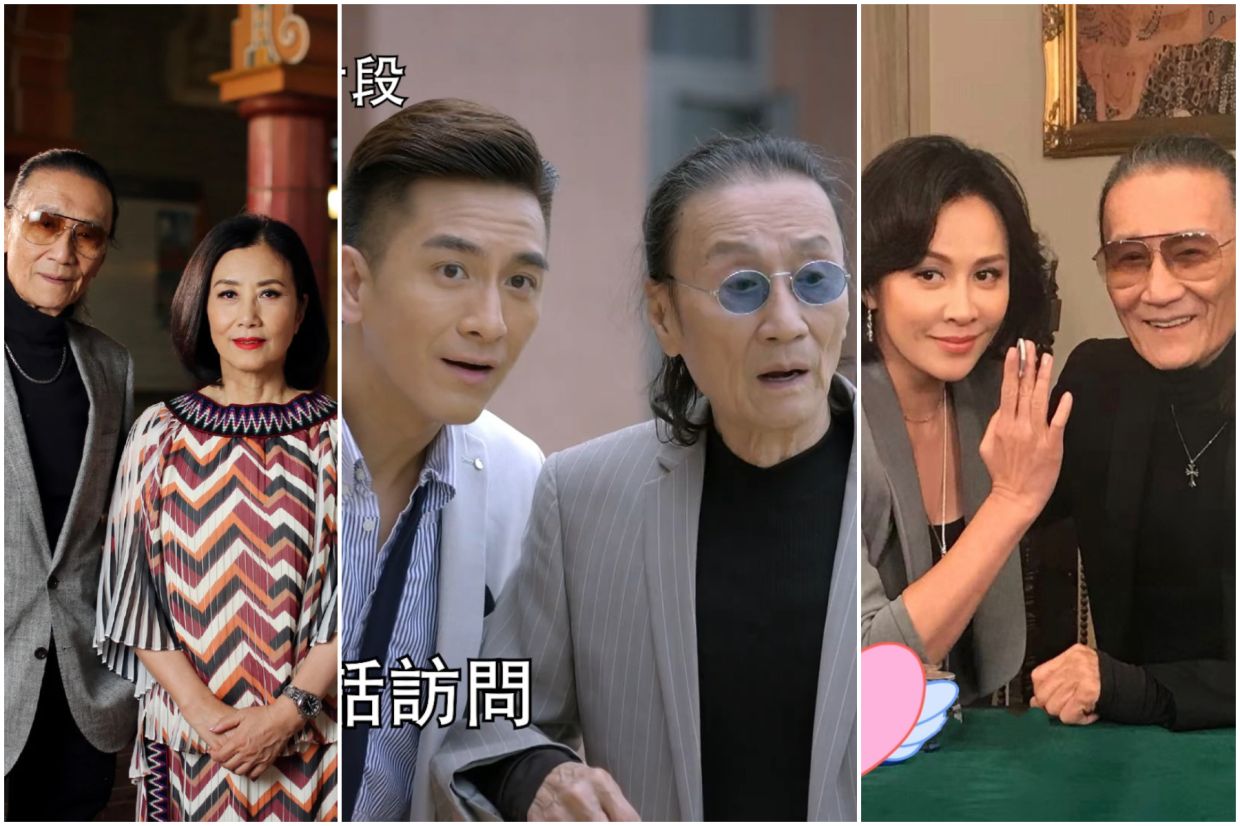
The death of Patrick Tse has prompted an outpouring of tributes from across Hong Kong's entertainment industry, with peers and collaborators reflecting on the legacy of an actor who defined generations of cinema and television drama. The revered figure, affectionately known throughout his career as Sei Gor—Fourth Brother—succumbed to pneumonia on July 16 at the advanced age of 89, with his family making the announcement four days later. The immediate and heartfelt responses from fellow artists underscore the profound impact Tse maintained throughout his exceptionally long career, even as younger generations of performers continue to dominate contemporary screens.
Carina Lau, among the first to publicly acknowledge Tse's passing, took to social media to share photographs spanning different eras of their professional relationship. In her statement, Lau emphasised how Tse embodied qualities that had become increasingly rare in modern entertainment: intellectual wit, refined elegance, and an almost aristocratic bearing that never descended into pretension. She framed his death not merely as a personal loss but as a diminishment of Hong Kong cinema itself, suggesting that his particular brand of sophistication and professionalism represented standards that future generations would struggle to replicate. Her tribute highlighted how Tse had created a body of work and a personal legacy that transcended the typical actor-audience relationship, instead becoming woven into the cultural fabric of Hong Kong's identity as a global entertainment hub.
Liza Wang, whose professional history with Tse spanned multiple decades and numerous television productions, occupied a uniquely intimate position within his circle. Beyond their on-screen partnerships in numerous TVB dramas, Wang served as godmother to Tse's daughter Jennifer, a relationship that crystallised the deep friendships forged through Hong Kong's entertainment ecosystem. Wang's recollections centred on Tse's character away from cameras—his consistent mentorship, his willingness to impart hard-won industry knowledge, and the genuine warmth he extended to collaborators regardless of their seniority. She characterised him as fundamentally kind in an industry often defined by competitive self-interest, describing how his presence on set created an atmosphere of mutual respect and learning. Wang's testimony carries particular weight given the breadth of her own career and her position as an elder stateswoman within Hong Kong entertainment, lending authority to her assessment that Tse represented a particular generation of professionalism increasingly difficult to find.
Michelle Ye approached her remembrance of Tse from a markedly personal angle, acknowledging how their working relationship on the 2005 drama had fulfilled an emotional need extending far beyond the conventional boundaries of professional collaboration. Ye's tribute, shared through social media platforms with reach across Greater China, revealed how Tse had provided a form of paternal presence that had been absent during her formative years. This dimension of Tse's influence—his capacity to nurture younger performers both artistically and emotionally—speaks to a mentorship model that characterised Hong Kong's entertainment industry during his most active years. The fact that performers of Ye's generation continued to value such guidance decades after initial encounters suggests that Tse's approach to his craft encompassed an understanding of entertainment as fundamentally relational rather than merely transactional.
Kenneth Ma's perspective offered insights into Tse's work ethic and physical dedication at an age when most performers would have long since shifted toward less demanding roles. During the 2017 production that brought them together under Wong Jing's direction, Tse reportedly insisted on executing his own action sequences despite being in his mid-eighties. Ma's characterisation of this commitment as exemplary to younger performers reflects a particular philosophy about artistic responsibility—the notion that maintaining professional standards and personal integrity throughout one's career represents a moral obligation rather than optional aspiration. His observation that working alongside Tse proved genuinely enjoyable highlights how the legendary actor managed to combine discipline with approachability, creating working environments where rigorous professionalism did not preclude friendship or humour. This balance between seriousness and levity appears consistently across multiple colleagues' recollections, suggesting it constituted a core element of Tse's personality and professional approach.
Director Wong Jing provided historical perspective on Tse's career trajectory and cultural significance, positioning the actor within the broader narrative of Hong Kong's post-war entertainment development. Wong's initial encounter with Tse in 1977—when Wong himself was still establishing his career as a screenwriter—proved formative not merely for professional advancement but for philosophical orientation within the entertainment industry. The anecdote about Tse's Mercedes-Benz and their substantive conversations about film reflected a particular era when the Hong Kong film industry maintained intimate networks of collaborators who shaped projects collectively through ongoing dialogue. Tse's observation that achieving star status imposed permanent obligations proved prophetic for Wong's subsequent career, establishing a principle that the director has apparently carried forward throughout decades of filmmaking. The fact that Wong remembered this specific remark with such clarity decades later demonstrates how Tse's wisdom about artistic responsibility transcended immediate professional contexts to shape the broader philosophy of younger creators.
Wong's characterisation of Tse as the most dashing male star in Hong Kong's cinematic history acknowledges both aesthetic appeal and a particular masculine ideal that Tse helped establish. This standard—combining physical attractiveness with intellectual refinement, charm with gravitas—influenced how subsequent generations of male performers approached their craft and public presentation. The legacy extends beyond mere appearance or charisma to encompass a holistic approach to stardom in which public persona, professional commitment, and personal integrity remained inseparable. For Malaysian and Southeast Asian audiences familiar with Hong Kong entertainment through decades of film and television imports, Tse represented a particular standard of leading man that shaped regional entertainment expectations throughout the late twentieth century.
The breadth and consistency of tributes from performers across different generations and specialisations suggests that Tse's influence operated across multiple registers simultaneously. He functioned as a role model for professional conduct, a mentor to younger performers, a collaborator of distinction, and an embodiment of particular cultural values associated with Hong Kong's identity. The timing of his death at the moment when Hong Kong entertainment continues navigating significant industrial and political transformations lends additional poignancy to assessments of his legacy. Colleagues' reflections implicitly position Tse as representing continuity with an earlier era of Hong Kong cinema characterised by particular standards of artistry, professionalism, and cultural significance.
The responses from Lau, Wang, Ye, Ma, and Wong collectively construct a portrait of an individual whose professional achievements represented only one dimension of his broader cultural impact. The emphasis across multiple tributes on personal qualities—generosity, kindness, grace, mentorship—suggests that Tse's most enduring legacy may ultimately rest not on specific films or dramatic performances but on the values he modelled and transmitted to generations of industry professionals. For the Hong Kong entertainment industry facing evolving market conditions and shifting creative priorities, the loss of such figures raises questions about how artistic standards and professional ethics remain preserved and transmitted. The collective remembrance serves simultaneously as celebration of accomplished career and implicit meditation on generational continuity within a rapidly transforming cultural landscape.

