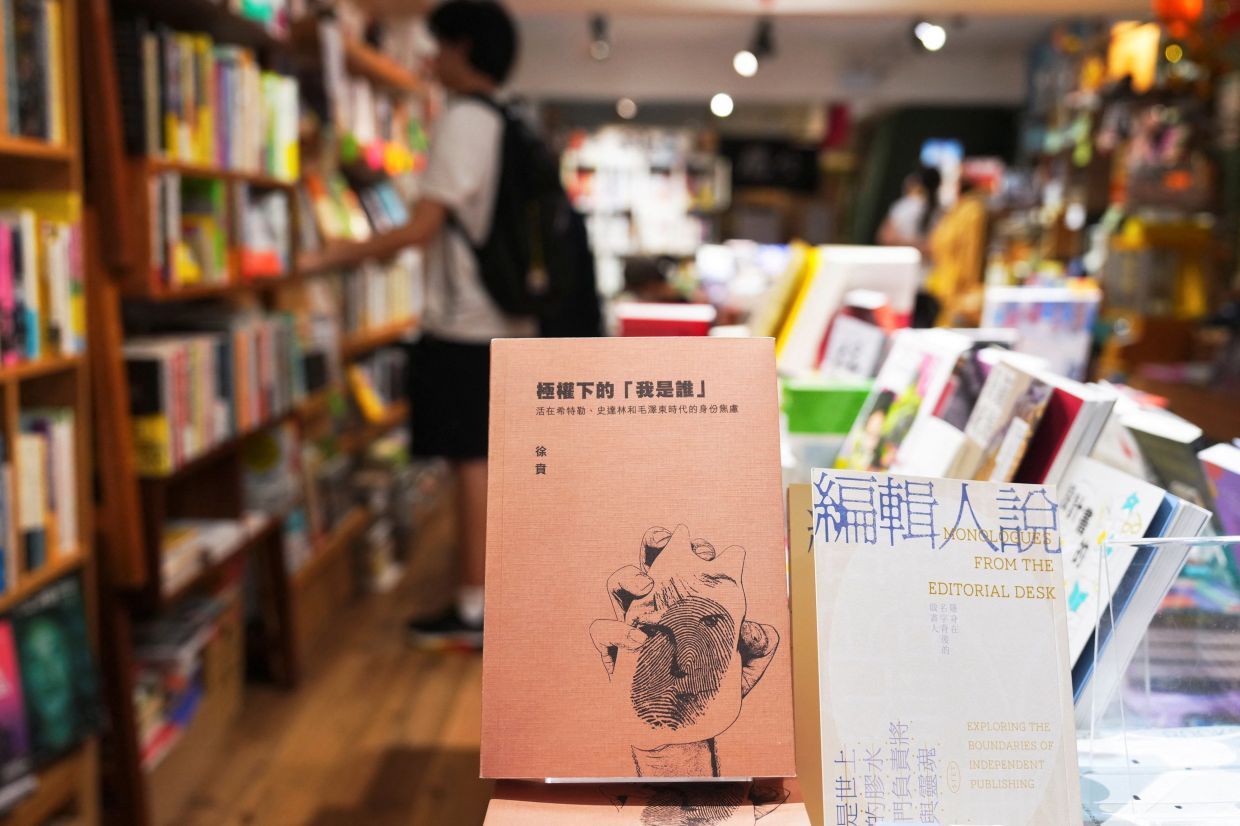
Hong Kong's chief security official has issued a stark warning to booksellers to take responsibility for ensuring the titles they stock do not compromise national security, remarks that came just one day after police arrested five people connected to two independent bookstores in what marks the third such operation targeting the sector within four months.
The enforcement action, which took place on Wednesday, resulted in two of the detained booksellers being released on bail by Friday morning. The coordinated raids on Have A Nice Stay, a bookshop founded by former journalists, and the longstanding Greenfield Book Store reflect intensifying scrutiny of the publishing and retail sector. Police alleged that the five individuals were suspected of displaying and selling seditious materials with content designed to incite hatred against Hong Kong's government, judicial system, and law enforcement establishment.
Speaking at the legislative building on Thursday, Secretary for Security Chris Tang drew a controversial analogy to defend the regulatory approach. He compared the responsibility of booksellers to that of food vendors, suggesting that just as food sellers must ensure their products are not poisonous or harmful, booksellers must guarantee their inventory poses no threat to national security. When pressed about whether authorities would publish an official list of prohibited titles, Tang rejected the notion, arguing that such a catalogue would undermine law enforcement effectiveness against works intended to damage the state. His refusal to clarify which specific books are problematic has intensified anxieties among publishers and retailers about the vagueness of enforcement standards.
The closure announced by Have A Nice Stay illuminates the practical pressures facing Hong Kong's independent bookshop operators. In a social media statement, the store attributed its decision to cease operations by August 30 to mounting financial difficulties and what it described as an elusive and unclear regulatory boundary. The bookshop's management acknowledged a fundamental operational challenge: the impossibility of comprehensively reviewing every single book in their inventory to determine which titles might be deemed problematic under current enforcement standards. This admission underscores a central concern: the subjective and unpredictable nature of what authorities consider a threat to national security.
The current enforcement wave represents an escalation in a pattern that has been building throughout the year. In March, police arrested the proprietor and staff members of Book Punch, another independent retailer, on suspicion of selling seditious publications. Among the titles that drew official attention was a biography of former pro-democracy media tycoon Jimmy Lai, who received a 20-year prison sentence in a national security case. Just three months later in June, Hong Kong police detained two additional booksellers suspected of trafficking seditious materials and receiving financial support from foreign political organisations, demonstrating that authorities are pursuing multiple angles of investigation.
These enforcement actions have created a chilling effect across Hong Kong's publishing and bookselling ecosystem. The repeated arrests and the vague standards for what constitutes a national security threat have prompted broader concerns about the erosion of freedom of expression, a cornerstone of Hong Kong's historical identity as a regional hub for open discourse and intellectual freedom. The bookstores targeted operate independently and have cultivated readerships interested in titles that challenge the mainstream or explore sensitive political subjects, positioning them as particularly vulnerable to regulatory action under the expanded definition of national security threats.
The uncertainty surrounding what content authorities deem acceptable has implications extending beyond Hong Kong's borders. In Taiwan, President Lai Ching-te addressed the situation directly on social media, characterising the pressure on Hong Kong's freedom of expression and publication as a matter of regional concern. He emphasised the vital role that independent bookstores play in safeguarding free thought, implicitly contrasting Taiwan's more permissive environment with developments in Hong Kong. Liang Wen-chieh, deputy minister of Taiwan's Mainland Affairs Council, disclosed that some Taiwanese publishers have begun self-censoring their catalogues when preparing to participate in Hong Kong's book fairs, indicating that the enforcement actions have already produced cross-border effects.
The self-censorship emerging among publishers reveals how regulatory uncertainty operates as an invisible form of control. Rather than explicit banning, the ambiguous enforcement environment encourages caution throughout the supply chain. Publishers, retailers, and distributors, lacking clarity on where authorities draw regulatory lines, make conservative decisions that restrict the range of available books without any formal prohibition needing to be announced. This dynamic represents a particularly insidious form of content control, as it achieves restrictive outcomes through implicit pressure rather than transparent censorship.
The comparison offered by Secretary Tang between book sales and food safety, while superficially logical, obscures fundamental distinctions between commercial product safety and intellectual content. Food safety standards are measurable and objective; a substance either contains harmful pathogens or it does not. By contrast, determining whether a book threatens national security involves subjective judgment about ideology, political expression, and historical interpretation. Tang's analogy sidesteps this complexity, treating political content regulation as though it were equivalent to technical compliance with health standards.
For Southeast Asian observers, Hong Kong's trajectory offers a cautionary lesson about how national security frameworks can expand to encompass cultural and intellectual domains. Malaysia, with its own complex history of managing diverse viewpoints and political expression, may face similar pressures to define and enforce national security boundaries in ways that affect publishing and bookselling. The Hong Kong experience demonstrates how vague standards and selective enforcement can generate uncertainty that suppresses expression without requiring explicit censorship.
The international dimension of these developments cannot be overlooked. As Taiwan's response indicates, Hong Kong's regulatory environment increasingly affects regional publishing dynamics and cross-border cultural exchange. Publishers and booksellers across East and Southeast Asia are watching closely to determine whether Hong Kong's model will influence approaches elsewhere or whether it represents a unique pathway driven by specific political circumstances. The commercial and cultural relationships that link Hong Kong to regional publishing hubs remain significant, making the trajectory of these enforcement actions consequential for the broader ecosystem.

