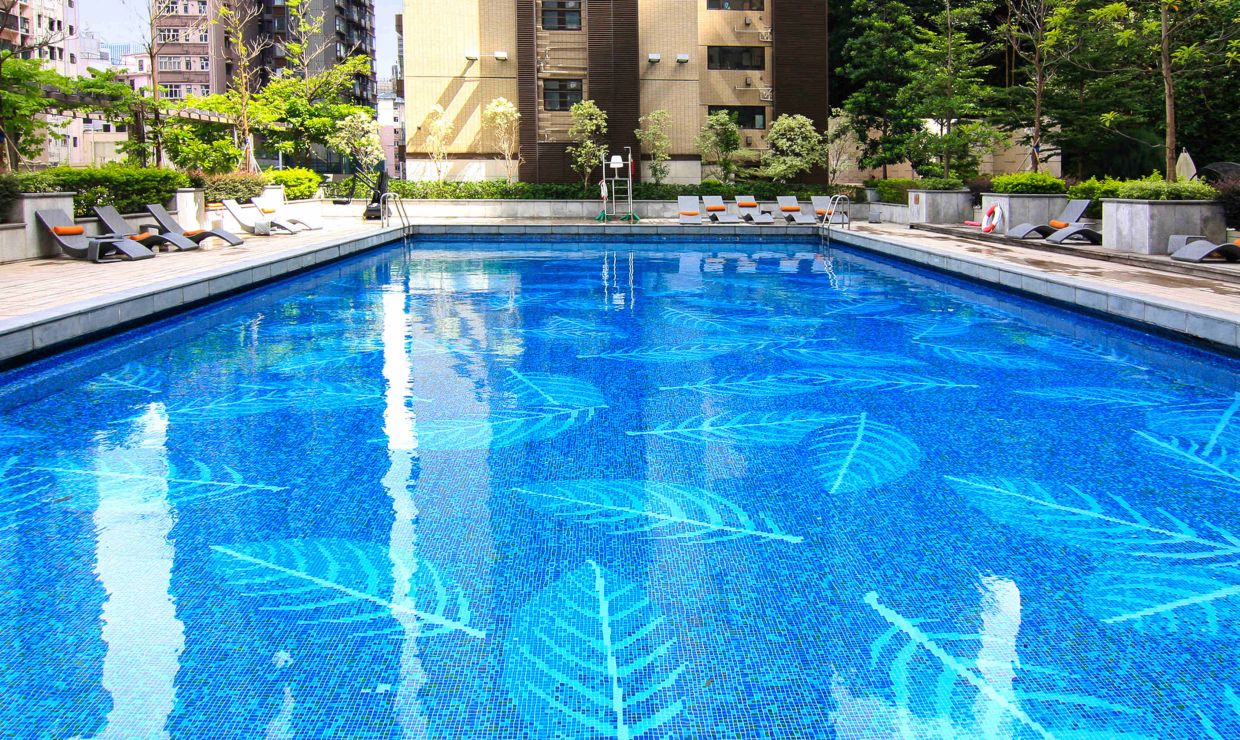
A private swimming facility in Hong Kong's upscale Happy Valley neighbourhood has been forced to close its doors following the discovery that one of its employed lifeguards was operating under fraudulent qualifications. The Food and Environmental Hygiene Department (FEHD) announced the immediate suspension on Thursday after cross-checking staff records against the official database maintained by the Hong Kong China Life Saving Society, revealing significant discrepancies in the lifeguard's claimed credentials.
The shuttered pool, located at 1-5 Ventris Road within the Winfield Building residential estate, fell out of compliance with Hong Kong's strict swimming pool regulations once the credential fraud came to light. Under local law, every licensed private pool must maintain a minimum number of qualified lifeguards on duty whenever the facility operates. The discovery that one attendant lacked proper certification immediately rendered the pool non-compliant and therefore unsafe for public use, necessitating immediate closure.
The incident unfolded after FEHD officers submitted a batch of lifeguard employment records for verification on Wednesday morning. Within 24 hours, the Hong Kong China Life Saving Society completed its audit and flagged the fraudulent documents, prompting swift regulatory action. The speed of this detection reflects a more robust verification system that has been gradually tightened over recent months in response to earlier safety lapses at private pools across the territory.
Beyond the immediate closure, authorities have initiated criminal proceedings against the pool's operating licensee for employing someone with false qualifications. The FEHD has formally referred the case to police for investigation into the suspected use of fraudulent documents, a serious offence under Hong Kong law. Additionally, the case has been escalated to the Property Management Services Authority, suggesting potential breaches extending beyond pool safety regulations to broader estate management standards.
This incident reflects heightened vigilance in Hong Kong's pool safety regime, which was significantly tightened following earlier discoveries of unqualified lifeguards operating at other private facilities. Beginning in May of the previous year, the government introduced sweeping new requirements mandating that all private pool licensees verify the identity documents of prospective lifeguards before hiring and maintain copies of their Pool Lifeguard Awards and personal logbooks. These measures were implemented because previous regulatory frameworks had allowed gaps that unscrupulous operators could exploit.
The regulatory environment has become considerably more stringent. Throughout the first seven months of this calendar year alone, FEHD inspectors conducted approximately 7,000 inspections across more than 1,400 licensed private pools throughout Hong Kong. During these checks, officers verified the qualifications of roughly 2,100 individual lifeguards, demonstrating the scale of the compliance verification effort. Such comprehensive auditing would have been virtually impossible under the old regulatory regime, suggesting that earlier cases of credential fraud may well have gone undetected.
The most recent discovery is not an isolated incident. Last year, authorities uncovered another case involving the suspected deployment of unqualified lifeguards at a different private pool, indicating that credential fraud remains a genuine systemic risk within Hong Kong's private pool sector. The apparent recurrence of this problem has prompted FEHD to commit substantial resources to ongoing surveillance and verification activities, particularly during peak swimming seasons when facilities operate at maximum capacity and the stakes for public safety are highest.
For Malaysian and broader Southeast Asian audiences, this case illustrates the regulatory challenges facing developed Asian economies as they manage the intersection of private property rights, commercial operations, and public safety. Hong Kong's response—involving spot checks, documented verification trails, and criminal enforcement—represents a relatively aggressive stance compared to many other regional jurisdictions. The emphasis on retaining physical copies of credentials and requiring countersigned duty records reflects a deliberate strategy to create an auditable paper trail that makes it harder for unqualified individuals to slip through.
The implications for private pool operators in Hong Kong are substantial. Licensees must now implement more rigorous human resources procedures and maintain meticulous documentation, effectively shifting compliance responsibility downward from government inspectors to individual facility managers. Any licensee found negligent in verification faces not only administrative penalties but potential criminal liability, creating powerful incentives for scrupulous hiring practices. The case also underscores that operating a private pool in Hong Kong increasingly requires treating safety protocols as a core business function rather than a compliance checkbox.
As swimming season approaches its busiest period, the FEHD has signalled its intention to substantially increase random inspections and surprise verification visits at pools across Hong Kong. This approach makes it considerably riskier for facilities to cut corners or overlook documentation requirements, as they cannot predict when auditors will arrive to cross-check their records. The strategy appears designed to make credential fraud practically untenable by dramatically raising the probability of detection.
The Happy Valley closure also sends a clear market signal to residential estate management companies and property developers across Hong Kong that safety lapses in recreational facilities carry reputational and legal consequences. For residents at Winfield Building and similar estates, the forced pool closure represents an inconvenience but ultimately reflects regulatory machinery functioning as intended—identifying risks and removing them before swimmers are endangered. Whether such compliance intensity can be sustained without unduly burdening smaller operators, or whether it might drive some private pools to cease operations, remains an open question for policymakers.

