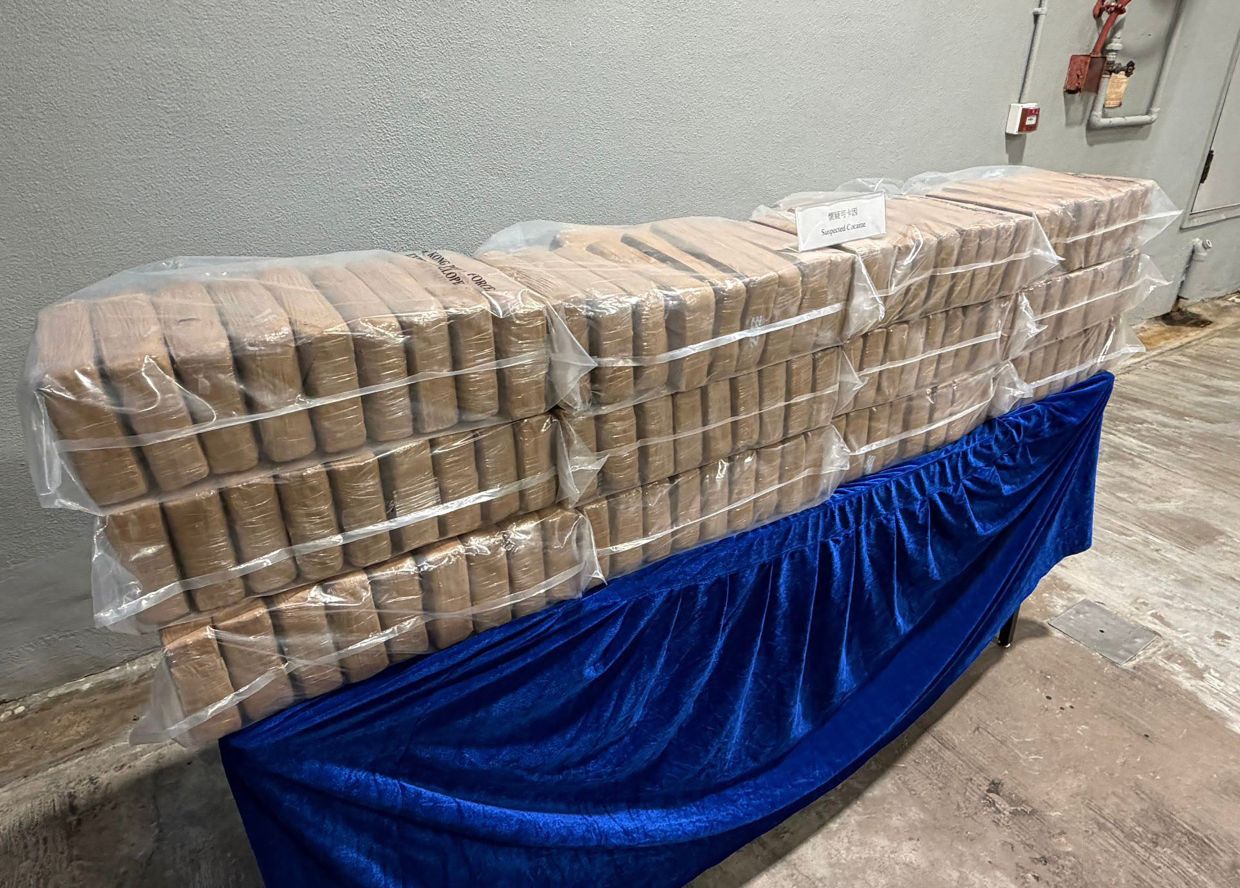
Hong Kong's narcotics enforcement has scored a significant victory against international drug trafficking networks following back-to-back raids on vessels anchored near Aberdeen Typhoon Shelter. Officers from the police narcotics bureau conducted a second operation on Sunday, discovering approximately 120 kilograms of cocaine bricks stashed aboard a six-metre yacht. This seizure, combined with 241 kilograms confiscated during a Friday raid on a neighbouring vessel, has brought the total haul to roughly 361 kilograms, valued at HK$270 million on the street. The twin operations represent Hong Kong's most significant cocaine interdiction effort in the past twelve months, highlighting the port city's vulnerability to sophisticated drug smuggling operations targeting South and Southeast Asia.
The remarkable discovery of such large quantities within days suggests investigators have disrupted a major trafficking network rather than intercepting isolated shipments. The narcotics bureau noted striking similarities between the two seizures—the cocaine bricks shared identical packaging and weight specifications—indicating that both cargoes were part of a single consignment. Rather than storing the entire batch on one vessel, which would concentrate risk, the trafficking syndicate appeared to have deliberately distributed its inventory across multiple boats anchored in the same vicinity. This methodical approach reflects the operational sophistication of international cocaine distribution rings, which typically employ compartmentalised storage strategies to minimise exposure if enforcement authorities intercept one location.
Aberdeen Typhoon Shelter, a natural harbour where commercial and recreational vessels cluster together, appears to have become an attractive transhipment point for organised crime groups. The congestion of boats and the legitimate maritime traffic provide cover for clandestine operations, while the sheltered anchorage offers stability for loading and unloading contraband. The choice of location suggests trafficking networks have conducted detailed reconnaissance of Hong Kong's harbour facilities and law enforcement patterns. The convergence of two major drug seizures in such proximity raises questions about whether police intelligence had already targeted the area or whether the first raid inadvertently revealed the presence of additional contraband nearby.
The arrests resulting from the operations have revealed the syndicate's apparent use of everyday economic narratives to conceal their involvement in global narcotics distribution. A 45-year-old local woman, identified as the registered owner of the yacht intercepted on Sunday, was arrested on Monday for questioning. Police described her as unemployed, suggesting she may have been enlisted as a front person—a common tactic where trafficking organisations recruit individuals to pose as legitimate vessel owners while remaining operationally disconnected from the actual smuggling activities. The earlier raid had already netted a suspected kingpin and two core syndicate members, who similarly claimed to be unemployed or engaged in fishing, implying a deliberate cover story coordinated across multiple defendants.
The scale of this seizure carries profound implications for Southeast Asia's narcotics landscape. Cocaine destined for Hong Kong markets typically originates from South American production zones, transported through complex transshipment routes involving multiple countries and ports. The fact that such quantities were moving through Hong Kong suggests the territory remains a critical hub in the transpacific drug trafficking pipeline, competing with conventional transit points in Southeast Asia. The drug would subsequently be distributed across Asia-Pacific markets, including mainland China, Thailand, Malaysia, and other nations where cocaine consumption has been gradually increasing among affluent demographics.
Hong Kong's geopolitical position and its deep-water ports have long made it attractive to international drug syndicates. The territory's status as a global financial centre with extensive shipping connections provides cover for illicit maritime operations. Despite enhanced border controls and interdiction efforts, the volume of containerised cargo and maritime traffic flowing through Hong Kong exceeds the practical capacity of law enforcement to inspect every vessel comprehensively. Trafficking networks exploit these enforcement gaps, calculating acceptable loss rates—where a percentage of shipments are seized while others successfully penetrate the market. A 361-kilogram seizure, while impressive, likely represents only a fraction of total cocaine flows transiting the region.
The value assigned to the seizure—HK$270 million—underscores the extraordinary profitability of international cocaine trafficking. This calculation assumes typical street-level pricing in Hong Kong's retail markets. However, the cocaine would have been purchased at vastly lower wholesale rates in source countries and carried minimal acquisition costs relative to final sale prices, meaning the trafficking organisation's investment in this shipment was likely substantially smaller. The enormous markup reflects not only the drug's prohibited status but also the risks and operational expenses associated with moving contraband across international borders. Such profit margins incentivise criminal syndicates to continuously innovate their smuggling methodologies and cultivate corrupt officials who might facilitate their operations.
The timing of these raids also deserves analytical attention. The discovery of 241 kilograms on Friday, followed by 120 kilograms on Sunday, suggests either that intelligence agencies had been monitoring the syndicate's activities for some period or that the initial seizure prompted rapid follow-up operations. If the latter applies, it indicates that arresting the kingpin and two members did not immediately dismantle the operation—suggesting either a deep bench of operative personnel or pre-existing contingency plans that allowed the syndicate to continue functioning despite leadership arrests. Alternatively, the second raid may have been timed to maximise disruption, with investigators deliberately delaying enforcement action on the Sunday vessel until after the Friday operation to prevent warnings from reaching members still at large.
This cocaine trafficking case underscores the persistent challenge facing Hong Kong and regional governments in countering sophisticated organised crime networks. The involvement of alleged unemployed individuals as cover persons, combined with the operational compartmentalisation across multiple vessels, reflects the professionalism of modern international drug syndicates. These organisations recruit locally, employ advanced logistics coordination, and exploit legitimate maritime infrastructure to move contraband across vast distances. For Malaysia and other Southeast Asian nations, the successful Hong Kong interdiction serves as both a cautionary note about trafficking volume and a reminder that even major law enforcement operations capture only a portion of the drugs flowing through regional waters. Sustained cooperation between maritime authorities, intelligence agencies, and border enforcement across the region remains essential for disrupting these networks.

