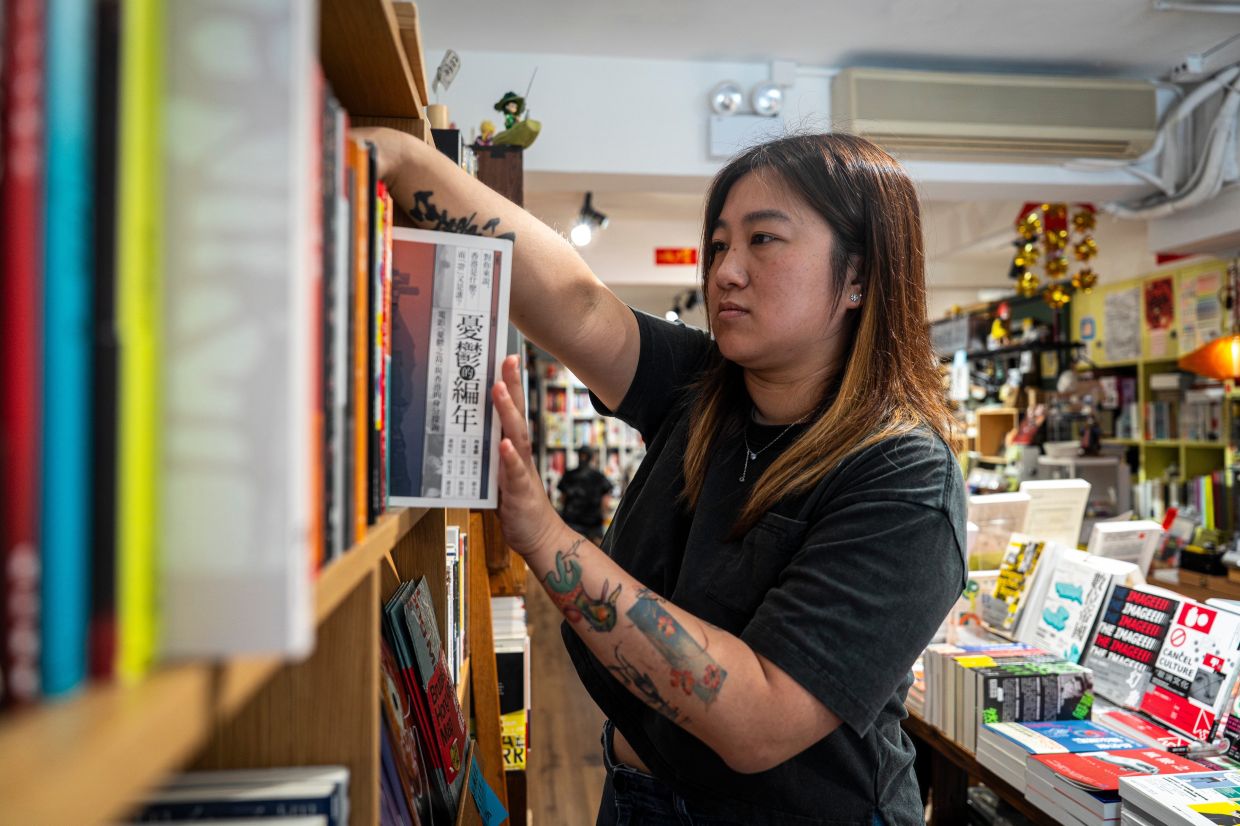
Hong Kong police moved against two individuals on Wednesday, June 24, on suspicion of distributing seditious publications and accepting financial support from overseas political organisations, employing powers granted under recently enacted national security legislation. The arrests represent a significant escalation in the authorities' enforcement of restrictions on political expression in the Asian financial centre, occurring as the city approaches the 29th anniversary of its return to Chinese administration from British rule.
While official statements released Thursday withheld the identities of those detained, multiple Hong Kong news organisations, including the Ming Pao newspaper, identified the primary suspect as Leticia Wong, proprietor of Hunter Bookstore located in Sham Shui Po district. Wong carries considerable symbolic weight in Hong Kong's civil society landscape as a former district councillor who has maintained an uncompromising stance on democratic freedoms despite the incarceration of numerous prominent activists following the 2019 protest movement that shook the territory.
The timing of the arrests carries particular political significance. They arrive merely a week before Hong Kong commemorates the June 30th anniversary of the 1997 handover agreement, when the British Crown Colony reverted to Chinese sovereignty. That transition came accompanied by pledges that Hong Kong would preserve its distinctive legal system, independent judiciary, and civil liberties under a so-called "one country, two systems" framework. Contemporary critics increasingly characterise these guarantees as progressively hollow, pointing to successive security legislation and enforcement actions as evidence of systematic constraint on what Beijing considers undesirable political activity.
According to official government statements, the two individuals face allegations encompassing multiple serious offences under Hong Kong's evolving legal architecture. Investigators claim they exhibited and distributed materials with seditious character within their premises, specifically items designed to cultivate animosity toward the administration, the courts, and law enforcement bodies. The charges additionally reference suspected receipt of remittances originating from overseas entities classified as foreign political organisations, violating separate asset and proceeds legislation that criminalises engagement with funds connected to indictable offences.
The governmental statement declined to enumerate which specific publications or international entities formed the basis of these allegations, creating uncertainty about the precise boundaries of permissible commercial activity within Hong Kong's current regulatory environment. This ambiguity has profound implications for booksellers, publishers, and cultural institutions across the territory, who must now navigate enforcement actions where the alleged violations remain substantially undefined in official communications.
Wong's bookstore has previously attracted official scrutiny. Last year, pro-Beijing media outlets published reports characterising an independent book fair held at the premises as embodying "soft resistance" to government authority. The incident centred partly on the store's intention to stock a biography of Jimmy Lai, a pro-democracy publisher currently imprisoned under national security provisions. That previous controversy foreshadowed Wednesday's action, suggesting sustained official focus on the bookstore's operational scope and inventory.
Wong's own account of governmental pressure paints a picture of systematic inhibition extending beyond criminal prosecution. During an interview last year with international media, she revealed that between July 2022 and June 2025, she documented 92 separate interventions by authorities targeting her establishment. These encompassed physical inspections, conspicuous surveillance operations outside the storefront, and formal letters threatening enforcement actions for alleged regulatory breaches. Additionally, she disclosed that an anonymous communication persuaded an organisation planning an event at her venue to withdraw its booking, suggesting that intimidation extends beyond official channels into the sphere of private commercial relationships.
The broader pattern of enforcement targeting booksellers extends beyond Hunter Bookstore's circumstances. In March, police apprehended personnel at another bookshop, reportedly charging them with distributing seditious publications, notably including the Lai biography that has become a focal point of official concern. Those individuals subsequently secured release on bail, though the incident underscores official determination to restrict the circulation of politically sensitive materials through retail channels.
The legal foundations for such enforcement derive principally from Hong Kong's national security legislation, particularly 2024 provisions that significantly expanded official authority to prosecute speech and publication deemed to undermine state security. The government has consistently articulated the position that these measures constitute indispensable safeguards for social stability while maintaining that freedom of expression continues receiving robust protection within Hong Kong's constitutional framework. This rhetorical position, however, confronts substantial credibility challenges from international observers, civil rights organisations, and Hong Kong residents who perceive an unmistakable trajectory toward constraint of political discourse and suppression of dissenting viewpoints through legal mechanisms.
For Southeast Asian observers, particularly those in Malaysia monitoring developments in neighbouring Hong Kong, the enforcement pattern carries instructive implications regarding the interaction between national security legislation and political liberty. The Hong Kong experience demonstrates how security laws initially framed as terrorism and subversion countermeasures progressively expand to encompass broader categories of political expression, publication, and civic participation. Booksellers emerge as canaries in the coal mine of political freedom, their capacity to operate without official interference serving as a litmus test for the vitality of civil liberties more broadly. The systematic targeting of individuals engaged in non-violent commercial activity involving books and ideas suggests that the boundaries of permissible conduct now extend substantially beyond protection against violence into the realm of ideological conformity.
Wong's personal trajectory from elected public representative to suspected criminal exemplifies the polarisation afflicting Hong Kong's political environment. Her persistence in maintaining a physical space for independent publication distribution despite documented governmental pressure demonstrates individual commitment to institutional independence. Simultaneously, her arrest signals official determination to eliminate infrastructure supporting political discourse that the administration perceives as threatening, regardless of the content's actual potential for inciting violence or destabilising violence.
The investigation's classification of international book fairs and biographical publications as requiring criminal enforcement raises fundamental questions about governance legitimacy and the sustainability of Hong Kong's previous reputation as a cosmopolitan centre embracing intellectual pluralism. As the territory approaches its anniversary commemoration, the parallel narrative of incremental institutional constraint and political boundary contraction deserves serious consideration among regional stakeholders concerned with preserving spaces for civil society expression and political discourse.

