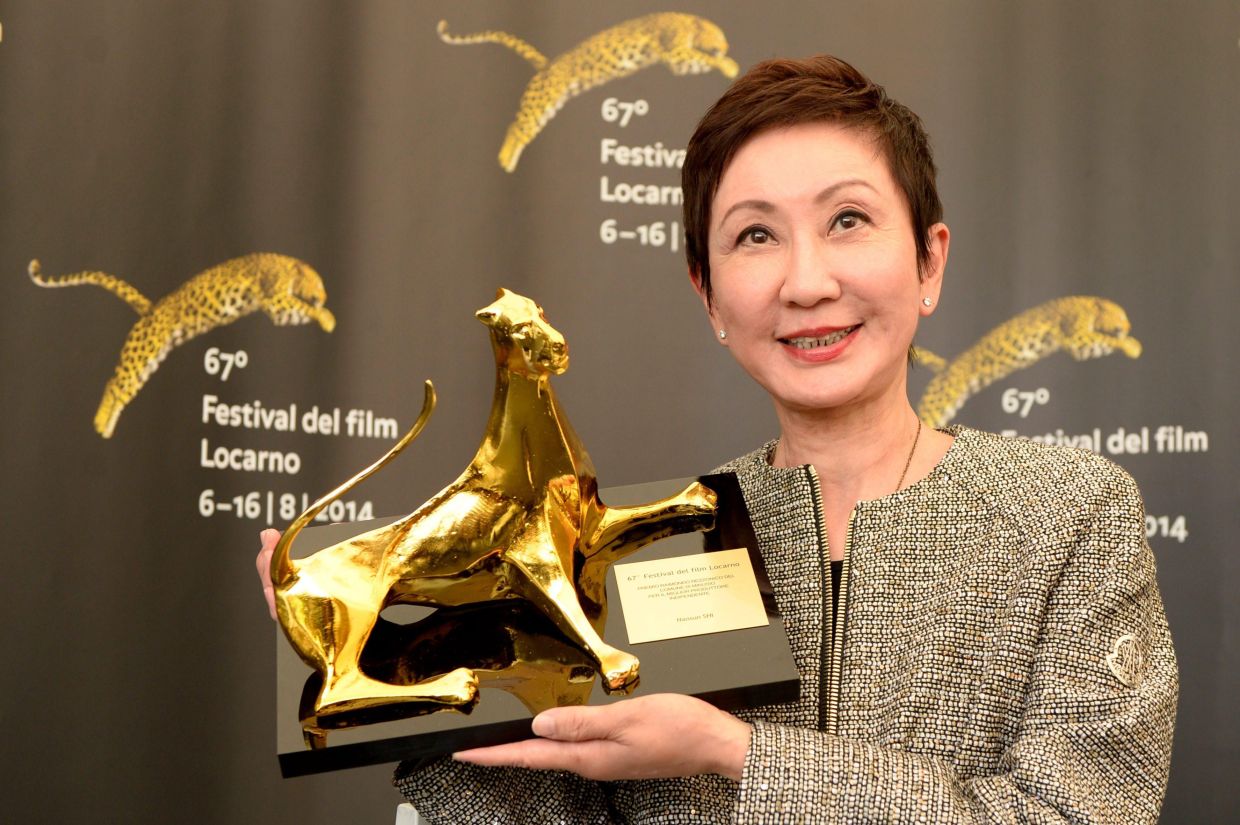
Hong Kong's entertainment world has lost one of its most transformative figures with the death of Shi Nan-sun, the pioneering film producer whose career spanned four decades and fundamentally reshaped how Asian cinema reached international audiences. She passed away on Monday at Hong Kong Sanatorium & Hospital at the age of 75, succumbing to multiple organ failure stemming from a bacterial infection that ravaged her immune system. Her death marks the end of an era for a generation of filmmakers who depended on her business acumen and unwavering commitment to elevating Hong Kong productions beyond regional markets.
Shi's company Film Workshop, which she established alongside her former husband acclaimed director Tsui Hark, confirmed her peaceful passing in a statement that acknowledged her deteriorating health since 2022. The company disclosed that complications affecting her immune system had rendered her increasingly vulnerable, with recurrent infections in recent months accelerating her decline. Despite the setbacks, those closest to her described a woman who faced her final chapter with characteristic resilience, surrounded by family and friends in her last moments. The emotional toll on the Hong Kong film community became immediately apparent as tributes flooded social media platforms from the industry's most celebrated names.
Jackie Chan, one of international cinema's most recognizable figures, used his Weibo account to express the collective sense of loss, characterizing Shi as another "legendary figure" the film world could ill afford to lose. Chan's tribute underscored how Shi's influence extended beyond Hong Kong to shape the careers of globally recognized performers. Actress Carina Lau, who worked closely with Shi throughout her career, shared a nostalgic black-and-white photograph alongside heartfelt reflections on the producer's mentorship. Lau described learning invaluable lessons about integrity and professional conduct from someone she and her husband Tony Leung Chiu-wai deeply respected as a symbol of female excellence in cinema. Other prominent names including Brigitte Lin Ching-hsia, action star Donnie Yen Chi-tan, and international actress Shu Qi joined the chorus of public remembrance, each highlighting different dimensions of Shi's professional legacy.
The Hong Kong government's formal recognition underscored Shi's significance as an architect of the territory's cultural standing. Secretary for Culture, Sports and Tourism Rosanna Law Shuk-pui issued a statement characterizing Shi as a distinguished figure whose contributions fundamentally shaped the local film industry's development trajectory. Law credited Shi with creating "precious cinematic memories" that defined the Hong Kong film experience for generations of viewers. The government's tribute acknowledged that Shi had dedicated her entire professional life to cinema and television, leaving behind a body of work that continues to define how international audiences perceive Hong Kong's creative capabilities.
Tsui Hark's own public statement, delivered as he left the hospital on Monday evening, provided intimate details of Shi's final days and her unwavering composure in the face of severe illness. The acclaimed director emphasized how Shi "held on bravely" despite her immune system's severe deterioration, a testament to the inner strength that colleagues and collaborators repeatedly referenced in their tributes. Tsui expressed gratitude for the care and support Shi received throughout her illness, reflecting the dignity with which she navigated her health crisis. The relationship between Shi and Tsui, which evolved from marriage lasting eighteen years until their 2014 divorce into an enduring professional partnership, exemplified how two creative minds could restructure personal bonds around shared artistic purpose.
Shi's last public appearance in May, when she attended filmmaker Linda Kuk Mei-lai's funeral, had already prompted concern among industry observers. Her reliance on a walking stick signaled visible decline to those who had followed her career across decades. Yet those who knew her best understood that such physical limitations could never diminish the mental sharpness and business instinct that defined her professional identity. Her absence from public life in recent months left a void that colleagues and collaborators felt acutely, aware that an era was drawing to a close.
Born and educated in Hong Kong, Shi distinguished herself through an unconventional path into filmmaking that began with technical training rather than artistic aspiration. Her studies in statistics and computing at London's Polytechnic of North London equipped her with analytical frameworks that would later revolutionize how Hong Kong producers approached international distribution and financial management. Her entry into the television industry laid groundwork for a film career that commenced in 1981 at Cinema City, where she quickly established herself as an administrator and strategist capable of orchestrating complex financing arrangements and international contracts. These early responsibilities positioned her as someone who understood the business machinery underlying creative production.
The 1984 founding of Film Workshop alongside Tsui represented a pivotal moment not just in their personal relationship but in Hong Kong cinema's evolution as an export industry. By establishing Distribution Workshop as a complementary entity, Shi created infrastructure that allowed Hong Kong filmmakers to bypass traditional Western gatekeepers and establish direct relationships with international exhibitors and audiences. This vertical integration of production, distribution, and marketing represented sophisticated business thinking that predated similar strategies in other creative industries. Her work transformed perceptions of Hong Kong cinema from regional curiosity to legitimate player in global film markets.
Brigitte Lin, whose friendship with Shi spanned more than five decades, offered perhaps the most revealing personal portrait through her detailed social media tribute. Lin quoted legendary novelist Jin Yong to characterize Shi as "the only wife who is completely infatuated with her husband," capturing how Shi's professional choices had been intertwined with her devotion to nurturing Tsui's artistic vision. This characterization, while emphasizing romantic devotion, also illuminated how Shi's business genius served larger creative ambitions. Lin's 4am tribute, in which she pledged to honor Shi's memory by passing forward the positive energy her friend embodied, reflected the profound personal connections Shi maintained across her professional network.
Shi's international recognition extended far beyond Hong Kong's film industry, evidenced by her elevation to the ranks of France's prestigious Ordre des Arts et des Lettres, an honor reserved for those advancing artistic and cultural endeavors. Her receipt of best independent producer recognition at the Locarno International Film Festival placed her among cinema's most respected figures globally. International film festival organizations repeatedly invited her to serve as jury member or president, assignments that testified to her judgment and standing among the world's most influential cinematic voices. These accolades represented more than personal achievement; they reflected how Shi's vision had expanded possibilities for Asian filmmakers seeking international legitimacy.
Just weeks before her death, in a fitting capstone to her extraordinary career, Shi and Tsui jointly received a lifetime achievement award at the Hong Kong Film Awards in 2025. The honor celebrated their combined contributions to an industry that both had fundamentally transformed through complementary talents and shared vision. For Tsui, the recognition acknowledged his artistic innovations; for Shi, it validated four decades of building the commercial and distribution infrastructure that made those innovations commercially viable and globally visible. This joint recognition symbolized how their professional partnership, transcending the dissolution of their marriage, remained built on mutual respect and shared commitment to elevating cinema.
Shi's passing leaves unfinished business and unfulfilled potential in an industry facing increased competition from streaming platforms and changing consumption patterns. The loss of someone who built relationships with international distributors and understood cinema's business evolution represents a genuine setback for Hong Kong filmmakers seeking to reclaim international prominence. Her strategic thinking and network of global contacts cannot be easily replicated. Yet the institutions she helped establish and the professional standards she elevated remain as her enduring contribution. The film world will remember Shi not primarily for films she produced, but for creating the conditions under which Hong Kong cinema could achieve global significance. For Southeast Asian readers, Shi's career demonstrates how regional talent can achieve international prominence through business innovation and unwavering commitment to artistic excellence, a lesson increasingly relevant as Asian creative industries compete for global audiences.

