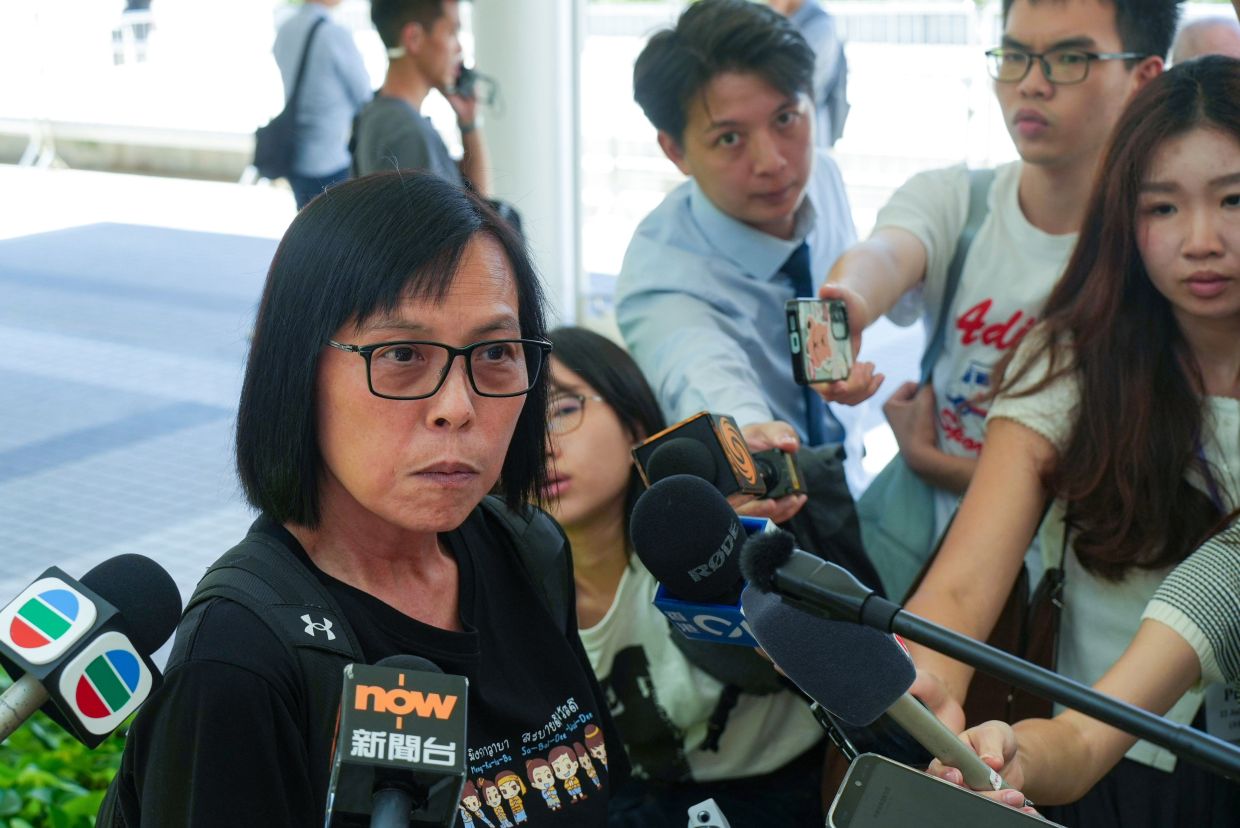
The independent committee tasked with investigating Hong Kong's Wang Fuk Court fire has decided against requesting statutory authority to expand its investigative powers, a decision that has alarmed survivors and observers who worry the inquiry may lack sufficient tools to uncover the full circumstances behind the deadly blaze. Committee chairman Justice David Lok Kai-hong announced the panel would not petition the chief executive to elevate the inquiry into a formal statutory commission, despite resuming hearings this week after a six-week hiatus.
The distinction between a voluntary independent committee and a statutory commission carries significant practical implications for how thoroughly an investigation can proceed. A statutory body possesses the legal authority to compel witnesses to testify under oath, demand production of documents, and impose penalties for non-cooperation or perjury. Operating without such powers leaves the current committee dependent on voluntary participation, potentially limiting its ability to access sensitive information or secure testimony from reluctant witnesses. For a major public incident of this magnitude, these constraints represent a meaningful weakening of investigative capacity.
Survivors and their families have expressed growing apprehension that the committee's chosen limitations may result in incomplete findings. Without statutory compulsion, critical witnesses—whether from government agencies, building management, or the fire services—could decline to participate or provide only partial information. The psychological impact on survivors and bereaved families extends beyond the immediate trauma; uncertainty about whether justice has been fully served through a comprehensive inquiry compounds their suffering and raises questions about institutional accountability in Hong Kong's approach to major disasters.
The Wang Fuk Court fire, which claimed multiple lives and displaced hundreds of residents, represented one of Hong Kong's most serious fire incidents in recent decades. Public expectations for a thorough investigation have been substantial, reflecting the scale of the tragedy and its implications for residential safety standards across the territory. The decision to forgo statutory powers suggests a more limited investigative scope than what many stakeholders had anticipated, particularly given the complexity of issues likely to emerge from such a catastrophic event.
Justice Lok's determination to proceed without enhanced authority may reflect various considerations, including potentially avoiding protracted legal procedures or institutional resistance that often accompanies statutory inquiries. However, this pragmatic calculus may come at the cost of investigative comprehensiveness. The committee will need to rely on goodwill cooperation from all parties involved, a dependence that could create vulnerabilities if any entity chooses to limit its engagement with the inquiry process. Building management companies, contractors, and government departments may exercise discretion regarding information disclosure when no legal obligation compels transparency.
The structural difference between these investigative models carries broader implications for public confidence in Hong Kong's institutional responses to major incidents. When disasters occur, societies typically establish robust fact-finding mechanisms to prevent recurrence and provide closure for affected communities. The choice of investigative framework signals the seriousness with which authorities approach accountability. A voluntary committee, while potentially faster and less adversarial, may inadvertently communicate that the incident, despite its gravity, does not warrant the full legal apparatus available for comprehensive inquiry.
Regional observers and comparative analysis with other jurisdictions offer perspective on this decision. When major fires or building disasters occur in Singapore, Taiwan, or South Korea, the standard investigative response typically involves statutory commissions or equivalent bodies with compulsory powers. This reflects a regional understanding that public safety incidents of significant scale demand investigative mechanisms with genuine enforcement capacity. Hong Kong's divergence from this pattern warrants scrutiny regarding whether it reflects genuine choice or represents institutional constraints limiting more rigorous approaches.
The resumption of hearings this week after the extended pause itself raises questions about investigative momentum. Extended breaks in inquiry proceedings can affect witness recall, create opportunities for narrative management by interested parties, and dilute public attention and accountability pressure. The reasons for the hiatus and the anticipated timeline for completing the investigation have not been fully articulated, leaving observers uncertain about whether the process will reach substantive conclusions in a reasonable timeframe.
For Malaysian readers and Southeast Asian communities generally, this situation illustrates broader challenges facing public inquiries across the region. Hong Kong's decision demonstrates how investigative models can vary significantly even within developed, professional governance systems. In Malaysia and other neighboring countries, understanding how different jurisdictions approach major disaster investigations provides valuable context for evaluating our own institutional frameworks. The Wang Fuk Court inquiry's limitations—whether voluntary or imposed—offer a cautionary case study in the importance of establishing adequate investigative authority when public safety and accountability intersect.
Moving forward, the committee's effectiveness will depend substantially on whether it can generate sufficient investigative findings despite its circumscribed powers. The quality of evidence presented and conclusions reached will ultimately determine whether survivors and the broader public accept the inquiry as having meaningfully advanced understanding of how the fire occurred and what systemic failures, if any, contributed to the tragedy. For survivors already coping with loss and displacement, these procedural questions carry profound personal significance beyond abstract institutional considerations.

