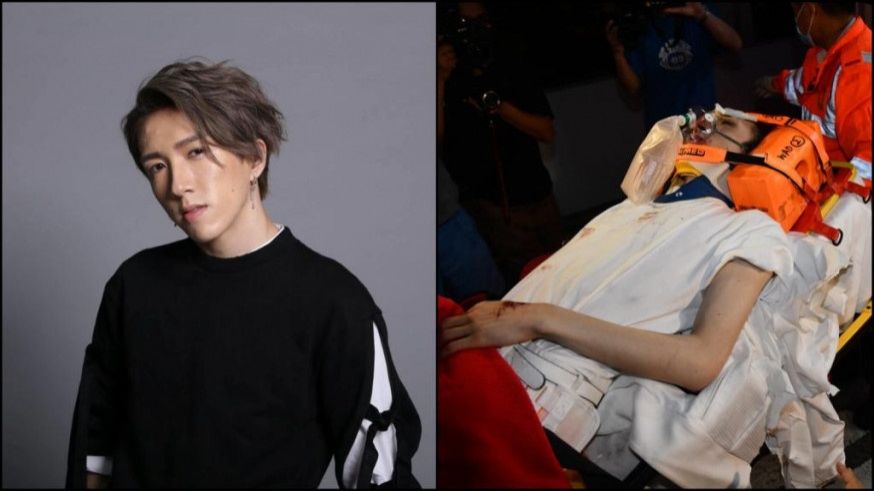
A Hong Kong district court has awarded dancer Mo Li Kai-yin HK$6.29 million (approximately RM3.32 million) in compensation for life-altering injuries sustained when a massive LED screen collapsed on him during a concert by Cantopop boy band Mirror in July 2022. The June 15 ruling represents the maximum damages available under multiple legal categories and underscores the gravity of the incident that transformed the 31-year-old performer's existence. His employer, Studiodanz, has been ordered to settle the award alongside covering all legal costs and accrued interest, though the company declined to participate in the trial proceedings.
The accident occurred during the fourth performance of Mirror's scheduled 12-concert run at Hong Kong Coliseum, when a four-by-four-meter LED panel detached from overhead rigging and fell directly onto Mo. The impact caused severe cervical spine dislocation, immediately paralyzing him from the neck downward. Emergency personnel rushed him to Queen Elizabeth Hospital for urgent surgical intervention and critical care, followed by extended treatment at private medical facilities across Hong Kong and internationally. More than two years later, Mo continues participating in rehabilitation programmes employing cutting-edge therapeutic approaches.
The District Court's judgment characterized Mo's condition as "catastrophic" and noted his permanent total incapacity to work. Legal documents reveal the performer requires continuous care from three dedicated caregivers to manage personal hygiene, mobility, and all daily living activities. The ruling explicitly stated that Mo "is incapable of ever leading or appreciating an independent adult life," reflecting the comprehensive nature of his disability. This assessment informed the compensation structure, which addresses not only immediate medical expenses but also lifelong caregiving requirements and periodic payments to sustain his care arrangements indefinitely.
Prior to the accident, Mo had established himself as a dedicated dance professional with a growing career trajectory. After discovering his passion for dance during university years between 2015 and 2019, he transitioned to full-time performance work in 2019, securing roles in concerts, television productions, commercial advertisements, and music videos. Simultaneously, he maintained teaching positions at four dance studios, including Studiodanz, the company subsequently found liable for his injuries. This multifaceted engagement within Hong Kong's entertainment industry positioned him as an emerging talent with promising prospects.
The legal determination of liability extended beyond the compensation award. Studiodanz faced regulatory penalties following occupational safety investigations, including a HK$132,000 fine for breaching workplace safety standards. These findings suggest that insufficient protocols existed for securing overhead equipment or managing technical hazards in performance venues. The case has significant implications for entertainment industry safety standards across Hong Kong and potentially throughout Southeast Asia, where live performance venues may operate under varying regulatory frameworks.
Mo's family has made extraordinary sacrifices supporting his recovery journey. His father, Reverend Derek Li Shing-lam, resigned from pastoral responsibilities and relocated from Canada to serve as his son's primary caregiver. The reverend maintained this demanding role until his death on April 25, after which the responsibility transitioned to professional caregiving staff funded through the compensation framework. This family narrative highlights the emotional and logistical dimensions of catastrophic injury recovery, extending well beyond the injured individual.
Despite the severity of his paralysis, Mo has demonstrated remarkable determination in pursuing rehabilitation. Contemporary regenerative medicine approaches and experimental technologies, including an implantable microstimulator device, have facilitated incremental functional recovery. Medical professionals have documented improved motor control in his right arm and partially restored sensation in bladder and bowel functions. Video documentation shared via his Instagram account in March revealed Mo operating an electric wheelchair independently using right-hand controls, demonstrating tangible progress through intensive therapeutic interventions.
The compensation structure acknowledges both present and future care requirements, recognizing that Mo's condition necessitates ongoing medical support for decades. The award encompasses acute medical expenses incurred during emergency treatment and subsequent hospitalization, ongoing healthcare costs associated with advanced rehabilitation technologies, and periodic payments calculated to sustain professional caregiving throughout his lifetime. This comprehensive approach reflects legal recognition that catastrophic spinal injuries create permanent financial obligations extending far beyond conventional personal injury settlements.
For Malaysian and Southeast Asian entertainment industry stakeholders, this case underscores critical safety considerations within live performance environments. The Hong Kong ruling establishes precedent regarding employer responsibility for technical infrastructure safety and venue management protocols. Entertainment companies, venue operators, and production teams across the region should review their safety procedures, equipment maintenance schedules, and insurance provisions to prevent similar incidents. The substantial financial penalty—extending into millions of ringgit—demonstrates that regulatory bodies increasingly scrutinize workplace safety compliance in entertainment sectors previously characterized by informal operational practices.
Mo's ongoing rehabilitation journey, funded through the court-awarded compensation, continues incorporating advanced medical technologies and intensive therapeutic programmes. His incremental functional improvements offer modest hope while underscoring the prolonged nature of recovery from severe spinal injuries. The case serves as sobering reminder of performance venue risks and the critical importance of robust safety infrastructure in entertainment spaces where complex technical equipment operates in proximity to performers and audiences.