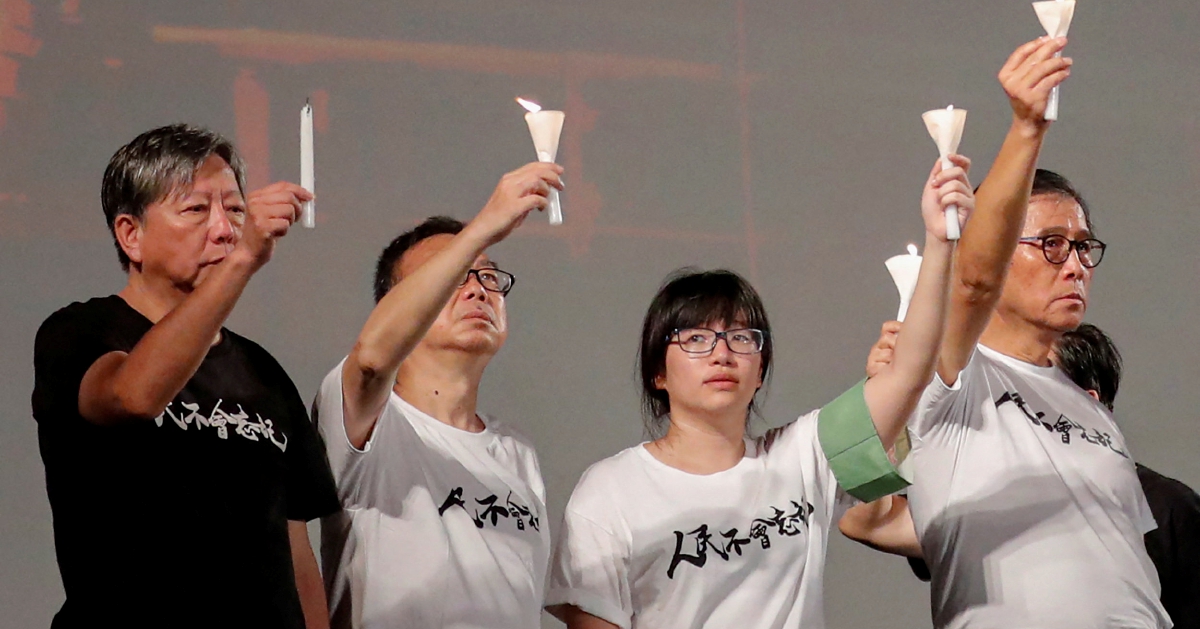
A Hong Kong court has convicted two long-standing activists of inciting subversion through their efforts to organise annual vigils commemorating China's 1989 Tiananmen crackdown. The guilty verdict delivered on Friday represents a watershed moment in Hong Kong's rapidly shifting political landscape, as authorities increasingly rely on national security laws to curtail activities that were once considered routine expressions of civic remembrance.
The conviction underscores how stringent interpretations of the National Security Law, imposed by Beijing in 2020, are reshaping what residents can openly discuss, memorialise, or organise around sensitive historical events. The Tiananmen vigils, which had become a defining feature of Hong Kong's civil society for decades, have transformed from mainstream civic expressions into activities pursued at considerable legal risk. For Malaysian observers, this demonstrates how security legislation enacted in one context can progressively alter the boundaries of permissible public expression.
The two activists had maintained their vigils as solemn annual traditions, drawing thousands of participants in previous years who gathered to remember those killed during the military intervention that ended pro-democracy protests in Beijing on June 3-4, 1989. These commemorations had functioned as rare moments when Hong Kong's distinct political identity found expression through collective memory. The court's finding that organising such vigils constitutes subversion signals how authorities are interpreting the security framework to criminalise acts that fall far short of violent or conspiratorial behaviour.
The subversion charge carries considerable weight within Hong Kong's legal architecture, reflecting how the National Security Law creates novel offences tailored specifically to the territory's geopolitical circumstances. Where previous prosecutions under this legislation often involved allegations of explicit calls for independence or violence, the conviction of vigil organisers extends the charge to encompass commemoration itself. This expansion of legal culpability presents serious implications for historical memory and public discourse across Asia's major cities.
For Hong Kong's civil society, the verdict compounds an already alarming trajectory. Opposition parties have been decimated through disqualifications and arrests, independent media outlets have closed, and labour unions have dissolved under mounting legal pressure. The conviction of Tiananmen vigil organisers represents the system progressively narrowing the space where dissent, even in historical commemoration, can exist without criminal consequences. What remains striking is that activities treating such commemorations as essentially apolitical memorials are now prosecuted as subversive.
The case reflects broader tensions within Hong Kong regarding how it negotiates its distinct history and identity within China's framework. While mainland China has largely excised the Tiananmen events from public discourse and education, Hong Kong's vigils preserved space for remembrance. The court's judgment suggests authorities view such preservation as fundamentally incompatible with social stability under current national security doctrine. The conviction establishes a concerning precedent for what other forms of historical remembrance or political assembly might face similar legal jeopardy.
Regionally, the outcome carries implications for other Asian democracies and semi-democracies grappling with how extensively security legislation can be applied. Southeast Asian nations implementing their own national security or sedition frameworks will likely monitor how aggressively Hong Kong authorities employ such tools. The vigil prosecution demonstrates that security laws framed broadly enough can transform civilian organising and commemoration into prosecutable offences, expanding governmental reach considerably beyond explicitly subversive or violent conduct.
The conviction also highlights tensions within Hong Kong's judiciary, which historically operated according to common law principles emphasising narrow construction of criminal statutes. The breadth with which courts are now interpreting subversion reflects either legislative ambiguity or a shift in judicial deference toward security imperatives. Observers of Hong Kong's legal system have noted how the National Security Law's vague terminology creates discretionary space that empowers prosecutors and judges to determine criminality in matters once considered constitutionally protected expression.
International human rights organisations have expressed deep concern about Hong Kong's trajectory, noting that surveillance, prosecution, and conviction patterns suggest systematic suppression of dissent rather than targeted response to genuine security threats. The conviction of Tiananmen vigil organisers provides fresh evidence supporting these assessments, as the prosecutions extend to activities that pose no plausible destabilisation risk yet challenge official narratives regarding sensitive historical moments.
Looking forward, the verdict will likely deter many from participating in future Tiananmen commemorations, effectively achieving through legal consequence what political suppression could not accomplish through traditional restrictions. The chilling effect extends beyond those directly prosecuted to encompass the broader community contemplating public assembly or historical remembrance. For Hong Kong residents, particularly younger generations, the conviction illustrates how the boundaries of permissible civic participation continue contracting.
The case ultimately reflects a fundamental question regarding how societies negotiate contested histories and political dissent. Hong Kong's courts have signalled through this conviction that remembering events Beijing wishes forgotten constitutes subversion worthy of criminal sanction. As other jurisdictions worldwide wrestle with comparable tensions between security imperatives and civic freedoms, Hong Kong's experience offers both cautionary lessons and concerning foreshadowing regarding how security frameworks can transform remembrance into criminality.

