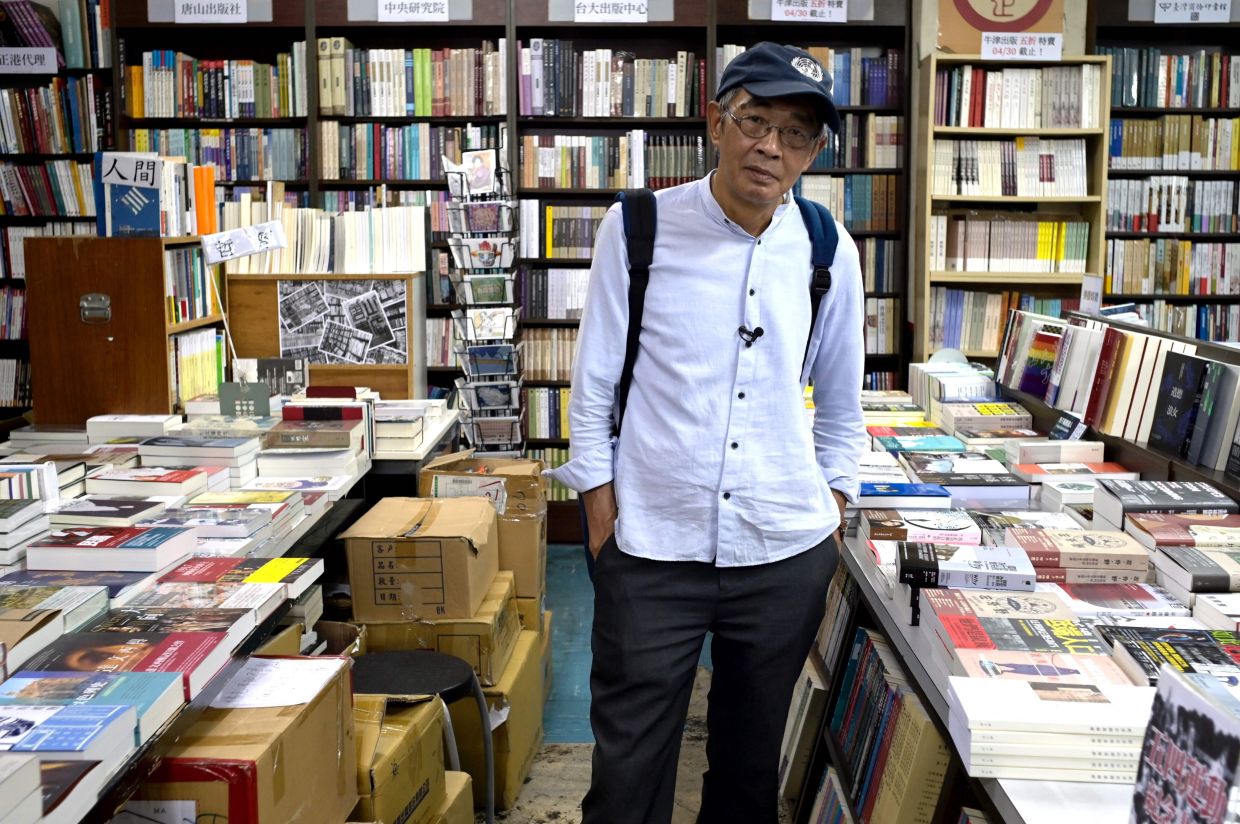
Lam Wing-kee, the former manager of Causeway Bay Books whose harrowing account of detention by Chinese authorities became a defining moment in Hong Kong's struggle for press freedom, has died in Taiwan at the age of 70. The prominent bookseller, who had become an international symbol of Beijing's grip tightening over the territory, passed away on Thursday evening at MacKay Memorial Hospital in Taipei after suffering a cancer relapse. Taiwan's Central News Agency confirmed the death, though specific medical details were not immediately disclosed beyond confirmation that Lam had been admitted to hospital earlier in the week before falling into a coma.
Lam's significance in Hong Kong's modern political landscape cannot be overstated. As manager of Causeway Bay Books, he presided over an establishment that catered to a specific but crucial market: readers hungry for publications unavailable on mainland China, including volumes purporting to expose secrets about senior Communist Party leadership and their alleged personal indiscretions. This seemingly niche business became, in late 2015, the focal point of an extraordinary series of disappearances that would expose the vulnerability of Hong Kong's promised autonomy and shake international confidence in the "one country, two systems" framework that had supposedly protected the city's freedoms.
In October 2015, Lam vanished after crossing the border into Shenzhen, launching a nightmare journey that would define his legacy. He recounted being blindfolded and transported by train for thirteen hours to Ningbo in eastern China, where he endured five months of captivity under constant surveillance by rotating two-person teams. Yet it was his defiant decision to publicly testify about this ordeal that transformed his personal trauma into a watershed moment for Hong Kong. Speaking at a crowded news conference in 2016, Lam provided meticulous details that contradicted official Chinese narratives, fundamentally challenging Beijing's version of events and demonstrating the willingness of at least one victim to resist the pressure to remain silent.
Lam was among five people connected to Causeway Bay Books who disappeared around the same period, creating an international incident that foreshadowed Hong Kong's deteriorating freedoms. His fellow bookseller Gui Minhai, a part-owner and publisher, vanished from his holiday residence in Thailand and subsequently received a ten-year prison sentence in mainland China on charges of illegally transmitting intelligence abroad. The coordinated nature of these disappearances, occurring across borders and involving what appeared to be mainland security apparatus operations, signalled a dramatic shift in how Beijing viewed its obligations to respect Hong Kong's distinct legal and administrative systems.
Lam's forced television confession in China represented a chilling mechanism of control that would become increasingly familiar to Hong Kong residents in subsequent years. The spectacle of a detainee publicly admitting to crimes, their words plainly coerced, served both as a tool for extracting propaganda value and as a warning to others. For the international community, it illustrated the lengths to which mainland authorities would go to neutralise sources of information they deemed threatening to the Communist Party's image and stability.
Fearing legal jeopardy and recognising the erosion of Hong Kong's protections, Lam departed for Taiwan in 2019, establishing himself in a place that offered the freedoms he could no longer take for granted at home. He reopened Causeway Bay Books in Taipei in 2020, continuing his work but operating now from exile rather than from the heart of Hong Kong. This relocation itself became symbolic of the larger exodus of Hong Kong's professional and creative classes, as well as activists and journalists, seeking refuge in Taiwan, the United States, Britain, and other democracies.
Taiwan's President Lai Ching-te acknowledged Lam's passing with a poignant statement that underscored the geopolitical dimensions of his life and work. Lai's tribute framed Lam not merely as a victim of state oppression but as a messenger of democracy's fragility and the continuous vigilance required to protect it. The presidential recognition reflected how Lam's story had transcended individual tragedy to become intertwined with broader questions about Taiwan's own security and the regional struggle between authoritarian and democratic governance models.
Lam's final years were marked by renewed health struggles. Last month, he disclosed to Taiwan's news agency that he had temporarily shuttered the Taipei bookstore due to deteriorating health, leaving its future reopening uncertain. The closure symbolised not merely one man's medical crisis but also the broader attrition of spaces dedicated to unrestricted expression. A symbolic gesture of mourning emerged when an unidentified visitor from Hong Kong left a white rose at the bookstore's entrance on Monday, a quiet act of remembrance that captured the emotional weight Lam carried for many.
The context surrounding Lam's death is darkly instructive regarding Hong Kong's transformation. Since the massive pro-democracy protests of 2019, Chinese and Hong Kong authorities have systematically dismantled what remained of the city's autonomous governance and civil liberties. The implementation of the 2024 National Security Law has created a chilling legal environment where even booksellers remain vulnerable. Recent arrests of individuals connected to another bookstore, on suspicion of peddling seditious materials and accepting foreign funding, demonstrate that the pattern Lam exposed nearly a decade ago continues unabated.
Lam Wing-kee's death marks the end of an extraordinary personal journey, but his legacy persists as a testament to Hong Kong's lost freedoms and as a cautionary tale for the region. His willingness to speak publicly about his ordeal, despite the personal cost, established a crucial historical record that authorities cannot erase. For Malaysian readers monitoring Hong Kong's trajectory, Lam's experience and his subsequent refuge in Taiwan illuminate the consequences when rule of law and institutional checks on state power erode. His life underscores why regional democracies must remain vigilant in defending the press freedom and speech protections that allow societies to function transparently and hold power accountable.

