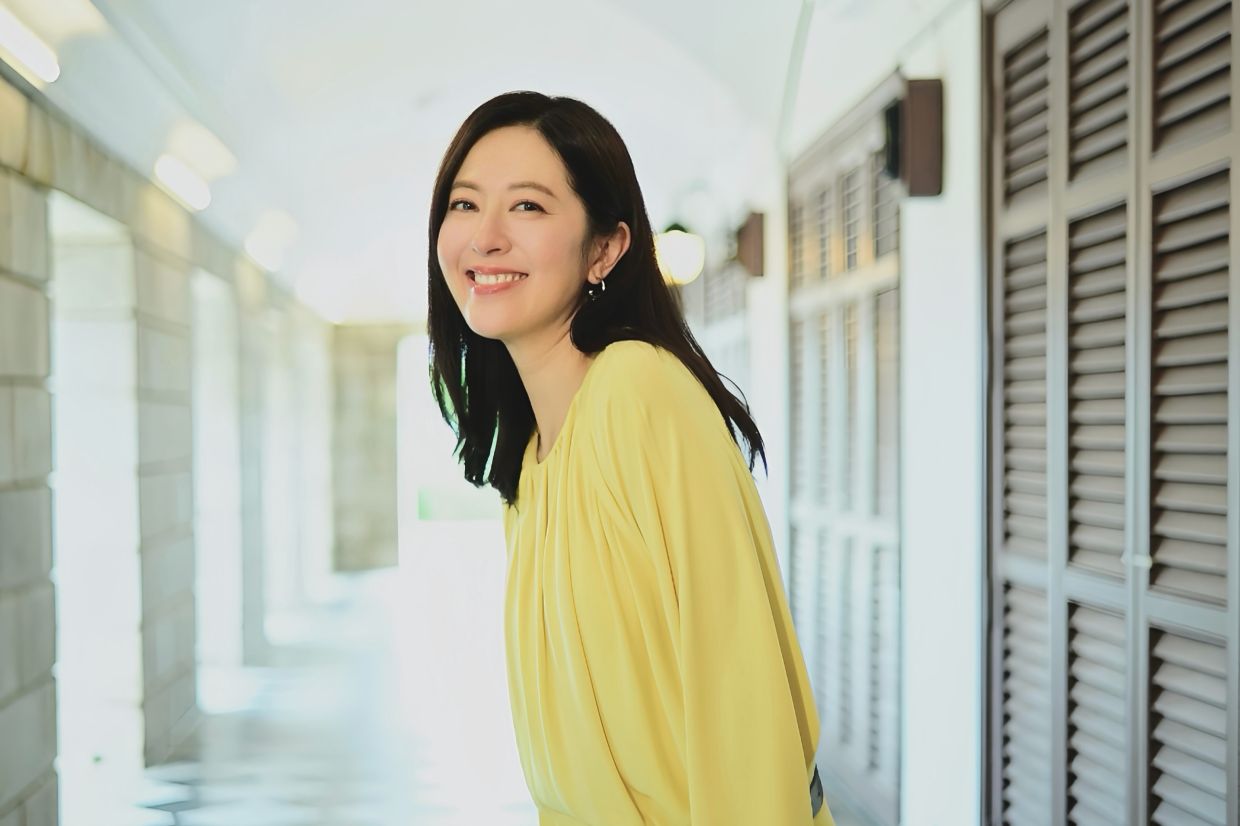
Hong Kong actress Natalie Tong has revisited one of the most painful chapters of her life, candidly discussing her mother's death in 2009 and the profound regret that continues to shape her choices today. The 45-year-old performer, who spent nearly two decades at broadcaster TVB, became visibly emotional during a recent television appearance as she recounted how her relentless pursuit of career advancement came at the cost of precious time with her mother.
Tong's reflection represents a broader conversation about the sacrifices made in pursuit of professional success, particularly acute in Hong Kong's demanding entertainment industry where long shooting schedules and promotional obligations often consume performers' personal lives. Her candour strikes a chord with many in the region who grapple with similar tensions between ambition and family obligations. The actress explained that during her mother's lifetime, she remained almost entirely consumed by work, treating her career as the priority while family concerns took secondary importance.
The family had faced a critical health decision years before her mother's death. Her mother required a pacemaker replacement, a procedure that demands ongoing medical attention and significant expense. Confronted with financial constraints, the family made the difficult choice to postpone the procedure, a decision rooted in the assumption that time remained abundant. This miscalculation would haunt Tong permanently. She revealed that at the time, she maintained an almost reckless confidence that her mother's health situation could wait, that opportunities for care and closeness would eventually present themselves.
The sudden nature of her mother's final illness compounded the tragedy. After undertaking a trip, Tong's mother returned home only to experience a sudden medical crisis. She began vomiting blood and was rushed to hospital in emergency circumstances. Tong describes the following morning as marked by an inexplicable sense of dread, an intuitive alarm that something had fundamentally shifted. When she hurried to the hospital, she arrived too late. The doctors delivered news that her mother had died overnight, leaving Tong emotionally devastated and physically unable to process the loss.
Tong's account of that moment is raw and unguarded. She collapsed upon receiving the news, unable to comprehend the finality of the outcome. The actress emphasizes that what haunts her most is not the fact of death itself, but rather the particular torture of regret—the knowledge that certain moments, certain conversations, and certain gestures of love would never occur. This distinction between grief and regret resonates deeply, as regret carries the added weight of unrealised possibility. In Tong's case, the regret stems from having privileged work obligations over the simple act of being present with her mother.
This profound experience ultimately catalysed a major professional transition. In 2022, after 19 years with TVB, Tong made the deliberate choice to depart from the broadcaster. The decision represented far more than a typical career move; it was a conscious attempt to recalibrate her entire relationship with time and family. She has spoken explicitly about how her mother's death informed this choice, describing it as a necessary correction to how she had structured her priorities and approached her own life.
Tong's departure from TVB allowed her to restructure her professional commitments in ways that better align with her evolved values. Rather than abandoning her entrepreneurial spirit, she redirected it into ventures offering greater autonomy. In 2023, she opened her own bakery in Causeway Bay, a business enterprise that afforded her control over her schedule and the freedom to allocate time according to her preferences. This venture represents not a retreat from professional ambition but rather a reimagining of how that ambition could coexist with personal priorities.
The actress has continued to maintain a public presence, making selective appearances on variety shows and exploring theatrical work. In 2025, she made her stage debut in a theatrical production, demonstrating that her transition away from TVB did not signal a withdrawal from performance entirely. Rather, she has become more intentional about the projects she undertakes and the commitments she makes, exercising agency over her own career trajectory.
Tong's reflection offers a meditation on the nature of regret and the possibility of change. She acknowledges that while the pain of her mother's absence persists, she has chosen not to allow that regret to become a defining element of her identity or future. Instead, she frames her remaining years as an opportunity for deliberate reconstruction, a chance to live differently and make choices that honour both her ambitions and her relationships. This perspective—that correction and transformation remain possible—has guided her recent decisions.
Her story resonates particularly within Southeast Asian contexts, where family obligations and individual aspiration frequently exist in tension, and where rapid economic development has created intense workplace pressures. Tong's willingness to publicly acknowledge her regrets and her subsequent choices models a form of reflection increasingly rare in entertainment industries driven by relentless advancement and public performance. By stepping back from the intense demands of a major broadcaster, she has demonstrated that professional relevance need not require complete surrender of personal autonomy or family relationships.

