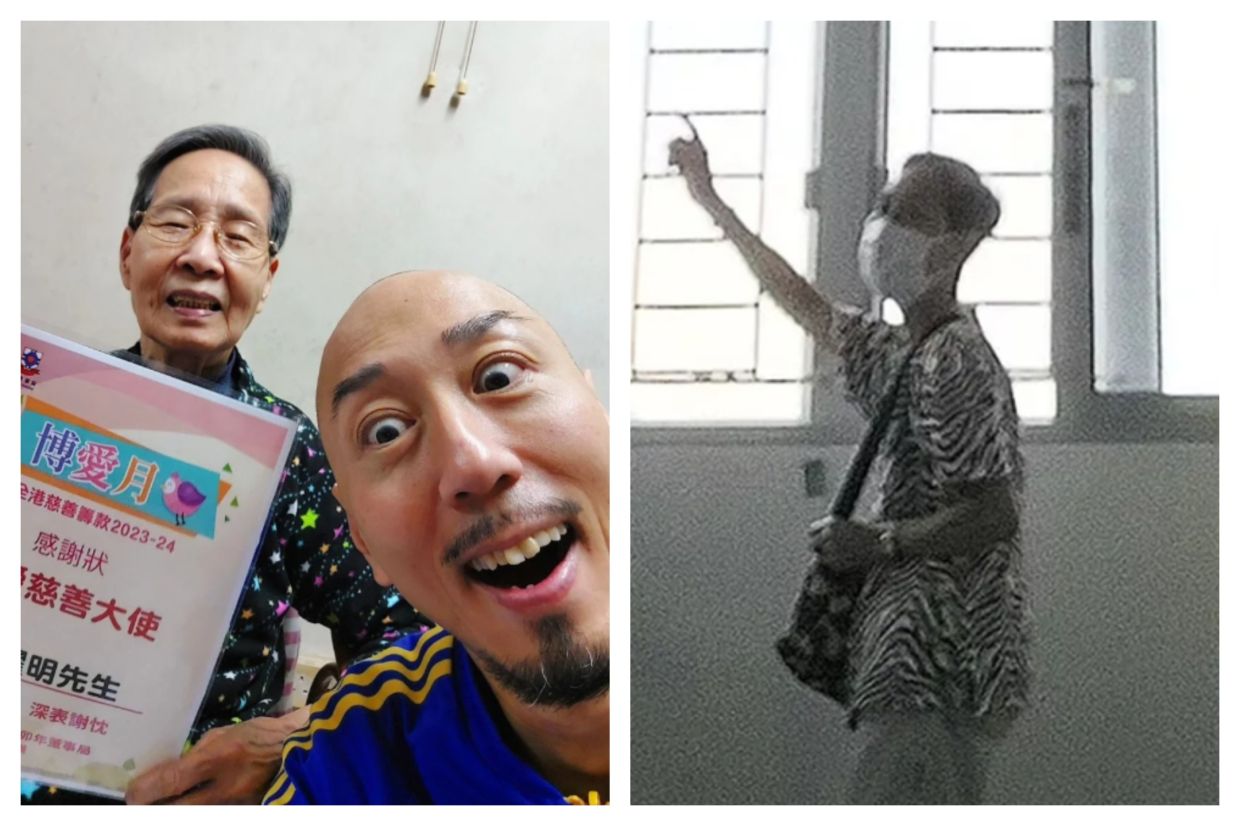
Hong Kong television actor Dai Yiu Ming has realised a cherished ambition by purchasing his inaugural property as a residence for his octogenarian mother, marking the culmination of years spent accumulating savings through disciplined financial management and consistent work in the entertainment sector. The 54-year-old TVB performer disclosed his achievement through social media, where he shared imagery of the newly acquired residence alongside photographs capturing the expansive views accessible from the property, prompting widespread acknowledgement from followers and industry observers alike.
In his accompanying message, Dai acknowledged the substantial financial burden the transaction represented, yet expressed no hesitation about the decision. His reflective commentary emphasised the irreplaceable nature of time spent with family members, invoking philosophical considerations about mortality and the limits of human connection across lifetimes. The emotional weight of his purchase transcended mere monetary transaction, functioning instead as a symbolic resolution to decades of responsibility and filial obligation undertaken during his adult years.
The actor's mother, now in her ninth decade, had endured a childhood and early adulthood characterised by material hardship and precarious living circumstances. Throughout most of her life, she inhabited makeshift dwellings and subsidised public housing units that reflected the economic constraints typical of Hong Kong's post-war period. Dai spoke reverently of his mother's fortitude, recounting her recollections of surviving wartime by subsisting on foraged vegetation, specifically sweet potato leaves gathered during air-raid shelter confinement—a testament to the generation's resilience during unprecedented global conflict.
Dai's written tribute to his mother balanced gratitude with modest self-assessment, acknowledging his own limitations as an income-earner while simultaneously defending his capacity to fulfil this fundamental duty. He framed his achievement not through extraordinary earning capacity but through sustained frugality and unwavering commitment to this singular objective. His language conveyed a philosophy prioritising duty and sacrifice over material accumulation for personal benefit, values that resonated powerfully with observers across multiple demographics and cultural contexts.
The social media response illuminated contemporary appreciation for filial devotion within Chinese communities, where obligations toward parents remain culturally paramount despite modernisation and economic transformation. Multiple commentators recognised Dai's actions as exemplifying exceptional commitment to familial responsibility, with particular emphasis placed on the intersection of professional perseverance and personal integrity. The volume and tenor of encouragement suggested that such demonstrations of dutiful behaviour retain substantial cultural significance, capable of generating widespread affirmation across digital platforms.
Dai's professional trajectory demonstrates the unpredictability and structural challenges inherent in Hong Kong's competitive entertainment landscape. His formal entry into the industry occurred through Asia Television's training scheme in 1991, followed by his maiden dramatic appearance in 1993. However, his initial stint at ATV concluded within a year after he perceived insufficient professional appreciation for his contributions, prompting his departure and subsequent retraining in computer repair technology. This interlude of occupational transition ultimately proved temporary, as TVB engaged him under contract later that year, initiating the extended association that would define his career.
Over subsequent decades, Dai cultivated professional standing through consistent work in supporting roles across numerous television dramas, establishing himself as a reliable presence within the Hong Kong television ecosystem. His consistent employment, while perhaps lacking the prominence associated with leading performers, provided the stable income foundation necessary to pursue his domestic objective. The absence of dramatic financial success paradoxically enabled his life philosophy, wherein modest but dependable earnings channelled toward family obligation superseded aspirational wealth accumulation.
Personal circumstances further reinforced Dai's commitment to his mother's wellbeing. His father's death more than ten years prior fundamentally altered family dynamics, establishing a dyadic relationship wherein mutual dependence and reciprocal obligation became paramount. This loss transformed his mother from subsidiary family member into primary relational focus, subsequently influencing major career decisions. When Dai pursued mainland Chinese opportunities in 2017 seeking enhanced professional prospects, his geographic separation from his mother proved psychologically untenable, prompting his relatively swift repatriation to Hong Kong.
This decision to subordinate career advancement to filial obligation represents a distinctive choice within contemporary entertainment industries, where geographic mobility and professional expansion typically demand prioritisation. Dai's willingness to forgo potential lucrative mainland opportunities rather than abandon his mother reflected values increasingly unconventional within globalised entertainment contexts. His subsequent return exemplified the psychological costs of geographic separation for individuals maintaining traditional family structures, particularly within East Asian cultural frameworks where intergenerational cohabitation and care responsibilities remain normatively significant.
The property acquisition itself assumes heightened symbolic resonance within Hong Kong's contemporary housing crisis, wherein property ownership remains fundamentally unattainable for substantial demographic segments despite decades of economic participation. For an actor of middling prominence to achieve homeownership through ordinary savings mechanisms represents statistical rarity within the jurisdiction, underscoring both the exceptional sacrifices required and the extraordinary housing cost inflation characterising the territory. Dai's achievement thus transcends personal narrative, implicitly commenting on systemic accessibility questions confronting Hong Kong residents seeking fundamental shelter security.
Beyond its immediate family significance, Dai's accomplishment speaks to generational transitions within Hong Kong society, whereby descendants of post-war austerity-era individuals now possess capacity to remediate their parents' historical deprivation. The contrast between his mother's wartime survival through vegetable foraging and contemporary property ownership encapsulates Hong Kong's economic transformation across three-quarters of a century. Yet Dai's modest self-presentation throughout his achievement narrative resists triumphalism, instead framing material advancement as collective family accomplishment rather than individual success.
The actor's public sharing of this deeply personal milestone facilitated broader cultural conversation regarding familial obligation, temporal finitude, and the relationship between professional endeavour and domestic responsibility. His articulation of these themes through accessible social media platforms democratised what might otherwise remain private satisfaction, creating space for wider audiences to contemplate analogous circumstances within their own family contexts. In doing so, Dai contributed meaningfully to ongoing discourse surrounding generational responsibility and filial piety within rapidly modernising societies grappling with traditional value preservation.

