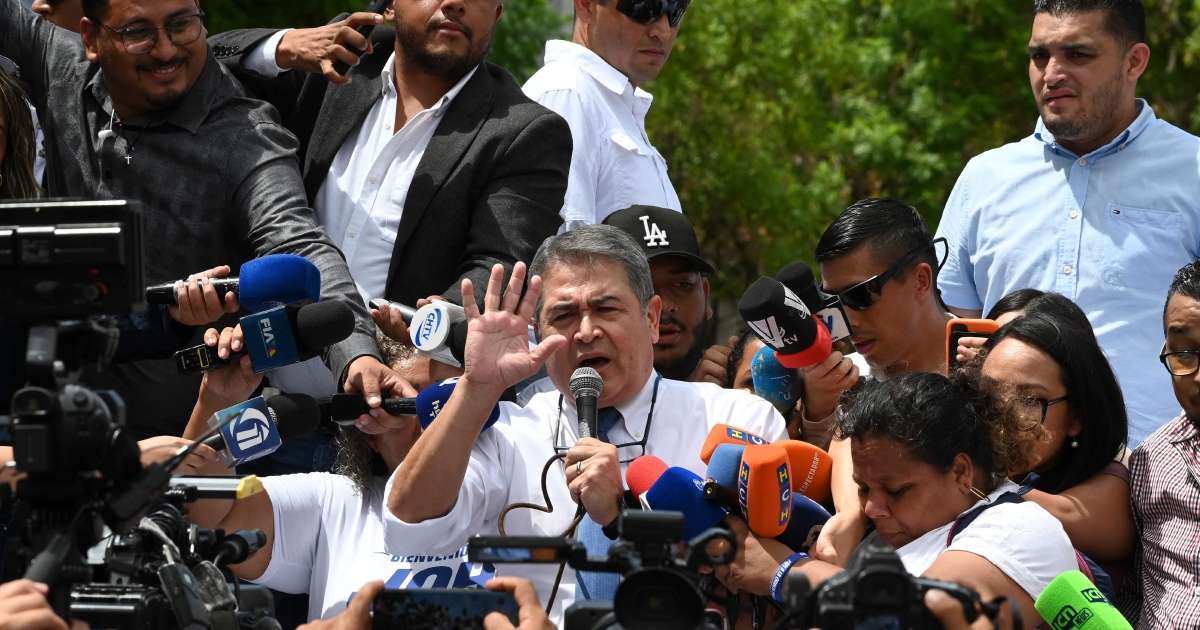
A Honduran judicial authority determined on Monday that former president Juan Orlando Hernández, who received a pardon from President Donald Trump regarding United States narcotics trafficking allegations, will not be held in custody during proceedings related to domestic corruption matters. The decision reflects a significant development in the legal trajectory of the former Central American leader, whose fortunes have shifted substantially following his initial extradition to the United States and subsequent conviction.
Hernández's path through the international justice system had appeared to accelerate toward serious penalties until Trump's intervention last year fundamentally altered his circumstances. The pardon effectively wiped away the consequences of his American conviction, removing what many observers had considered the most formidable legal obstacle confronting the politician. However, his native Honduras maintains independent prosecutorial authority and has pursued allegations of systematic corruption during his tenure, creating a parallel legal universe where the Trump pardon offers no protection.
The court's permission for Hernández to remain at liberty carries substantial implications for how Honduras approaches accountability for its most senior officials. Judicial systems in the region have increasingly struggled to maintain credibility when prosecuting figures from the political establishment, particularly when those individuals possess networks of influence and resources. The decision to allow freedom pending trial, rather than imposing pretrial detention, signals either judicial confidence in the defendant's cooperative behaviour or acknowledgment of practical challenges in maintaining custody over a former head of state.
Central America has become increasingly associated with narcotics trafficking networks, with Honduras serving as a particularly significant transit zone for substances moving northward toward North American markets. Hernández's original conviction in the United States rested upon allegations that he facilitated and profited from the passage of cocaine through Honduras during his presidency, claims that fundamentally challenged his public assertions of anti-drug commitment. The Trump pardon suggested a recalibration of priorities regarding the Central American leader's utility to American interests, potentially overshadowing Washington's longer-standing emphasis on combating regional drug trafficking.
The separation between American and Honduran proceedings reflects the complexity of governance and legal accountability across borders. Although Trump's pardon eliminates any remaining American liability, it carries no formal weight in Honduran courtrooms, where domestic law prevails. This divergence creates an unusual scenario where an individual can be simultaneously freed from serious international charges while remaining vulnerable to prosecution in his home jurisdiction, illustrating the compartmentalisation of modern transnational justice systems.
Honduras has attempted in recent years to strengthen anticorruption mechanisms, including the establishment of specialised tribunals intended to address systematic wrongdoing by government officials. These institutional reforms have produced mixed results, with numerous cases languishing in the judicial system and questions persisting about political interference in sensitive prosecutions. Hernández's trial therefore serves as a test of whether Honduras can sustain pressure on high-profile defendants even when those individuals command considerable political and financial leverage.
The former president's case resonates across Southeast Asia given regional concerns about political elites evading accountability through legal technicalities, foreign interventions, or institutional manipulation. Malaysia and neighbouring countries have witnessed comparable patterns whereby powerful figures exploit jurisdictional gaps or international relations to insulate themselves from consequences. The contrast between how different legal systems address the same individual provides a cautionary example of how fragmented global governance permits selective accountability.
Trump's pardoning authority, unconstrained by legislative or judicial review in most circumstances, highlighted the degree to which executive clemency can reshape outcomes for international figures willing to cultivate favour with American administrations. The Hernández pardon occurred amid Trump's broader recalibration of Central American policy and reflected shifting diplomatic considerations that prioritised other concerns above drug trafficking accountability. This realignment complicates efforts to maintain consistent international standards for prosecuting narcotics-related crimes.
For Honduran citizens already sceptical of their government's commitment to fighting corruption, the spectacle of a former president who faced American conviction navigating his domestic trial from a position of freedom may intensify cynicism about judicial evenhandedness. Public confidence in anticorruption initiatives depends substantially upon visible consequences for high-level offenders, and cases that appear to shield such figures ultimately undermine broader reform efforts. The court's decision therefore carries symbolic weight beyond its immediate legal consequences for Hernández personally.
Moving forward, Honduras faces pressure to demonstrate that its domestic courts can meaningfully address allegations of presidential-era misconduct regardless of external pardons or political pressures. The corruption trial will likely consume significant judicial resources and public attention as Central America navigates complex questions about accountability, sovereignty, and the proper relationship between domestic and international legal systems. How this trial unfolds will establish precedents for how Honduras treats elite defendants and whether its anticorruption infrastructure can function independently of political considerations.

