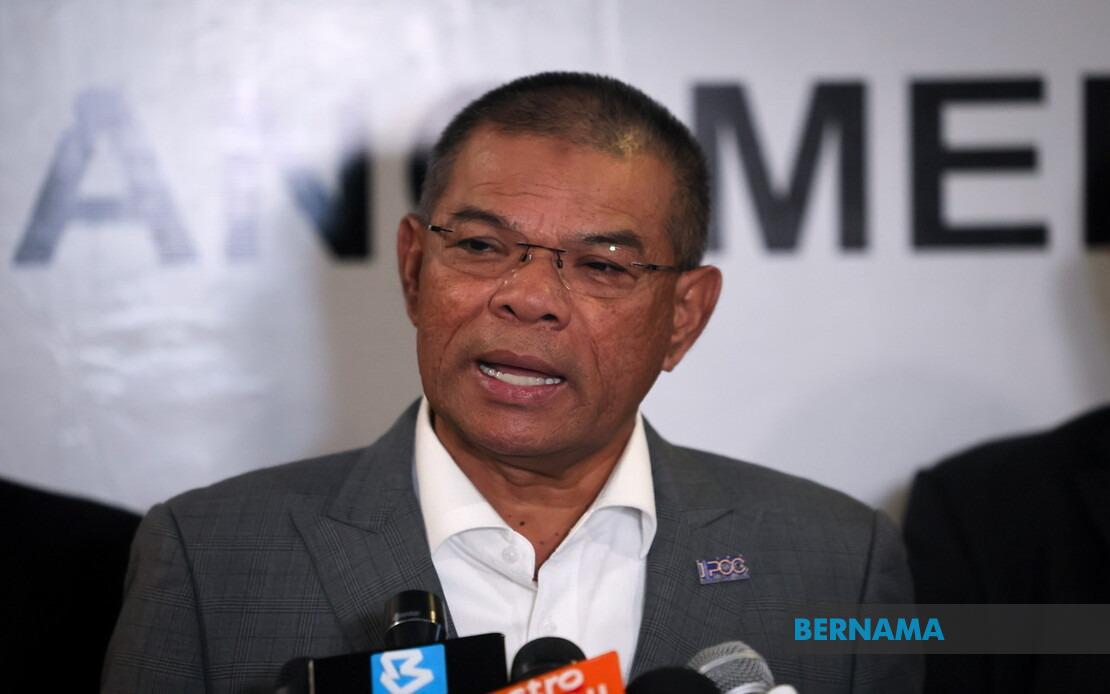
Home Minister Datuk Seri Saifuddin Nasution Ismail has issued a directive requiring the Malaysian Immigration Department to extend full cooperation to investigating authorities examining the circumstances surrounding an early morning vehicle collision that resulted in three deaths. The minister's intervention underscores the gravity of the incident and signals the government's commitment to ensuring accountability should lapses in procedures be identified throughout the inquiry process.
In a statement released through social media, Saifuddin Nasution made clear that any finding of negligence, misconduct, or legal violations would trigger decisive action against implicated personnel. This firm stance reflects growing public concern over road safety standards affecting government agencies and the need for institutional responsibility. The minister extended formal condolences to the bereaved family, acknowledging the profound loss experienced by those affected by the tragedy.
The collision occurred approximately 1 am today along Jalan Sultan Ismail in the federal capital, when an Immigration Department Black Maria—a specialised detention and transport vehicle—struck down four pedestrians in rapid succession. Three members of the same family perished in the incident, while a fourth victim sustained serious injuries requiring medical intervention. An additional vehicle, an Inokom Matrix multipurpose vehicle, was also caught in the collision sequence.
According to witness accounts and preliminary reports, the Immigration lorry was operating in an empty capacity, having been dispatched toward Chow Kit to conduct an enforcement operation targeting undocumented foreign nationals. The vehicle's operational status at the time of impact—utilising beacon lights and siren systems—indicates it was responding to an official assignment rather than routine transportation duties, raising questions about emergency driving protocols.
The sequence of events at the Maju Junction intersection suggests a complex interaction between multiple traffic participants. The Immigration vehicle reportedly proceeded through the intersection despite its traffic signal displaying red for its direction of travel. Simultaneously, a Proton Saga sedan was advancing through the same junction on a green light, positioning the two vehicles on a collision course. The Proton driver apparently lacked sufficient time and distance to execute evasive manoeuvres once the lorry entered the intersection.
Following impact with the Proton sedan, the substantially heavier Immigration lorry lost directional control and entered an uncontrolled skid across the roadway. During this trajectory, the vehicle's considerable mass and momentum allowed it to strike multiple pedestrians who were lawfully occupying designated crossing areas. The secondary collisions with pedestrians and the Inokom vehicle indicate the severity of impact forces and the unpredictability of the incident's progression once the initial collision occurred.
The Road Transport Act 1987 provides the legal framework guiding the investigation, with authorities invoking Section 41(1) provisions covering offences related to vehicle operation and road safety. This statutory reference suggests investigators will examine whether the vehicle operator adhered to prescribed speed limits, maintained proper control of the vehicle, and followed regulations governing emergency light and siren utilisation. The scope of enquiry will likely extend to whether departmental procedures governing emergency response driving were properly observed and whether driver training standards were adequate.
For Malaysian readers, this incident raises important questions about how government agencies balance operational urgency with public safety obligations. The Immigration Department's enforcement mission against irregular migration—a significant policy priority—must be executed within frameworks protecting innocent civilians. Emergency driving privileges granted to government vehicles carry corresponding responsibilities, and public confidence in departmental operations depends on demonstrable commitment to safety standards.
The incident also reflects broader concerns about intersection safety in Kuala Lumpur, where competing traffic streams, pedestrian volumes, and commercial activity create complex operational environments. Whether traffic signal sequencing, visibility factors, or driver fatigue contributed to the collision remains part of the investigative remit. The presence of beacon lights and sirens introduces additional analytical dimensions, as these devices are intended to alert other road users but do not automatically grant right-of-way privileges.
From a regional perspective, road safety among government enforcement agencies remains an under-addressed issue across Southeast Asia. Professional standards governing high-risk driving, particularly for vehicles engaged in detention and security functions, warrant strengthened protocols. Malaysia's response to this incident through ministerial direction and legislative application may establish benchmarks relevant to other jurisdictions managing similar operational demands.
The investigation's findings will likely influence departmental training programmes, vehicle maintenance standards, and operational procedures governing emergency response driving. Should systemic deficiencies be identified, implementing corrective measures becomes essential for protecting both the public and Immigration Department personnel. The minister's explicit warning that accountability measures will follow substantiated findings demonstrates awareness that institutional credibility depends on decisive action rather than administrative minimisation of serious lapses.
This tragedy represents not merely an isolated accident but an opportunity for institutional reflection on how enforcement agencies can execute their mandates while prioritising public safety. The coming weeks will determine whether the investigation process generates genuine insights into the collision's causation and establishes a foundation for preventing similar incidents. For the affected family and broader public, the investigation's thoroughness and the subsequent implementation of recommended safeguards will constitute the government's response to this preventable loss of life.

