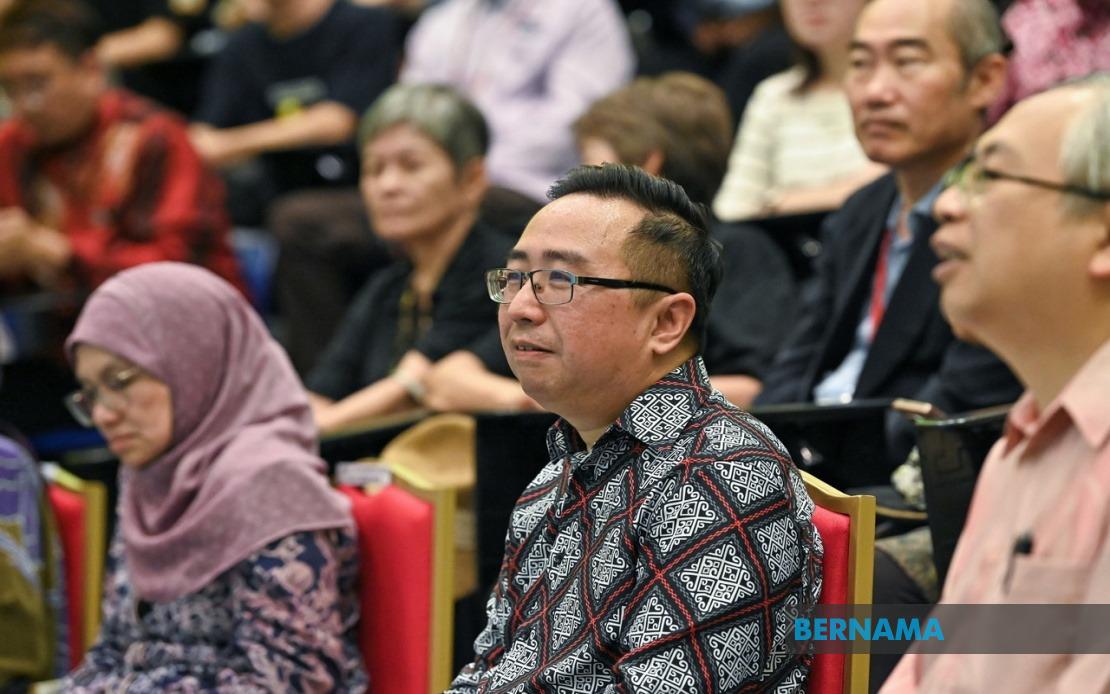
Prospective graduates in science and technology fields have little reason to fear unemployment, with Malaysia experiencing a significant surge in high-tech investment that is generating sustained demand for skilled professionals. Science, Technology and Innovation Minister Datuk Chang Lih Kang made this reassurance at the 20th Malaysia Festival of the Minds held at Universiti Tunku Abdul Rahman (UTAR) Kampar Campus, signalling the government's confidence that the country's talent pipeline can meet the emerging needs of an expanding technology sector.
The current employment landscape presents a sharp contrast to common anxieties about job security in the digital age. Rather than facing saturation, the technology sector is experiencing a notable shortage of qualified workers relative to available positions. Chang's remarks underscore a fundamental challenge facing Malaysia's knowledge economy: the pace of economic transformation driven by foreign direct investment in semiconductors, electronics, and advanced manufacturing is outstripping the supply of trained professionals capable of filling these roles.
Government efforts to address this mismatch extend beyond reassurance. Through initiatives like the Malaysia Festival of the Minds, officials are engaging directly with students to counter prevailing misconceptions about automation and artificial intelligence displacing human workers. This proactive outreach represents a strategic shift in how policymakers communicate with potential entrants to STEM fields, moving away from passive recruitment towards active dialogue that acknowledges and addresses legitimate concerns about technological disruption.
The investment environment supporting this job creation is substantial and tangible. Malaysia is witnessing what Chang characterised as a significant influx of high-tech, high-value capital, with both multinational corporations and regional technology firms establishing or expanding operations in the country. This investment surge reflects Malaysia's positioning as a critical node in the global semiconductor supply chain, particularly following geopolitical reassessments of manufacturing footprints in Southeast Asia.
To strengthen this competitive advantage, the government has structured a matching-fund initiative aimed at building Malaysia's advanced packaging technology capabilities. The arrangement allocates RM92 million from the Malaysia Science Endowment, while five industry partners have collectively contributed RM93 million, resulting in a combined commitment of RM185 million over a two-year implementation period. This public-private partnership model demonstrates how government and industry can share both financial and strategic responsibility for developing critical technological competencies.
The focus on advanced packaging technology is particularly significant for Malaysia's semiconductor ecosystem. Packaging represents a crucial value-add segment of the semiconductor manufacturing process, where Malaysia already possesses substantial manufacturing expertise. By investing in advanced capabilities—such as chiplet integration, three-dimensional packaging, and high-density interconnect technologies—Malaysia can move beyond basic assembly operations towards more sophisticated and higher-margin manufacturing activities that command premium pricing and sustained competitive advantage.
Chancel's emphasis on collaboration with universities and industry players reveals a coordinated approach to talent development. Rather than allowing market forces alone to determine curriculum and training priorities, the government is actively facilitating dialogue between academic institutions and employers. This institutional coordination helps ensure that educational programmes remain aligned with evolving industry requirements, reducing the gap between classroom training and workplace needs that often frustrates both graduates and employers.
For Malaysian students, the implications are encouraging but also demanding. The abundance of opportunities comes paired with heightened expectations regarding technical competence and ongoing professional development. The rapid pace of technological change means that qualifications alone cannot guarantee career longevity; continuous learning and adaptation have become professional imperatives. Students entering STEM fields should anticipate not merely job security, but rather career trajectories requiring periodic upskilling and exposure to emerging technologies.
Regionally, Malaysia's investment in advanced packaging technology positions the country as a potential alternative to concentration of semiconductor manufacturing in Taiwan, South Korea, and mainland China. For Southeast Asian neighbours and global supply chain participants, Malaysia's development of these capabilities could diversify sourcing options and reduce vulnerabilities associated with geographic concentration of critical technology production. This broader significance extends beyond Malaysia's borders, potentially reshaping regional technology manufacturing hierarchies.
The two-year timeframe for achieving these technological capabilities reflects both ambition and pragmatism. Government officials have acknowledged the genuine challenges involved in developing advanced packaging competencies, including funding complexity and technical implementation hurdles. Rather than presenting an unrealistic timeline, the administration has set a deliberate, achievable target that allows for systematic capability building while maintaining accountability for resource deployment and outcome delivery.
For policymakers and industry observers, the convergence of strong investment inflows, government funding commitment, and private sector participation suggests that Malaysia's technology sector may sustain elevated employment growth across the coming years. The foundation being laid through initiatives like this packaging technology programme should produce ripple effects throughout the technology workforce ecosystem, creating opportunities not only for advanced specialists but also for technicians, engineers, and support professionals at various career stages.
Looking forward, the sustainability of this employment expansion depends on several factors beyond current investment momentum. Maintaining competitive advantage requires continuous innovation, protecting intellectual property, and ensuring that workforce development initiatives keep pace with technological advancement. Success will likely determine whether Malaysia becomes a permanent fixture in the global technology manufacturing hierarchy or whether current prosperity proves temporary.

