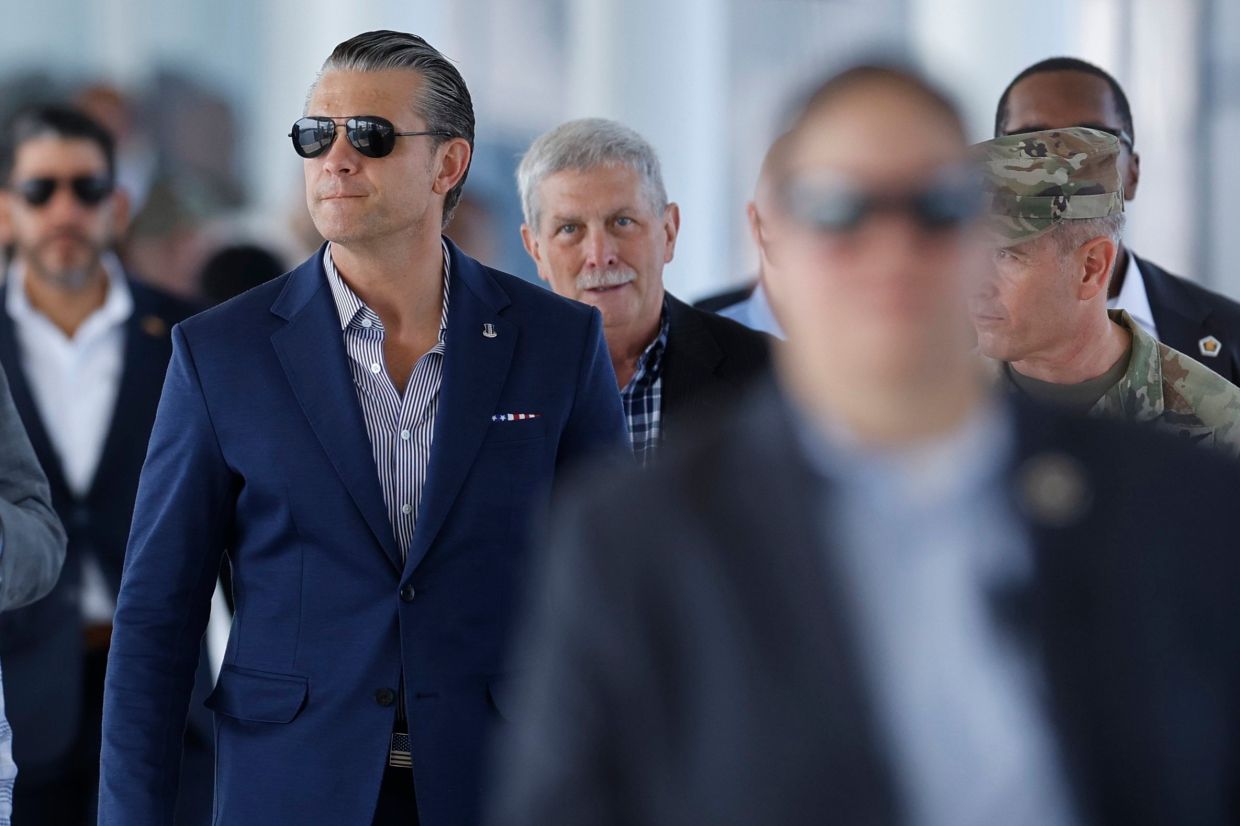
Mounting pressure on US Defence Secretary Pete Hegseth over his handling of Iran and negative media coverage has sparked speculation about his continued tenure, raising fresh questions about the trajectory of military relations between Washington and Beijing at a critical juncture. Multiple unnamed officials suggest Hegseth stands on precarious footing, introducing unpredictability into defence coordination at a moment when the two superpowers have been cautiously rebuilding channels of communication.
The timing of this institutional turbulence is particularly delicate. Since President Donald Trump and Chinese leader Xi Jinping convened in Beijing in May, defence interactions between the two nations have shown a marked upswing. Officials from both sides have engaged across multiple hierarchical levels, and by most assessments, the military-to-military relationship has reached its healthiest state in over a decade. This period of relative warmth contrasts sharply with years of friction and represents a significant diplomatic achievement for both administrations seeking stability in their competitive relationship.
Hegseth himself has publicly articulated this thaw in defence relations. Speaking at a defence conference weeks after the Beijing summit, he declared that ties between the American and Chinese militaries had improved substantially, describing them as "better than they've been in many years." He positioned the military cooperation as a natural extension of Trump and Xi's broader commitment to constructing a more positive bilateral relationship, suggesting that strategic partnership extended beyond political leadership into the operational structures of both armed forces.
Tangible evidence of this warming emerged last month when senior Pentagon officials, including Alvaro Smith, deputy assistant defence secretary for China, Taiwan and Mongolia, hosted discussions with Chinese vice-minister for foreign affairs Ma Zhaoxu at the Pentagon. Smith publicly credited Hegseth's stewardship for initiating what he described as active repair work on a military communication channel that had previously fractured. The characterisation reflected genuine progress in restoring mechanisms that had atrophied during periods of heightened tension, marking a meaningful diplomatic achievement.
Yet any disruption to this nascent progress invites complications. Zhao Minghao, a professor at Fudan University's Institute of International Studies in Shanghai, suggested that Trump might utilise a cabinet reshuffle—a routine feature ahead of American midterm elections—to deflect blame for foreign policy challenges, particularly regarding Iran. If Hegseth were removed, Zhao cautioned, the personal relationships he has cultivated with his Chinese counterpart Defence Minister Dong Jun would need to be rebuilt from scratch. Their interactions, which have occurred in settings from Malaysia to Xi's own state visit to Beijing, represent institutional memory and personal credibility that cannot be instantly transferred to a successor.
However, analysts and current officials dispute whether Hegseth's departure would substantially damage the emerging defence architecture. Multiple Pentagon sources characterised the current state of military-to-military engagement as robust and durable, suggesting that personality-driven instability in the American cabinet need not inevitably derail institutional momentum. The continuity argument gains additional weight from the emerging profile of potential successors within the administration.
China's diplomatic establishment has taken particular notice of Stephen Colby, a Pentagon official who participated in the recent Washington talks with Ma and who has articulated views on Taiwan that align more closely with Beijing's strategic interests. According to sources familiar with Beijing's assessments, Chinese officials have been favourably impressed by Colby's analytical framework, particularly his position that Taiwan does not constitute a vital existential interest for the United States. This framing, though controversial among Taiwan hawks in Washington, resonates with Beijing's preference for deprioritising the island in the broader US-China strategic equation.
The competing narratives about Taiwan's geopolitical weight underscore the fragility of current military understanding. China continues to regard Taiwan as integral territory and has never formally renounced force as an option for eventual reunification. The United States maintains its long-established policy of de facto recognition without formal diplomatic relations, opposing any coercive seizure while remaining bound by law to provide defensive capabilities to the island. Navigating these inherently contradictory positions depends heavily on military-to-military trust and direct communication channels.
Zhao argued that if Colby retained his Pentagon position—particularly if he ascended to lead the defence establishment—continuity would be preserved in the pattern of military exchanges now becoming institutionalised. The broader framework underpinning these interactions rests on Trump and Xi's shared commitment to "strategic stability," a concept that both interpret as requiring restored and strengthened defence sector dialogue. This understanding transcends individual secretaries of defence and reflects considered strategic intent from both presidents.
Additional dialogue between the two militaries at working and operational levels has already resumed, observers note, precisely because of this top-level commitment to relationship rebuilding. The momentum appears largely independent of Hegseth's particular tenure, suggesting that institutional interests in both Washington and Beijing favour continuation regardless of cabinet-level personnel changes. One source characterised current military engagement as "very good right now," indicating satisfaction with the trajectory rather than fragility dependent on any single official's continued tenure.
The coming weeks will test these assumptions. Xi Jinping is expected to visit Washington next month for what would constitute his first state visit since 2015, marking the highest-level diplomatic engagement between the nations in nearly a decade. Military-to-military relations are anticipated to feature prominently on the agenda, potentially accelerating the normalisation process. The convergence of Hegseth's uncertain status and Xi's imminent visit creates an unusual diplomatic window where leadership stability in the Pentagon suddenly assumes significance well beyond routine personnel management.

