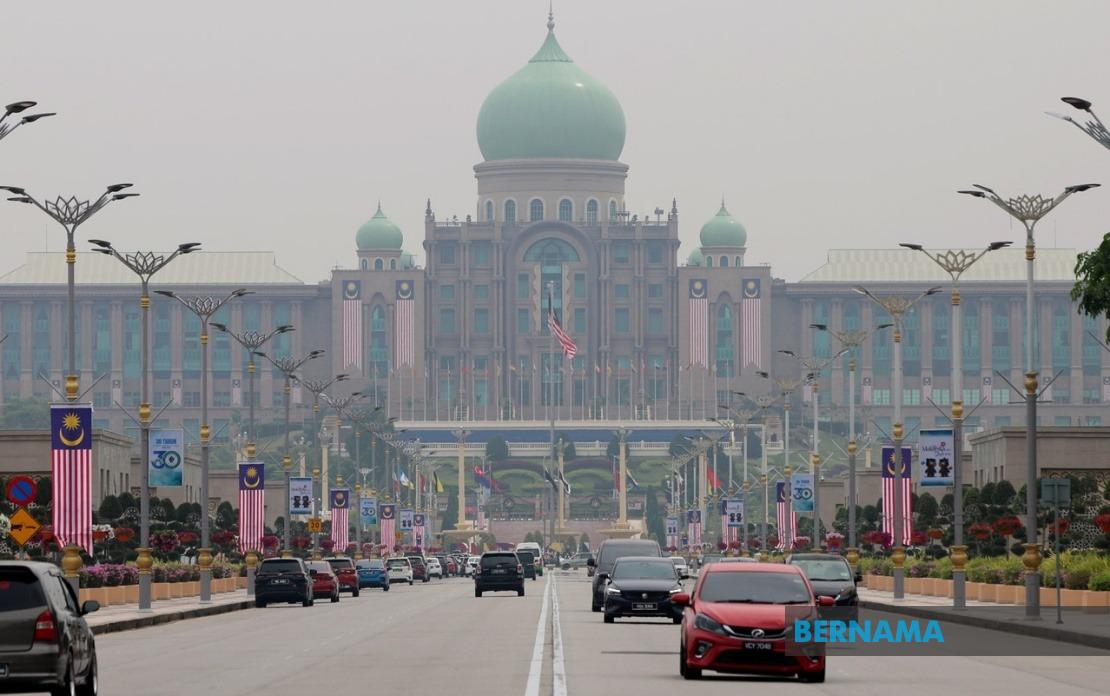
Malaysia's air quality is set to deteriorate markedly over the coming days, with thick haze expected to envelope Sarawak, Sabah, and key peninsular regions through the final day of August, according to forecasts released by the Malaysian Meteorological Department. The widespread atmospheric degradation comes as the country prepares for major national celebrations, prompting authorities to reconsider ceremonial arrangements and urge residents to take precautions during outdoor activities.
Dr Mohd Hisham Mohd Anip, MetMalaysia's director-general, attributed the deteriorating conditions to the interplay of southwest monsoon winds and an unusually persistent concentration of active fire hotspots across southern Sumatra and western Kalimantan. These transboundary atmospheric patterns have long posed challenges for Malaysia's air quality, particularly during the dry season when agricultural burning and uncontrolled vegetation fires intensify across Indonesia. The combination of meteorological factors and terrestrial fire activity creates a perfect mechanism for smoke transport across regional boundaries, affecting millions of people downwind.
Forecasts generated by the Malaysian Community Multiscale Air Quality Model—commonly referred to as MyCMAQ—paint a particularly concerning picture for Sarawak, which appears positioned to experience the most severe impacts among Malaysian states. The modelling suggests that most districts in the state will register hazy conditions classified as Unhealthy, with certain districts potentially crossing into the Very Unhealthy category on August 30 and 31. This escalation represents a significant public health concern, as exposure to Very Unhealthy air quality levels poses risks to vulnerable populations including children, the elderly, and those with respiratory or cardiovascular conditions.
The peninsular regions face their own challenges, though typically less severe than those predicted for East Malaysia. Johor, Melaka, Negeri Sembilan, Selangor, Kuala Lumpur, and Putrajaya are all anticipated to experience elevated haze concentrations that could persist until month's end. Sabah's situation is expected to commence from the coming Saturday, suggesting a gradual spread of atmospheric degradation across the archipelago as wind patterns transport pollutants from their source regions. This staggered timeline underscores how haze events develop and propagate across vast distances, affecting different regions sequentially rather than simultaneously.
The timing of this air quality crisis coincides awkwardly with Malaysia's national calendar. August 31 marks the nation's Independence Day celebration, an occasion typically marked by outdoor festivities, public gatherings, and the flagship National Day parade. Communications Minister Datuk Seri Fahmi Fadzil revealed that the government is actively deliberating whether to scale down the celebration or relocate it entirely, reflecting serious concerns about conducting large-scale outdoor events during forecasted Very Unhealthy air conditions. Such decisions involve complex considerations balancing patriotic observance, public health protection, and logistical feasibility.
Prime Minister Datuk Seri Anwar Ibrahim has appealed to Malaysians to pray for atmospheric conditions to stabilise during this critical period, acknowledging that both National Day and Malaysia Day on September 16 require extensive government preparation and coordination. The prime minister's invocation reflects both the genuine uncertainty inherent in weather prediction and the political significance of these celebrations to national identity and cohesion. Government agencies have already mobilised substantial resources for festivities, creating scheduling pressures and the challenge of pivoting arrangements on short notice.
MetMalaysia has committed to continuous monitoring of atmospheric conditions and air quality indices, with forecasters pledging to update predictions as new meteorological data becomes available. This ongoing surveillance approach is essential given the inherent uncertainties in weather modelling and the potential for unexpected atmospheric changes—such as shifts in wind direction or intensity—to alter the severity and geographic distribution of haze impacts. Residents should monitor official air quality bulletins released regularly throughout the forecast period.
For Malaysian readers and policymakers, this situation underscores the persistent vulnerability of Southeast Asia to transboundary air pollution during seasonal cycles. While the region has developed increasingly sophisticated monitoring and forecasting capabilities, and bilateral agreements between nations aim to address source fire management, the fundamental challenge remains: controlling fire activity across Indonesia's vast territory and managing regional atmospheric flows. The haze phenomenon is not merely a weather event but reflects deeper issues of land management, agricultural practices, and climate patterns that demand sustained attention beyond emergency response periods.
Businesses and institutions should prepare contingency plans for the forecast period, particularly those operating outdoors or requiring public participation. Manufacturing facilities with air-quality-dependent processes may experience disruptions, while logistics, construction, and tourism sectors typically see reduced activity during heavy haze events. Schools may need to adjust outdoor curriculum activities, and healthcare facilities should anticipate increased respiratory complaints and prepare accordingly. For residents, practical measures including use of N95 masks, air purifiers, and limiting outdoor exposure remain the primary protective strategies during Very Unhealthy air quality episodes.
The convergence of environmental challenges and political calendar pressure illustrates how climate variability increasingly intersects with national governance and public celebration in Southeast Asia. Adaptation strategies—both immediate and long-term—must balance environmental realities with ceremonial obligations and public wellbeing, requiring coordination across meteorological, health, and political institutions.

