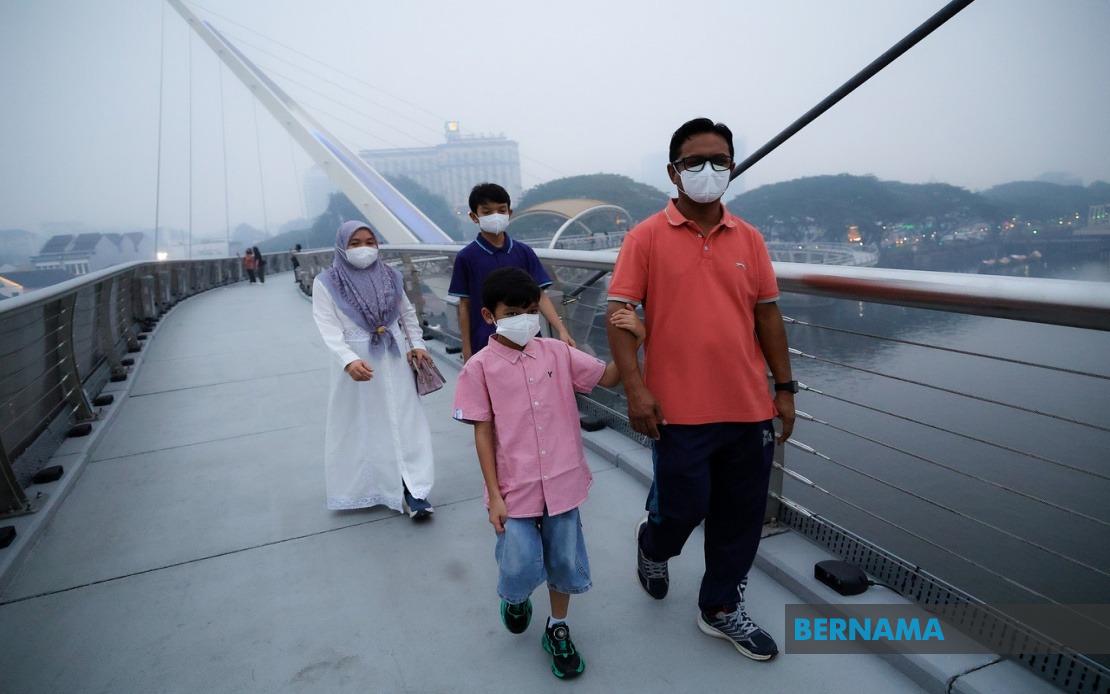
As haze continues to impact Malaysia, health specialists are emphasising the importance of proactive monitoring and personal protective measures to safeguard public health. Dr Anas Ahmad Jamhari from Universiti Sultan Zainal Abidin's Faculty of Health Sciences stresses that residents must regularly review Air Pollutant Index data released by the Department of Environment before venturing outdoors, particularly when levels breach the 100 threshold that indicates potentially hazardous conditions.
The proper use of protective equipment is critical during elevated pollution episodes. Dr Anas explains that N95 masks represent the most effective defence for those required to work outside for extended periods, but only when fitted correctly with a secure seal around the face. The effectiveness of such masks deteriorates significantly if worn loosely, repeatedly removed, dampened, torn, or placed over facial hair that compromises the seal. Parents should also recognise that children often struggle with mask compliance, as masks that do not fit their smaller faces fail to provide adequate protection and may create a false sense of security.
Beyond equipment considerations, experts recommend adjusting daily routines to minimise inhalation exposure during poor air quality events. Strenuous outdoor pursuits including jogging, cycling, and competitive sports should be deferred when haze settles, since physical exertion naturally elevates breathing rates and causes individuals to draw significantly more air into their lungs, allowing greater quantities of harmful fine particles to penetrate deeper into the respiratory system. Dr Anas observes with concern that many Malaysians persist in outdoor recreation even when official classifications deem air quality unhealthy, a behaviour pattern that substantially elevates both immediate acute symptoms and long-term chronic health complications.
Indoor environments require equal attention to pollution control. Residents should maintain sealed doors and windows whilst simultaneously addressing internal contamination sources such as tobacco and vape smoke, incense burning, scented candles, and cooking activities that generate substantial smoke. Vehicle operators utilising air-conditioning systems should ensure the circulation mode draws recirculated cabin air rather than pulling in outside pollution. Simultaneously, communities must pressure authorities to enforce cessation of open burning practices that contribute materially to deteriorating air quality across regions.
From a chemical perspective, haze represents far more than simple smoke obscuring visibility. Dr Anas emphasises that the phenomenon comprises a complex mixture of particulate matter and gaseous pollutants, with particular danger stemming from fine PM2.5 particles whose microscopic dimensions enable penetration through lung defences into the deepest respiratory passages. Once deposited in the respiratory system, these particles initiate oxidative stress mechanisms that cascade into inflammatory responses, cellular injury, and diminished lung capacity over time.
Temperature and humidity dynamics warrant integrated consideration alongside pollution indices, according to Datuk Dr Zainal Ariffin Omar, a specialist in public health medicine. During haze episodes coinciding with elevated temperatures—particularly during El Niño weather patterns—the population confronts compounded health threats from both air pollution and heat stress simultaneously. Enhanced water consumption becomes essential as the combination of poor air quality and thermal stress substantially heightens vulnerability to heatstroke and dehydration, conditions that can rapidly become life-threatening without prompt intervention.
Currently, Malaysia is experiencing measurable health consequences from deteriorating air quality. The Health Ministry documented a dramatic surge in respiratory conditions during the most recent reporting week, with asthma presentations at sentinel health facilities skyrocketing more than eightfold to 1,811 cases compared to merely 219 cases the previous week. Conjunctivitis cases similarly escalated from 146 to 720 during the same seven-day period, indicating widespread population-level health impacts across multiple physiological systems.
Dr Zainal Ariffin cautions against treating haze as merely a predictable seasonal inconvenience that warrants minimal adjustment to routine behaviour patterns. This perception diminishes public readiness for subsequent episodes and encourages dangerous complacency. Instead, he advocates for sustained public education campaigns deploying straightforward, comprehensible messaging that encourages preventative action before air quality deteriorates to critical levels rather than prompting response only when API readings reach dangerous thresholds.
The challenge confronting Malaysian policymakers and health authorities involves strengthening population-wide awareness through continuous, accessible information distribution. Without proactive education emphasising the genuine physiological risks posed by fine particulate pollution, members of the public will continue postponing protective actions until conditions become visibly severe. This reactive approach leaves vulnerable populations—including children, the elderly, and those with pre-existing respiratory conditions—exposed to unnecessary health jeopardy that preventative measures could have mitigated.

