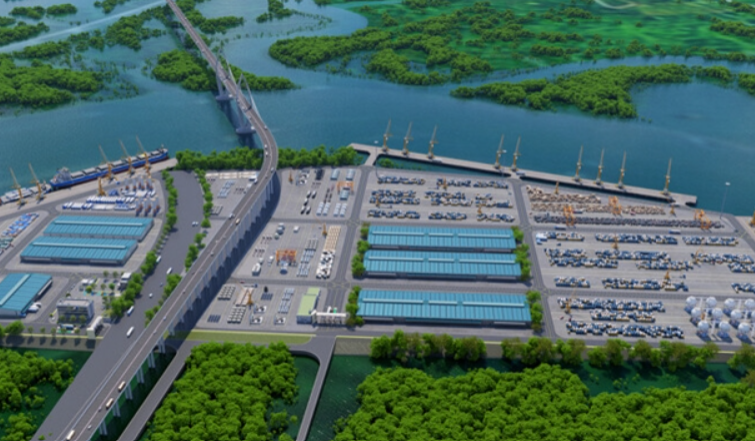
Vietnam's economic powerhouse Ho Chi Minh City has initiated development of a major port facility worth nearly VNĐ6.9 trillion (US$261 million), signalling the country's commitment to modernising its maritime infrastructure and enhancing regional trade competitiveness. The groundbreaking ceremony on July 5 underscored growing recognition among Vietnamese policymakers that logistics capacity must keep pace with the nation's expanding manufacturing and export sectors, particularly as supply chain pressures intensify across Southeast Asia.
The QTM International Port project sits within the Cai Mep-Thi Vai deep-water port complex, a sprawling facility located in Phu My Ward that has already established itself as one of the world's significant container hubs. When fully operational, the new installation will process approximately 16 million tonnes annually across its expansive 80-hectare footprint, substantially increasing the capacity of this strategically important maritime gateway. The facility's configuration reflects modern port design principles, incorporating sophisticated logistics infrastructure alongside cargo-handling capabilities to create an integrated transportation ecosystem serving Vietnam's industrial heartland.
Construction occurs in two phases extending from 2026 through 2034, a timeline that reflects both the project's technical complexity and the measured approach Vietnamese authorities are adopting toward major infrastructure development. Beyond the port terminals themselves, the development encompasses a sprawling 200,000-square-metre warehousing and logistics centre, a facility that effectively transforms the site from a simple container transshipment point into a comprehensive supply-chain hub. This integrated approach mirrors contemporary port development trends visible across Asia, where maritime terminals increasingly function as logistics nodes rather than purely cargo-handling facilities.
The completed port will accommodate eight deepwater berths capable of servicing vessels up to 60,000 deadweight tonnes (DWT), with infrastructure designed for future expansion to accommodate ships reaching 100,000 DWT. This scalability reflects the rapidly evolving shipping industry, where vessel sizes continue expanding and port facilities must accommodate increasingly large container ships serving major Pacific and European trade routes. For Vietnamese exporters and regional manufacturers relying on maritime transport, access to berths accommodating modern mega-ships eliminates costly transhipment costs and accelerates delivery schedules.
The impetus for this expansion derives substantially from territorial reconfiguration affecting the city. Recent administrative mergers have enlarged Ho Chi Minh City's footprint and population, correspondingly amplifying demand for goods movement and raw material supply chains that feed its expanding manufacturing base. Hoang Nguyen Dinh, vice chairman of the HCM City People's Committee, acknowledged this dynamic when addressing the ceremony, noting that cargo transport demand had surged markedly following the consolidation. He emphasised that contemporary logistics networks must transcend local boundaries, integrating seamlessly with regional and international shipping corridors to maintain the city's competitive edge.
Evidential support for infrastructure urgency appears in recent cargo statistics. Sea and inland waterway transport volumes through Ho Chi Minh City expanded 7.3 per cent during the first half of this year alone, demonstrating robust growth in maritime cargo movement. This expansion trajectory suggests that existing port capacity has begun straining under demand, creating genuine bottlenecks that impede commerce and inflate logistics expenses. The new facility directly addresses this constraint by introducing additional berth capacity and complementary warehouse infrastructure precisely when regional trade is accelerating.
Vietnam's government recognises that logistics efficiency represents a critical competitive lever within the globally integrated manufacturing sector. Deputy Prime Minister Pham Gia Tuc, speaking at the groundbreaking, stressed that logistics expenditures currently consume between 14 and 16 per cent of Vietnam's gross domestic product—a substantial proportion that constrains export profitability and erodes price competitiveness against regional rivals. By reducing transport costs through modern port infrastructure, Vietnam aims to improve margins for manufacturing enterprises while simultaneously lowering prices for international buyers, a dual benefit that strengthens export market share.
Recognising the urgency of the logistics challenge, Tuc urged project developers to accelerate construction timelines substantially, calling for initial operations within eleven months. This aggressive schedule reflects government determination to alleviate capacity constraints rapidly and support Ho Chi Minh City's target of achieving double-digit economic growth in the coming years. Such growth targets, while ambitious, appear feasible given robust regional manufacturing momentum and Vietnam's established position within Pacific and European trade networks.
Ho Chi Minh City's geographic advantages reinforce the strategic importance of this infrastructure investment. The city commands approximately 110 kilometres of coastline and operates one of Vietnam's largest maritime transport systems, positioning it as the natural gateway for southern Vietnamese commerce. The Cai Mep-Thi Vai complex extends these advantages by offering direct shipping connections to both Trans-Pacific and European trade routes, eliminating the transshipment costs and schedule delays that smaller, less-connected ports impose. For Malaysian logistics operators and manufacturers sourcing inputs from Vietnam or seeking Vietnamese export partners, improved HCM City port capacity translates directly into more reliable, cost-effective supply chains.
The project's timing aligns with broader Southeast Asian supply-chain reshuffling following pandemic disruptions and escalating US-China trade tensions. Companies increasingly diversify manufacturing across multiple Southeast Asian jurisdictions, and Vietnam has attracted substantial investment seeking to reduce China dependence. Reliable, modern port infrastructure becomes essential for these supply-chain strategies to function effectively. By enhancing logistics connectivity, Ho Chi Minh City strengthens Vietnam's competitive positioning within this regionwide manufacturing reconfiguration, potentially attracting additional industrial investment to southern Vietnam.
For regional context, Vietnam's logistics infrastructure development mirrors broader Southeast Asian patterns whereby governments invest substantially in port and transportation infrastructure to capture manufacturing and trade opportunities. Singapore's port dominance reflects decades of such investment, while regional competitors including Thailand and Indonesia similarly pursue port modernisation. Vietnam's systematic infrastructure development suggests national policymakers view logistics as integral to long-term economic strategy rather than peripheral infrastructure, a perspective that should accelerate regional integration and intra-Southeast Asian trade flows over the coming decade.

