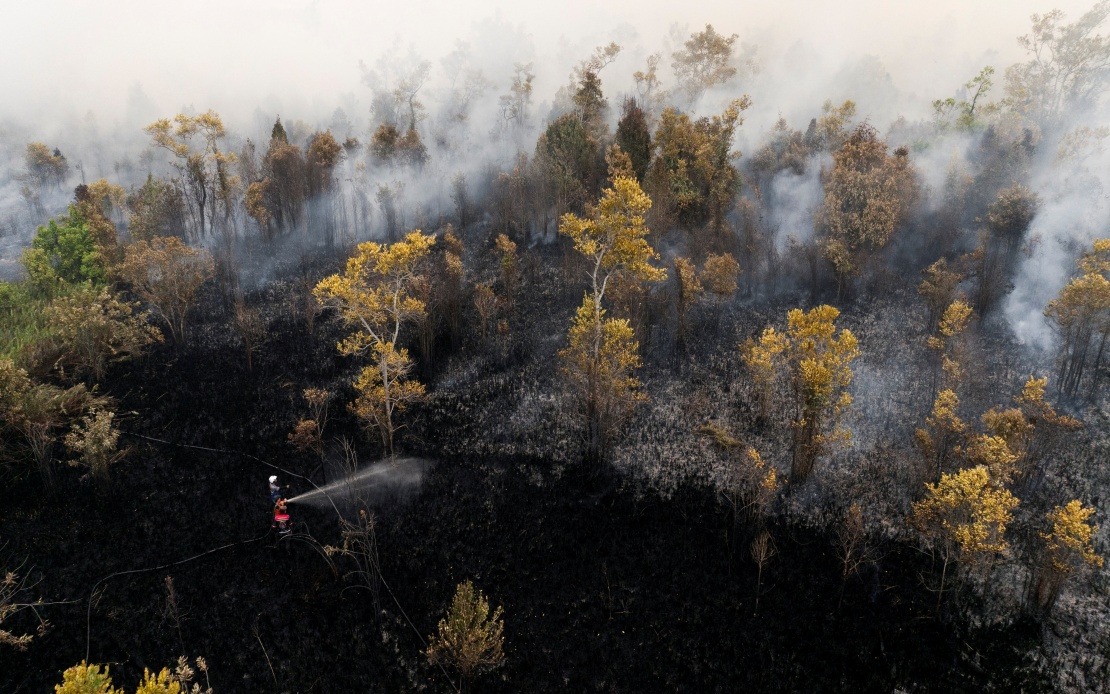
Indonesia's Singkawang Airport suspended all domestic flight operations on Saturday as thick haze from widespread forest and land fires across Kalimantan rendered conditions unsafe for aviation. The airport authority announced the decision through its official social media channels, urging affected passengers to communicate directly with their carriers regarding rebooking and compensation options. Located approximately 145 kilometres north of Pontianak, the provincial capital of West Kalimantan, Singkawang serves as a key transport hub for Indonesia's western Borneo region.
The Transport Ministry indicated through a statement by Director-General of Civil Aviation Lukman F. Laisa that visibility remains the critical determinant in such operational decisions. When atmospheric conditions fall below prescribed safety thresholds, airlines face mandatory compliance measures including flight delays, route diversions, or outright cancellations. This regulatory framework reflects international aviation standards that prioritise passenger safety over operational continuity, a principle the ministry emphasised as non-negotiable regardless of commercial pressures.
Smoke monitoring conducted by satellite imagery from NASA's Terra and Aqua systems revealed extensive fire activity across the Kalimantan region as of late Friday evening. Central Kalimantan recorded 56 confirmed hotspots, West Kalimantan showed 51 active fire locations, and South Kalimantan documented 19 separate incidents. The Indonesian Meteorology, Climatology and Geophysics Agency (BMKG) classified air quality in affected areas of West and Central Kalimantan as reaching very unhealthy levels, creating respiratory hazards for both aviation crews and ground personnel.
The situation underscores a recurring crisis pattern in Southeast Asia during the dry season, when peat and forest fires generate transboundary haze affecting multiple nations. For Malaysian readers, the Singkawang disruption carries immediate relevance given the region's connectivity to regional travel networks and the historical precedent of haze episodes affecting Malaysian airports and air quality. Previous incidents have demonstrated how Indonesian Kalimantan fires can rapidly spread atmospheric pollution across the Sulu Sea and into Sabah and Sarawak within days.
Response efforts on the ground have intensified significantly, combining conventional and experimental firefighting methods. Ground-based teams engage in direct suppression work whilst aerial water-bombing operations target active fire zones. Additionally, the authorities have prepared weather modification capabilities, commonly referred to as cloud seeding, for deployment once meteorological conditions become favourable. This multi-pronged approach reflects the scale of the challenge facing Indonesian emergency services when vast tracts of peatland ignite simultaneously.
Law enforcement investigations have commenced into the origins of these fires, with Central Kalimantan police naming approximately 12 suspects by mid-August on forest and land fire charges. Inspector-General Iwan Kurniawan, heading the provincial police force, indicated that systematic investigations are underway to establish causation and identify responsible parties. The distinction between natural ignition and deliberate fire-setting carries significant implications for prosecution strategies and potential penalties under Indonesian environmental law.
This crisis exposes the vulnerability of regional air transport infrastructure to environmental disruption beyond mechanical or technological failures. Airlines operating regional networks must maintain flexibility in scheduling whilst regulators balance safety imperatives against economic disruption. For travellers, such incidents create unpredictable delays affecting business commitments, medical appointments, and family obligations across the Borneo region.
The Transport Ministry's coordination efforts extend beyond aviation authorities to encompassing multiple stakeholder agencies. This holistic approach acknowledges that haze management requires simultaneous action across civil aviation, environmental monitoring, emergency response, and law enforcement domains. However, effectiveness ultimately depends on ground-level fire suppression success, which remains challenging given Kalimantan's geography and the scale of affected areas.
For Malaysia, the situation warrants monitoring as wind patterns shift. The Department of Environment's air quality index readings in Sabah and Sarawak typically spike when Indonesian fire activity intensifies, occasionally necessitating health advisories and school closures. Regional cooperation frameworks, whilst existing on paper, have historically demonstrated limitations in coordinating transboundary air quality management during acute episodes.
The broader context involves land use patterns and agricultural expansion in Kalimantan, where clearing forests and peatlands for plantations creates tinderbox conditions during dry spells. Fire incidents frequently concentrate in areas undergoing conversion, suggesting deliberate burning remains a cost-effective clearing methodology despite legal prohibitions. Enforcement of fire prevention regulations remains inconsistent across Indonesian provinces, partly reflecting resource constraints and competing development priorities.
Airport authorities in other Kalimantan hubs, including Balikpapan and Banjarmasin, have reported heightened alert status with potential for similar shutdowns should visibility deteriorate further. Regional airlines have begun issuing travel waivers permitting customers to change bookings without penalty, a tacit acknowledgement that the haze crisis may persist for several weeks as the dry season progresses.

