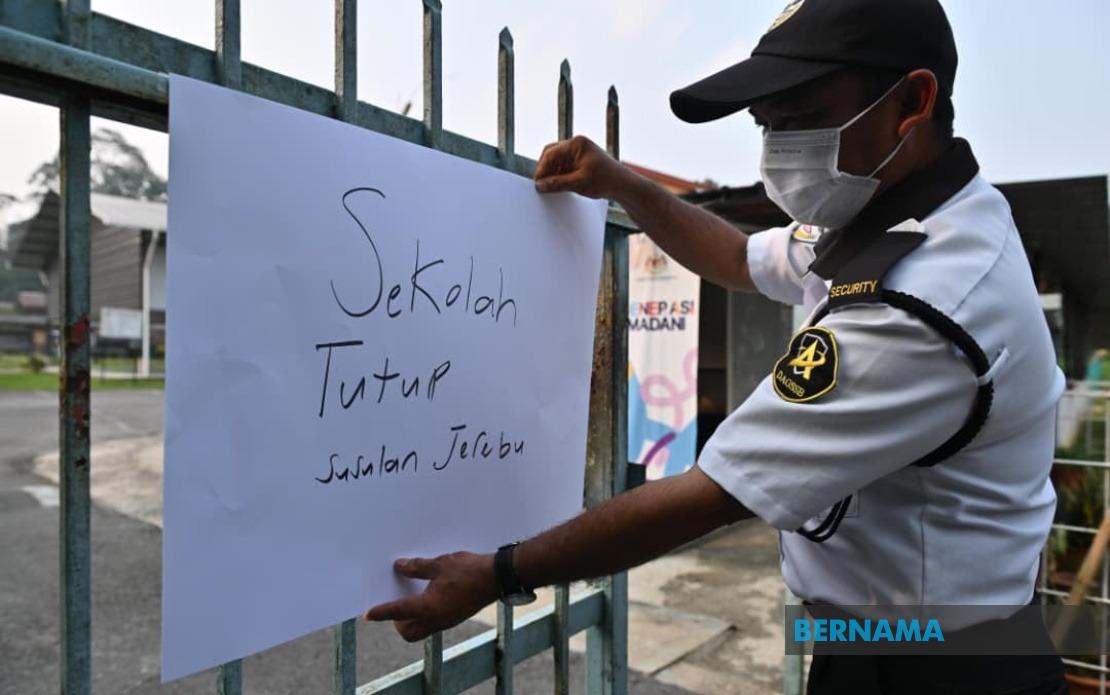
The Sarawak State Disaster Management Committee announced the temporary closure of 108 schools across the Serian district on August 12 as a protective measure in response to hazardous air quality conditions. The decision was triggered by Air Pollutant Index readings climbing above 200, a threshold that demands immediate action to safeguard students and educational staff from the health impacts of severe air pollution.
The closure mechanism operates under Malaysia's National Haze Action Plan, with implementation authority vested in the Sarawak State Education Department director. According to the protocol, facilities including primary and secondary schools, kindergartens, and nurseries must cease in-person operations the moment API levels breach the 200 mark. This predetermined trigger eliminates ambiguity during crisis situations and ensures swift, coordinated responses across the state's education system.
To mitigate disruption to academic progress, the education authorities have activated Home-Based Teaching and Learning arrangements, known locally as PdPR. This transition to remote instruction enables educators to maintain continuity in curriculum delivery and student engagement despite the physical closure of school premises. The strategy reflects growing institutional capacity across Southeast Asian education systems to leverage technology during environmental emergencies.
Understanding the API scale itself provides essential context for evaluating the severity of the situation. The index operates across a tiered scale where readings from zero to 50 denote good air quality, 51 to 100 indicate moderate conditions, 101 to 200 signal unhealthy air suitable only for vulnerable populations, 201 to 300 classify as very unhealthy, and anything exceeding 300 represents hazardous conditions posing risks even to healthy individuals. The Serian district's API of 202 falls into the very unhealthy category, just above the school closure threshold, indicating serious respiratory and cardiovascular stress for prolonged outdoor exposure.
The regional air quality crisis has been intensifying steadily since the start of August, according to monitoring data from Sarawak JPBN. By 4 pm on August 12, two locations had recorded readings in the very unhealthy range—Tebedu registered 212 while Serian itself measured 202. Additionally, eleven other districts were classified as unhealthy: Kuching, Samarahan, Sri Aman, Sarikei, Sibu, Bintulu, Samalaju, Miri, Lundu, Lubok Antu, and Lawas. This widespread geographic extent suggests a regional air mass event rather than localized pollution, likely stemming from transboundary haze sources common to Borneo during fire seasons.
For Malaysian and broader Southeast Asian observers, this episode underscores the recurring transnational nature of air pollution in the region. Sarawak's haze emergencies frequently correlate with land-clearing fires in neighbouring Indonesian territories, particularly during drier months. The scale of the current episode—affecting dozens of districts simultaneously—indicates conditions severe enough to overwhelm local air dispersion capacity and necessitate public health interventions.
The disaster management authorities have issued comprehensive public health guidance urging residents to curtail outdoor activities, particularly during periods when API readings reach unhealthy thresholds or higher. The advisory specifically identifies vulnerable populations requiring heightened caution: children whose respiratory systems are still developing, elderly citizens with accumulated lung damage, pregnant women whose physiological changes increase oxygen demand, and individuals already diagnosed with respiratory or cardiac conditions. These groups face disproportionate health risks from particulate matter and chemical pollutants in severely degraded air.
Authorities have also cautioned against the spread of unverified information regarding the haze situation. The appeal to rely exclusively on official government channels reflects concerns about misinformation potentially undermining public confidence in emergency protocols or causing unnecessary panic. In an era of rapid social media dissemination, managing information flow during environmental crises remains a persistent challenge for Southeast Asian governments.
The implications of widespread school closures extend beyond immediate classroom disruption. Extended periods of air quality crises can exacerbate educational inequities, as students from lower-income households may lack reliable internet access or home learning spaces compared to their wealthier peers. Additionally, repeated closures throughout a school year fragment curriculum progression and complicate assessment schedules. For Malaysian policymakers observing Sarawak's experience, the episode demonstrates the economic and social costs imposed by transboundary air pollution, strengthening the case for regional cooperation on fire prevention and management.

