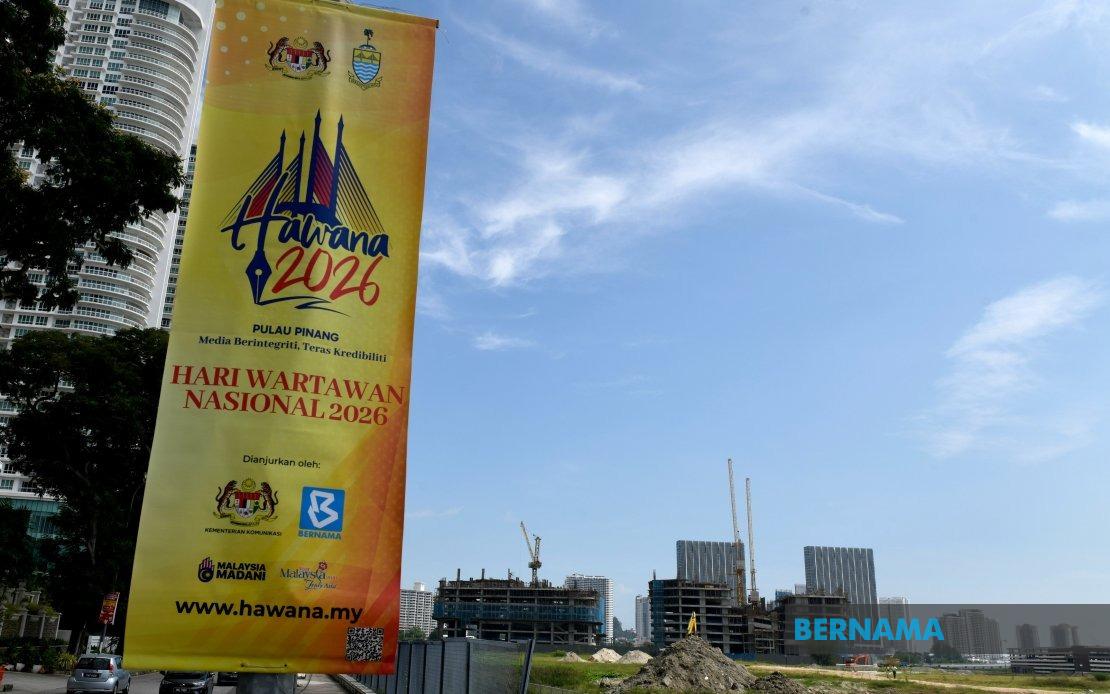
Penang is preparing to welcome the first-ever HAWANA 2026 National Journalists' Day celebration, a prestigious three-day event that state officials believe will deliver substantial economic stimulus and international visibility to the island. The main ceremony, to be officiated by Prime Minister Datuk Seri Anwar Ibrahim on June 20 at the PICCA Convention Centre @ Butterworth Arena, will gather approximately 1,000 media practitioners from across Malaysia and the broader ASEAN region. The convergence of journalists, media leaders, and tourism stakeholders represents a unique opportunity for Penang to demonstrate its capacity as a host destination while simultaneously strengthening regional perceptions of the state's cultural and commercial appeal.
State Tourism and Creative Economy Committee chairman Wong Hon Wai articulated an expansive vision for the event's impact, emphasising that Penang's selection as host venue signals broader recognition of the state's institutional readiness and tourism infrastructure maturity. The choice reflects confidence in Penang's ability to orchestrate international-scale gatherings whilst maintaining the logistical and hospitality standards expected by a diverse, geographically dispersed audience. Such validation carries weight beyond the immediate event, positioning Penang alongside other established convention destinations and potentially attracting future large-scale conferences and forums that generate sustained economic activity.
The presence of regional media contingents promises to amplify Penang's profile across Southeast Asia, an advantage particularly valuable as competition among regional tourism destinations intensifies. Wong highlighted that extensive, high-calibre media coverage emanating from HAWANA 2026 will reinforce Penang's standing as a premier tourist destination, translating journalistic attention into visitor inquiries, bookings, and sustained interest. Unlike conventional advertising, earned media generated by respected journalists carries heightened credibility and authenticity, potentially influencing travel decisions among affluent regional audiences and business travellers seeking quality experiences.
Economic projections centre on cascading benefits throughout the hospitality and service sectors. Wong noted that tourism operators have already reported robust hotel bookings, with Seberang Perai offering sufficient accommodation capacity to absorb the anticipated influx without strain. The anticipated demand surge extends across multiple revenue streams: lodging, restaurants and beverage establishments, transportation services, retail shopping, and paid attractions. This multiplier effect—whereby visitor spending circulates through interconnected local businesses—amplifies the net economic impact substantially beyond the direct expenditure figures, as service workers spend earnings within their communities and businesses purchase supplies from local vendors.
The event's thematic focus on media integrity and credibility carries particular resonance within Malaysia's contemporary information landscape. By centring discussions around journalistic standards, professional ethics, and the role of credible reporting in democratic societies, HAWANA 2026 positions Penang as a venue for substantive discourse on media's societal function. This intellectual dimension elevates the gathering beyond a purely commercial exercise, attracting thought leaders, academics, and policy advocates concerned with information quality and public trust—audiences whose engagement generates longer-term benefits for the state's soft power and regional influence.
Wong articulated a strategic framework positioning media as essential infrastructure for tourism and creative economy development. Recognising that journalists function as gatekeepers of information and shapers of public perception, state authorities view HAWANA 2026 as an investment in cultivating positive, accurate narratives about Penang's attractions, cultural vitality, and business environment. By facilitating direct engagement between media professionals and local creative practitioners, tourism operators, and government stakeholders, the event creates pathways for authentic storytelling that transcends promotional messaging and reflects genuine assets and opportunities available within the state.
The parallel RIUH Pi HAWANA Carnival component significantly expands the event's reach beyond journalist participants to encompass general audiences. Attracting approximately 30,000 visitors over three days, the carnival democratises access to showcased creative content and provides Penang's emerging local brands with prominent platform exposure. The structured programming—featuring over 24 local creative enterprises, 20 food vendors, and 16 live performances from established and emerging local artistes including Exists, Bunkface, Masdo, Sakura Band, Budak Nakal Hujung Simpang, and Chelsea Ng—demonstrates deliberate curatorial effort to highlight creative diversity whilst supporting ecosystem participants across multiple genres and maturity stages.
Free admission to the carnival removes financial barriers that might otherwise constrain attendance, particularly among younger demographics and lower-income households. This accessibility aligns with stated objectives of promoting the creative economy as a vehicle for broad-based prosperity rather than elite consumption. Visitors experiencing live performances, exploring innovative creative products, and engaging with interactive workshops develop deeper appreciation for the creative sector's viability whilst potentially identifying emerging talent worthy of future investment and professional partnership. The carnival thereby functions simultaneously as consumer engagement mechanism, business development forum, and talent incubation platform.
For Malaysia's broader creative economy ambitions, Penang's hosting role carries strategic significance. The state has emerged as a secondary creative hub, benefiting from lower operational costs relative to Kuala Lumpur whilst maintaining sufficient infrastructure and talent density to support vibrant cultural production. HAWANA 2026 amplifies Penang's visibility within national creative economy discussions and potentially attracts creative professionals, entrepreneurs, and investors seeking alternatives to congested metropolitan markets. The event provides occasion to communicate Penang's competitive advantages—affordability, quality of life, cultural authenticity, and existing community infrastructure—to audiences whose professional networks and purchasing decisions influence investment flows and talent migration.
The event's timing in June positions it as anchor attraction during Malaysia's monsoon season transition period, potentially encouraging extended visits and weekend tourism packages. Strategic positioning within annual tourism calendars, coupled with favourable media coverage and word-of-mouth amplification from attending journalists, extends HAWANA 2026's economic benefits beyond the immediate event dates. Visitors attending the celebration frequently extend stays to explore additional attractions, return on subsequent occasions, and recommend Penang to social networks and professional colleagues. Such longer-term visitation patterns generate sustained revenue streams and relationship capital that compound over multiple years.
The state government's explicit positioning of media as a strategic partner underscores evolving governance approaches recognising communication and narrative-building as central to contemporary policy implementation. Rather than viewing journalists as external observers to be managed or controlled, Wong's rhetoric embraces media as collaborative stakeholders in state development objectives. This orientation suggests receptiveness to substantive dialogue regarding tourism policy, creative economy initiatives, and regulatory frameworks shaping cultural production—conversations that can generate constructively critical reporting that strengthens rather than undermines state initiatives.
Looking forward, HAWANA 2026's success will likely establish precedent for expanded state investment in media-focused events and creative economy showcase opportunities. Positive outcomes—measured through visitor attendance, media coverage volume and sentiment, direct expenditure documentation, and creative sector performance metrics—provide justification for future resource allocation to similar initiatives. Penang officials' evident confidence in the event's benefits suggests institutional commitment to periodic hosting of journalism and creative sector celebrations, potentially establishing recurring annual or biennial programming that progressively deepens the state's positioning as a regional media and creative industries destination.