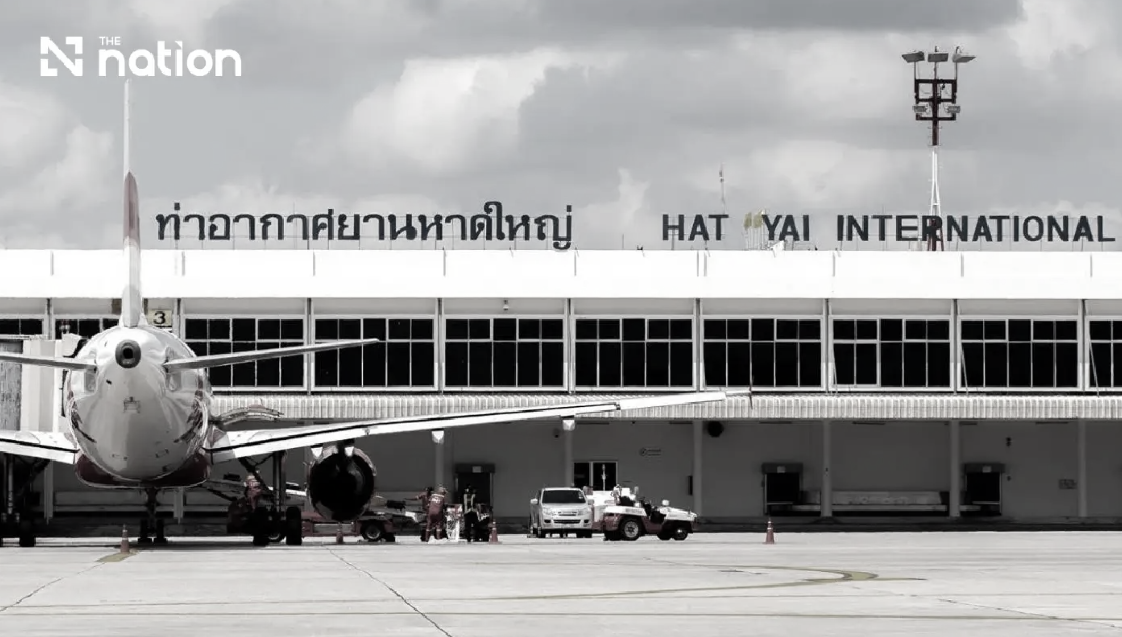
Hat Yai International Airport in Thailand's southern Songkhla Province temporarily suspended operations on Runway 26 after a mishap involving an airport fire engine created safety concerns, leading carriers to divert incoming traffic to alternative landing facilities. The incident unfolded on Wednesday afternoon in June, disrupting scheduled operations and catching passengers off guard as their flights were rerouted without prior warning.
The airport authority issued a NOTAM—a formal notice to airmen—declaring Runway 26 unavailable from 1.55pm to 4.30pm on June 17 to allow emergency responders and airport personnel to manage the affected area safely. Officials prioritised passenger and crew safety above operational continuity, implementing a precautionary closure that affected multiple aircraft attempting to land at the busy regional hub. The decision reflected standard aviation safety protocols requiring swift action whenever equipment becomes involved in runway incidents that could compromise aircraft landing operations.
Two notable Thai carriers experienced disruptions as a result of the temporary shutdown. Thai Airways flight TG263 and Thai Lion Air flight SL712, both approaching Hat Yai for landing during the closure window, received instructions to divert northward to Krabi International Airport. Flight-tracking data from Flightradar24, the popular aviation monitoring platform, captured the real-time rerouting of these aircraft as they adjusted their approach vectors in response to the temporary unavailability of Hat Yai's primary runway.
Passengers aboard affected flights found themselves caught in an unexpected inconvenience, with many learning about the diversion only after takeoff or whilst airborne. The airport advised travellers to maintain close contact with their respective airlines for updates regarding potential delays or modifications to their flight itineraries. Communication challenges emerged during the incident, as the airport initially provided limited information to concerned family members and passengers seeking clarity about why landings were suspended.
One passenger's relative travelling on Thai Airways flight TG263 contacted Hat Yai Airport directly to determine why the aircraft could not proceed with landing. Airport representatives acknowledged an emergency situation but declined to furnish supplementary details at that juncture, leaving inquiries partially unanswered. This informational gap highlighted the challenges airports face in managing crisis communications whilst simultaneously addressing operational disruptions, particularly when technical incidents occur during peak travel periods.
The fire engine accident itself—the precise nature of which remained undisclosed in official statements—underscored the vulnerability of airport infrastructure to unexpected mechanical failures. Airport fire services play a critical role in aviation safety, maintaining constant readiness to respond to emergencies ranging from landing mishaps to cargo incidents. When such essential equipment becomes involved in accidents, it not only removes valuable emergency response capacity temporarily but also necessitates comprehensive runway inspections to ensure no debris or hazards remain that could endanger subsequent flights.
Krabi Airport, situated approximately 180 kilometres northwest of Hat Yai, served as the designated alternate landing site for diverted traffic. The facility accommodates regional carriers and maintains sufficient capacity to handle overflow from other southern Thai airports during disruptions. Thai Airways flight TG263 successfully landed at Krabi without incident, though passengers experienced significant delays and the inconvenience of an unplanned stop-over. Such diversions often create logistical complications, requiring ground handling coordination, potential crew rest considerations, and arrangements for onward transportation to final destinations.
Hat Yai International Airport functions as a vital transportation nexus for southern Thailand, connecting provincial centres like Songkhla and Satun with Bangkok and other regional hubs. The facility typically handles several dozen daily flights during normal operations, making even temporary runway closures consequential for the broader aviation network. The incident occurred during what was presumably a busy afternoon service period, amplifying its disruptive impact across multiple flights and hundreds of passengers.
For Malaysian travellers and businesses operating in the region, disruptions at Hat Yai carry particular significance given the airport's importance for cross-border commerce and tourism. Many Malaysian visitors transit through Hat Yai en route to southern Thai destinations, and the facility serves as an alternative to Phuket International Airport for accessing the region's coastal attractions. Incidents triggering runway closures demonstrate the importance of maintaining robust redundancy in regional airport infrastructure and reinforcing emergency preparedness protocols across Southeast Asian aviation facilities.
The temporary closure concluded as scheduled by late afternoon, restoring normal operations and allowing Hat Yai Airport to resume full capacity. However, the incident prompted broader reflection on equipment maintenance standards and safety oversight mechanisms at regional airports. Aviation authorities throughout Thailand and across Southeast Asia periodically review incident reports to identify systemic improvements and prevent recurrence of similar mishaps. This particular fire engine accident, whilst ultimately minor in outcome, exemplified how unexpected infrastructure failures can cascade into passenger inconveniences and operational complications across regional flight networks.