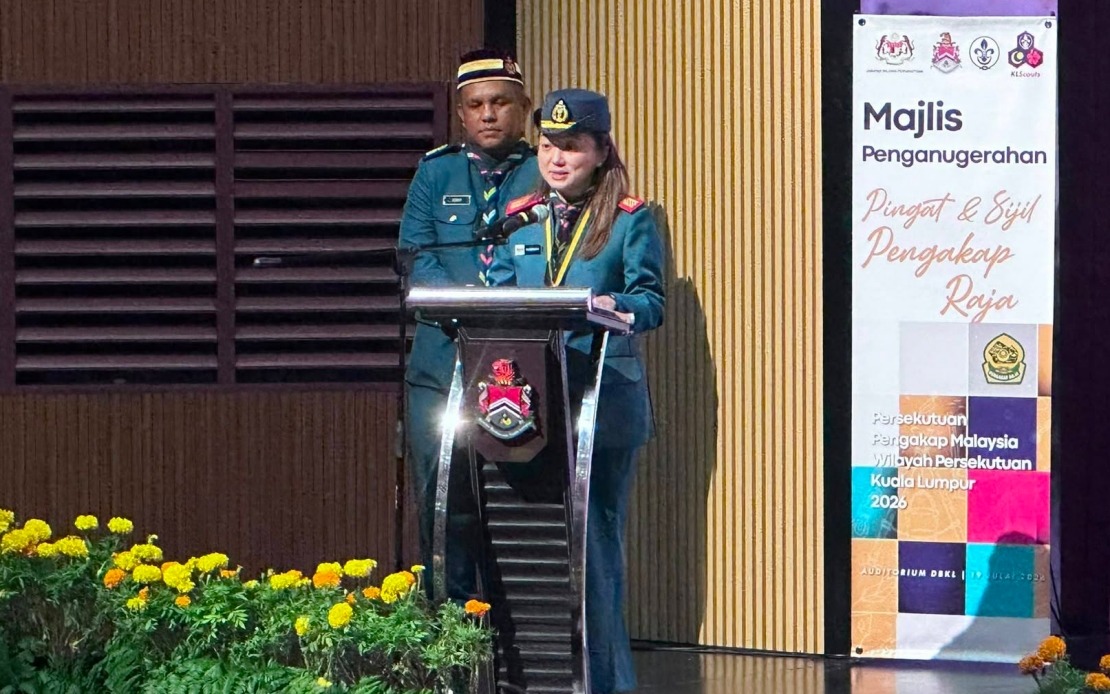
Minister in the Prime Minister's Department (Federal Territories) Hannah Yeoh has assumed the role of president of the Federal Territories State Scouts Council following a formal proclamation ceremony held at City Hall Auditorium in Kuala Lumpur. The appointment, made during the 2026 Kuala Lumpur Federal Territory King's Scout Medal and Certificate Presentation Ceremony, underscores the government's commitment to nurturing young leadership and character development through the scouting movement.
Yeoh's elevation to this position reflects her department's portfolio responsibility for the federal territories and signals heightened ministerial engagement with youth development initiatives. Her appointment coincides with heightened focus on scouting as a mechanism for cultivating discipline, integrity, and community service values among Malaysian youth—attributes increasingly emphasised by policymakers seeking to strengthen social cohesion and national identity.
Central to Yeoh's inauguration was a substantial financial commitment to expand scouting activities across the Federal Territories. The minister announced a combined allocation of RM20,000, structured as dual tranches of RM10,000 each, targeting different aspects of youth engagement. The first portion supports the Kuala Lumpur branch of the Scouts Association of Malaysia in designing and implementing holiday programmes that attract broader youth participation, particularly during school breaks when young people have expanded availability.
The second RM10,000 allocation addresses a critical gap in scouting accessibility by funding training initiatives for young people who face barriers to conventional programme participation. This targeted approach acknowledges socioeconomic disparities and other obstacles that prevent certain demographics from engaging with traditional scouting structures, reflecting a more inclusive policy framework toward youth development.
The ceremony witnessed simultaneous recognition for DBKL Executive Director Rosli Nordin, who was proclaimed chairman of the Kuala Lumpur Federal Territory State Scouts Council. This dual appointment strengthens institutional linkages between municipal administration and scouting governance, potentially facilitating resource allocation and programme coordination across city-level infrastructure and youth services.
A total of 58 individuals received the King's Scout Certificates, the pinnacle achievement within the Malaysian Scouting Movement. These recipients have demonstrated exceptional competency across multiple dimensions including leadership capabilities, practical skills acquisition, personal resilience, volunteer community engagement, and adherence to scouting's foundational principles. The award represents recognition of the highest standards of young adulthood and disciplined citizenship, serving as credentials for these scouts' readiness to assume greater societal responsibilities.
Beyond the headline awards, the ceremony honoured 75 scout leaders through Chief Scout's Commendation Certificates and recognised 108 additional scout leaders via Federal Territories Scouts Wangsa Certificates. This three-tiered recognition structure emphasises the scouting movement's hierarchical achievement framework and validates the often-overlooked contributions of adult volunteer leaders who sustain programme delivery and mentor younger scouts.
The event drew attendance from Major General Datuk Prof Dr Mohd Zin Bidin, the Chief Scout of Malaysia, and Tan Sri Johari Abdul, the Dewan Rakyat Speaker and National Scout Council member. Their presence elevated the ceremony's national significance, signalling cross-institutional support for scouting as a strategic youth development priority within Malaysia's broader social policy agenda.
For Malaysian readers, Yeoh's appointment and the RM20,000 allocation represent tangible governmental investment in structured youth engagement mechanisms. The scouting movement has historically served as a pipeline for developing young Malaysians into disciplined, community-minded citizens—a function increasingly valued amid concerns about youth unemployment, social fragmentation, and declining civic participation.
The Federal Territories, encompassing Kuala Lumpur, Labuan, and Putrajaya, serve as microcosms for national policy innovation. The scouting initiatives announced here may establish models for expansion across state-level scout councils nationwide, potentially influencing how other jurisdictions approach youth development funding and accessibility.
Regionally, Malaysia's scouting movement positions the nation within an established Southeast Asian framework of youth character development. Countries including Singapore, Thailand, and Indonesia maintain similarly structured programmes, and Malaysia's emphasis on inclusive, well-funded scouting reflects competitive positioning within regional youth development rankings.
The practical implications extend beyond ceremonial recognition. With RM20,000 channelled into programme expansion and accessibility improvements, the Scouts Association of Malaysia gains resources to design innovative interventions—particularly those addressing participation barriers for economically disadvantaged youth. This targeting acknowledges that scouting's benefits remain underutilised among populations most requiring structured character development opportunities.
Yeoh's leadership of the scouts council positions her at the intersection of youth policy, urban governance, and civil society engagement. Her departmental mandate over federal territories governance, combined with scouting presidency, creates opportunities for integrating youth development into broader territorial administration—a synergy that could influence how Kuala Lumpur, Labuan, and Putrajaya approach young people's civic participation and community contribution within emerging urban frameworks.

