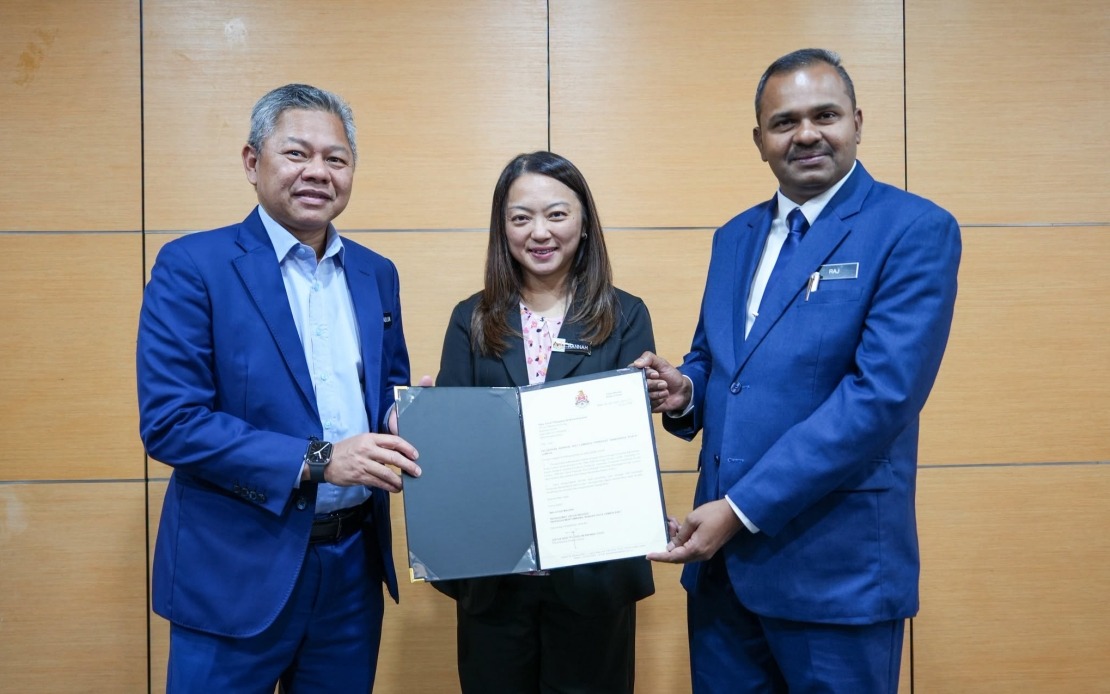
Federal Territories Minister Hannah Yeoh has extended her congratulations to S. Thiyagaraj following his formal appointment to the Kuala Lumpur City Advisory Board, with the appointment letter presented by Kuala Lumpur Mayor Datuk Seri Fadlun Mak Ujud. The swearing-in ceremony marks another step in strengthening the city's governance framework through the recruitment of experienced professionals into advisory roles that shape urban policy and administration.
In her remarks, Hannah underscored the significance of Thiyagaraj's new position, expressing confidence that he would discharge his responsibilities with integrity and professional rigour. She called on the new board member to leverage his background to provide meaningful counsel to the Mayor on matters that directly affect the city's residents and the quality of urban services they receive. The minister's public endorsement reflects a broader commitment by the federal government to populate such positions with individuals whose track records demonstrate competence and dedication to public service.
Thiyagaraj brings substantial professional experience to the advisory board, having spent nearly two decades in the Prisons Department from 2005 to 2023. During his tenure, he rose to the rank of Assistant Superintendent of Prisons, serving in the Technical Intelligence and Investigation Unit—a demanding role requiring analytical capability and investigative rigour. This background suggests he possesses both the institutional knowledge of large bureaucracies and the investigative acumen that could prove valuable in examining complex urban governance issues.
The Kuala Lumpur City Advisory Board functions as a consultative body tasked with furnishing the Mayor with strategic perspectives and recommendations on municipal administration and urban development initiatives. According to Hannah, the board plays a vital role in shaping how the city addresses its evolving challenges, from infrastructure maintenance to public service delivery. The appointment of individuals like Thiyagaraj reflects an apparent effort to infuse the board with diverse professional backgrounds that can enrich deliberations on city-wide matters.
Hannah stressed that each board member carries considerable responsibility in advancing the city's governance standards, particularly in enhancing operational efficiency, ensuring transparent decision-making processes, and ensuring that municipal institutions remain responsive to citizen needs. In the Malaysian urban context, where cities like Kuala Lumpur face mounting pressures—from congestion and housing affordability to environmental sustainability—advisory bodies can serve as important channels for expert input and cross-sectoral dialogue. The quality of advice reaching the Mayor can influence resource allocation, policy direction, and the overall trajectory of urban development.
The appointment arrives as Kuala Lumpur continues to grapple with complex governance challenges inherent to a rapidly developing metropolis. The city's advisory boards serve as intermediaries between technical experts and elected officials, helping to bridge gaps between policy intention and practical implementation. By drawing from individuals with backgrounds in law enforcement and security, as in Thiyagaraj's case, the boards gain access to perspectives on public safety, institutional operations, and investigative methodologies that can inform urban planning and administration.
The minister's formal acknowledgment of the appointment signals the government's intent to maintain public visibility around governance appointments, demonstrating that advisory roles are treated seriously rather than as ceremonial positions. Hannah's remarks about integrity, professionalism, and commitment to public benefit establish clear performance expectations, creating a public record of what the government expects from board members. Such transparency can strengthen accountability and reinforce the principle that public appointees serve the citizenry rather than narrow interests.
Thiyagaraj's transition from law enforcement to urban governance advising reflects a broader pattern in Southeast Asian administrations of drawing talent from security and intelligence sectors into civil governance roles. This trend acknowledges that managing modern cities requires expertise in information systems, security protocols, and institutional efficiency—domains where security professionals have developed substantial competencies. However, such appointments also invite scrutiny regarding the balance between security-focused perspectives and other considerations such as civil liberties, community engagement, and inclusive urban planning.
Looking ahead, Thiyagaraj's performance on the advisory board will likely serve as a barometer for how effectively external expertise can enhance municipal governance in Malaysia. If he and fellow board members can meaningfully influence the Mayor's decision-making and contribute to improvements in public service delivery, the appointment model may be strengthened. Conversely, if advisory recommendations are routinely overlooked or if appointments become primarily ceremonial, questions may arise about the utility of such institutions in Malaysia's governance landscape.

