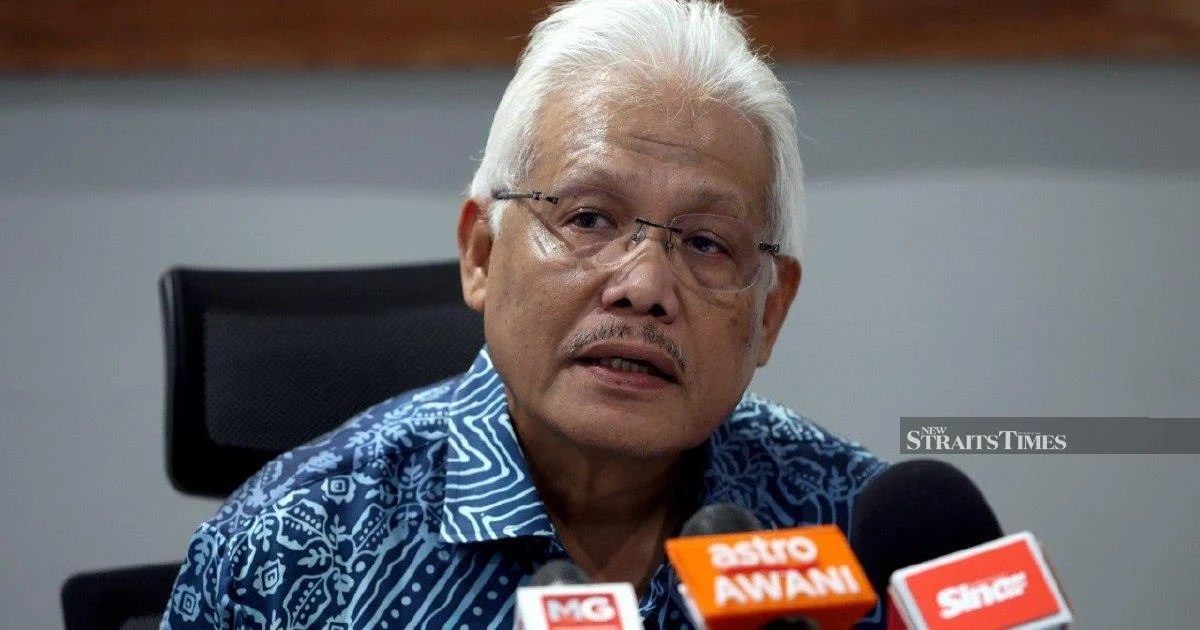
The rebranded Parti Wawasan Negara, formerly known as Parti Cinta Malaysia, has signalled ambitions to function as a unifying force between two of Malaysia's most influential Malay-Muslim parties, Pas and Umno. Party chairman Hamzah Zainudin articulated this vision as the formation moves to establish itself in the country's fractious political landscape, where competition between these heavyweights has frequently destabilised coalitions and fractured the voting bloc they claim to represent.
The repositioning reflects broader anxieties within Malaysia's Malay-Muslim political establishment about the consequences of persistent infighting. When Umno and Pas clash—as they did spectacularly during the 2018 general election and again during the 2022 power transition—the resulting fragmentation allows opposition forces to exploit divisions and erodes the collective bargaining power these parties traditionally wield in federal politics. Hamzah's initiative suggests that even smaller players recognise the stakes involved in maintaining a semblance of coordination among these constituencies.
Partai Wawasan Negara's stated objective centres on preventing the kind of destructive competition that leaves the broader Malay community politically vulnerable. The party's framing presents itself as ideologically positioned to understand both Umno's secular-nationalist orientation and Pas's Islamic-centric approach, theoretically giving it credibility as a neutral intermediary. This positioning echoes a recurring theme in Malaysian politics: the periodic emergence of smaller parties promising to reconcile seemingly irreconcilable factions within the dominant coalition.
However, the practical viability of such a bridging role faces considerable obstacles. Umno and Pas have competing organisational bases, divergent policy priorities, and historical grievances that extend beyond surface-level disagreement. Umno's traditional emphasis on Bumiputera economic interests and secular governance structures sits uncomfortably with Pas's push for Islamic law expansion and religious governance. These differences reflect genuine ideological gulfs rather than mere personality clashes that a third party could easily mediate away.
Hamzah Zainudin's own political trajectory carries significance for how his new party will be received. As someone navigating Malaysia's upper echelons of power, his party's establishment signals that even establishment-proximate figures view reconciliation efforts as necessary. Yet this proximity to power structures could undermine Parti Wawasan Negara's claimed neutrality—both Umno and Pas may view the party with suspicion if it appears to favour one faction's interests over the other's.
The timing of this initiative matters considerably for Malaysian politics more broadly. Federal politics have stabilised somewhat since the dramatic 2020-2022 transition period, but underlying tensions remain. If Parti Wawasan Negara can establish itself as a genuine dialogue mechanism rather than merely a vehicle for individual political advancement, it could contribute to more constructive engagement between these parties. Conversely, if the party becomes perceived as advancing particular factional interests within either Umno or Pas, it risks becoming another divisive element rather than a unifying one.
For Southeast Asian observers, Malaysia's attempt to manage intra-elite competition through institutional mechanisms warrants attention. The region contains several comparable political systems where dominant ethnic or religious coalitions periodically fracture, threatening broader stability. How Malaysia handles this perennial challenge offers lessons—both positive and negative—for managing coalition politics in diverse societies.
The success of Parti Wawasan Negara's bridging ambitions will likely depend on whether both Umno and Pas perceive genuine benefits from dialogue facilitated by the party. If the arrangement merely provides cover for agreements they would reach anyway, or if it becomes transparent that the party favours one partner, its utility as a mediator will evaporate quickly. Malaysian voters, meanwhile, will assess whether this new formation offers substantive policy alternatives or simply represents another reconfiguration of existing power holders seeking to preserve their collective dominance.
Partai Wawasan Negara's emergence also reflects the broader fluidity within Malaysia's party system, where formation, rebranding, and coalition-shifting occur with surprising frequency. This volatility, while allowing for repositioning and renewal, can also exhaust voters and undermine party institutionalisation. Whether Hamzah's party becomes a meaningful institutional player or another ephemeral political vehicle will depend on its ability to develop genuine organisational capacity and policy distinctiveness beyond its mediating ambitions.
Looking forward, the most significant indicator of success will be whether Umno and Pas actually utilise Parti Wawasan Negara's services as a dialogue mechanism. If relations between these parties continue deteriorating despite the party's stated availability, it will suggest that ideological and organisational differences run too deep for third-party mediation to address meaningfully. Conversely, if the party facilitates constructive engagement on policy matters or electoral coordination, it will validate Hamzah's vision and potentially establish an important precedent for managing intra-coalition tensions in Malaysian politics.

