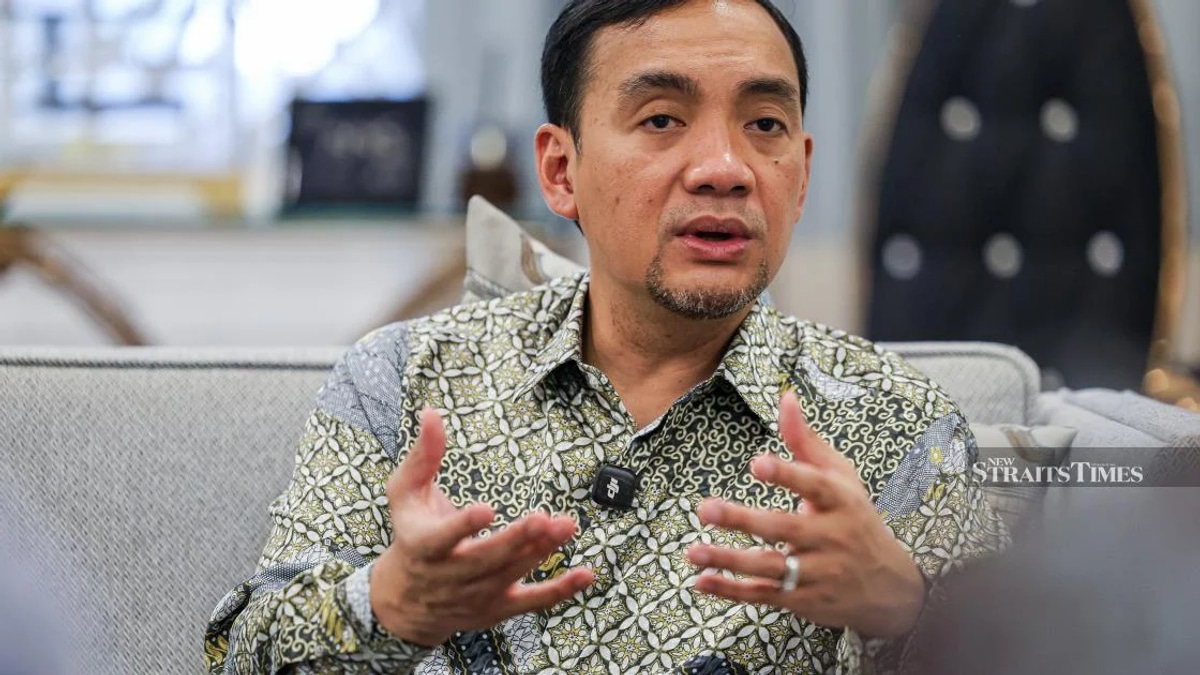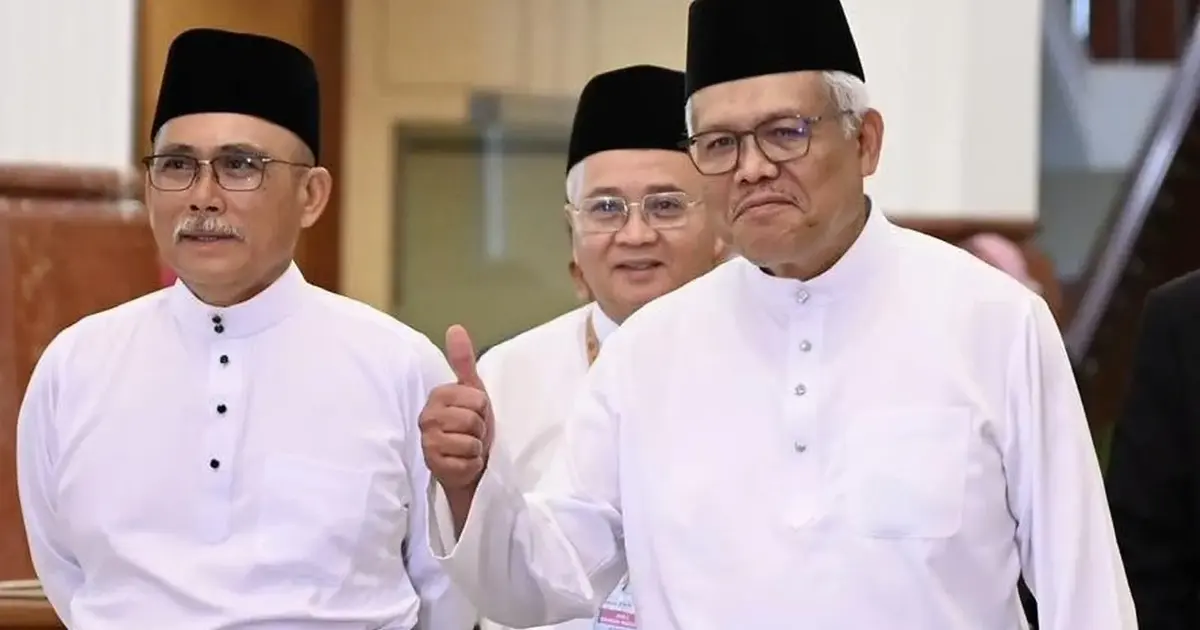
Hamzah Zainudin's elevation to opposition leader was grounded in demonstrable parliamentary numbers rather than arbitrary selection, according to Kiandee, the suspended Bersatu vice-president who offered insight into the decision-making process. The Larut MP secured the position following a convergence of support across opposition coalition partners, with PAS delivering its members as a unified bloc while simultaneously commanding the allegiance of the majority within Bersatu's parliamentary contingent.
This explanation touches on a critical element of Malaysian opposition politics: the mathematical reality of government formation and leadership selection in the legislature. Hamzah's appointment represents a calculated effort to consolidate fractious elements within the opposition into a coherent voting bloc capable of challenging government positions and, theoretically, assembling sufficient numbers for alternative governance arrangements. The emphasis on majority support within Bersatu—a party that has experienced considerable internal turbulence and defections—underscores how fragile coalition mathematics have become in contemporary Malaysian politics.
For Malaysian readers following the complex landscape of opposition realignment, Kiandee's statement provides a window into how party leadership navigates the practical mechanics of parliamentary representation. The consolidation of support across PAS and Bersatu represents one of the more stable opposition arrangements in recent years, though both parties have histories of shifting allegiances that create underlying uncertainty about durability. PAS's unified backing of Hamzah through its parliamentary caucus demonstrates strategic discipline, while Bersatu's majority support reflects a party attempting to recover coherence after experiencing significant internal divisions.
The context of Kiandee's own suspension from his own party's vice-presidency adds layers of complexity to his commentary. Speaking from a position of internal dissent or exile within Bersatu, his explanation of the majority support rationale may reflect broader factional disputes within the party. His willingness to articulate the logic behind Hamzah's selection suggests an attempt to rationalize decisions made during a period of considerable political turbulence, when the opposition was maneuvering to strengthen its institutional position.
From a Southeast Asian perspective, this type of parliamentary coalition-building remains distinctive to Malaysia's political system, where individual MPs often hold disproportionate leverage and party discipline varies considerably. Unlike more rigid parliamentary democracies, the Malaysian system allows for fluid movement of parliamentarians and creates scenarios where opposition leaders are genuinely selected based on demonstrated capacity to command votes. This flexibility can enable adaptive governance but also creates chronic instability when coalitions prioritize immediate tactical advantages over strategic coherence.
Hamzah's selection carries implications for how the opposition might mobilize its parliamentary resources in coming legislative sessions. As opposition leader, he theoretically coordinates strategy, manages parliamentary proceedings, and serves as the public face of alternative governance. The fact that his appointment derived from demonstrable majority support rather than procedural technicality lends him greater legitimacy within opposition ranks, though it simultaneously places expectation on him to deliver tangible parliamentary victories and maintain coalition discipline.
The role of PAS within this configuration remains significant for regional observers. As an Islamic party with considerable ground organization and demonstrated electoral appeal in peninsular and east Malaysian constituencies, PAS's unified backing provides the opposition with both voting numbers and grassroots mobilization capacity. However, PAS's historical pragmatism regarding coalition partnerships—including previous collaboration with UMNO-Barisan Nasional—means that its support for opposition formations remains contingent on evolving political calculations.
For Malaysian business and policy circles, opposition leadership dynamics matter because they signal whether organized parliamentary challenge is emerging. Coherent opposition leadership and stable coalition arrangements theoretically enable more rigorous scrutiny of government policy, potentially improving legislative accountability. Conversely, fragmented opposition leadership disperses critical capacity across competing factions and reduces pressure on government decision-making in parliament.
Kiandee's emphasis on majority support suggests that opposition strategists recognized the legitimacy problem that would attend appointing a leader lacking demonstrable parliamentary backing. In recent years, Malaysian politics has witnessed occasions where leadership appointments faced challenges based on claims of insufficient representative mandate. By anchoring Hamzah's selection in explicit, quantifiable majority support across coalition partners, opposition figures attempted to preempt such challenges and establish him as a leader commanding genuine parliamentary authority.
Looking forward, the durability of this opposition arrangement and Hamzah's leadership position will depend on whether the coalition successfully coordinates legislative action and whether internal party dynamics—particularly within the troubled Bersatu—stabilize sufficiently to maintain the majority support that originally justified his appointment. The expressed backing from PAS members and most Bersatu parliamentarians provides a foundation, but Malaysian political history suggests that such arrangements remain perpetually vulnerable to individual defections, party internal power struggles, and shifting electoral calculations among coalition partners.