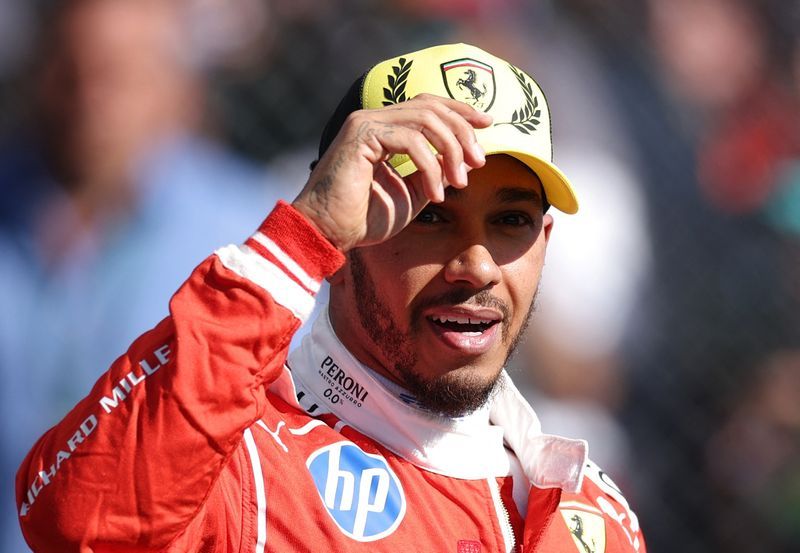
Lewis Hamilton will look to capitalise on a track where he has built an extraordinary legacy when Ferrari competes at the Hungaroring this weekend, a circuit that offers the British driver the prospect of a positive finish before Formula One's extended mid-season break. The 2024 championship battle has shifted dramatically in recent weeks, with Mercedes' George Russell confronting an unexpected performance crisis that has exposed underlying technical problems with his car, whilst his youthful teammate has emerged as an unlikely frontrunner in the drivers' championship.
Russell's difficulties have become the central talking point in the paddock as his Mercedes-Benz struggles particularly on the track's straights, where the car sheds considerable time against rivals. The situation has proven deeply frustrating for the British driver, who entered this season with realistic title aspirations and a reputation for dependable performances. His recent retirement in Belgium, caused by a spin into gravel, marked his third race without scoring points—a sharp reversal of fortunes that has seen him accumulate a 50-point deficit to championship leader Kimi Antonelli. The contrast is particularly stark given Antonelli's remarkable form, with the 19-year-old Italian having accumulated six victories in just ten rounds, a trajectory that few predicted when the season commenced.
Hamilton's recovery to second place overall, though still trailing Antonelli by 45 points, positions him encouragingly as Formula One reaches its mid-campaign stage. The seven-time world champion's history at the Hungaroring is genuinely remarkable, representing one of the most consistent records any driver holds at a single venue. His eight previous victories at the Budapest circuit remain unmatched in the track's modern history, and this weekend presents an opportunity to move one step closer to equalling his nine wins at Silverstone, where he dominated during his Mercedes years before transferring to Maranello. The Hungaroring also holds personal significance as the scene of Hamilton's most recent pole position achievement, which dates back to 2023, suggesting the layout fundamentally suits his driving style and approach.
Ferrari team principal Fred Vasseur, however, resisted the temptation to forecast smooth sailing at Hungary despite the apparent advantages the circuit offers his team. The Frenchman emphasised that the nature of Budapest—a circuit where engine horsepower matters considerably less than at faster venues and where aerodynamic setup and tyre management become paramount—should not be mistaken for guaranteed success. His caution reflects the unpredictable nature of modern Formula One competition, where team performance can fluctuate dramatically depending on track characteristics and how well each organisation executes fundamental elements like suspension geometry and fuel strategy. Vasseur's measured commentary suggested Ferrari remains grounded despite their promising situation, avoiding the overconfidence that can lead to strategic miscalculations.
Charles Leclerc has emerged as Ferrari's more consistent performer over the past fortnight, securing victory at Silverstone and finishing second at Spa, whereas Hamilton's recent form shows third place in Britain and fourth at Spa following his Barcelona triumph. This comparative recent record underscores the intense competition among the leading teams and drivers, with momentum proving a fleeting commodity in contemporary Formula One. The championship dynamics have created a scenario where multiple teams genuinely possess the capability to prevail, depending entirely on how effectively each organisation addresses the specific demands posed by individual venues.
Antonelli himself projects confidence about the possibilities at Hungary whilst acknowledging the genuine uncertainty surrounding which teams might emerge strongest. He characterised the upcoming contest as a potential four-way contest between Red Bull, Mercedes, McLaren, and Ferrari, with the track's characteristics—slower speeds and constant cornering rather than heavy straights—likely to compress performance gaps across the field. The Italian's assessment suggests Monaco-like conditions where raw driving skill and confidence prove crucial, creating scenarios where consistency across a weekend often determines outcomes rather than straightforward mechanical superiority. His observation that victory will depend upon how various organisations manage energy deployment and tyre degradation reflects the technical sophistication required to succeed in contemporary motor racing.
McLaren will arrive at Hungary equipped with significant upgrade packages aimed at enhancing their competitive position, including a revised floor and numerous aerodynamic modifications. The team continues developmental work on an experimental rear wing configuration that could provide competitive advantages depending on how effectively engineers integrate the concept into overall vehicle performance. These systematic enhancements represent McLaren's strategic commitment to the latter half of the season, potentially establishing advantages that could prove decisive when championship contention reaches its climactic stages. Meanwhile, the broader technical landscape sees multiple teams pursuing upgrades, though some organisations face timing constraints that limit their immediate options.
Aston Martin's situation exemplifies how upgrade scheduling can influence competitive balance throughout the season. The Silverstone-based team has prepared a long-awaited chassis upgrade for Hungary, representing a significant engineering investment aimed at addressing fundamental performance limitations. However, the timing of their latest Honda engine specification—reserved for deployment at the subsequent Dutch Grand Prix—demonstrates how technical regulation changes can become staggered across the calendar, preventing simultaneous implementation of all planned improvements. This fragmentation of development cycles across different races illustrates how Formula One organisations must strategically sequence their initiatives across the season, balancing immediate competitive needs against longer-term architectural improvements.
The Hungarian Grand Prix therefore arrives at a fascinating juncture in the 2024 championship, with multiple storylines intersecting at a circuit where historical precedent suggests Lewis Hamilton possesses genuine advantages. Russell's mechanical struggles require urgent resolution if Mercedes hopes to mount a credible championship challenge, particularly given how comprehensively Antonelli has dominated recent competition. The competitive intensity remains extraordinarily high, with Verstappen, Leclerc, Norris, Piastri, and others all capable of delivering strong performances depending on how successfully their respective teams optimise vehicle setup for Budapest's particular demands. Hamilton's opportunity to conclude the first half of the season positively could significantly influence championship momentum as teams approach the August break, where strategic planning for the campaign's second phase intensifies among engineers and decision-makers.

