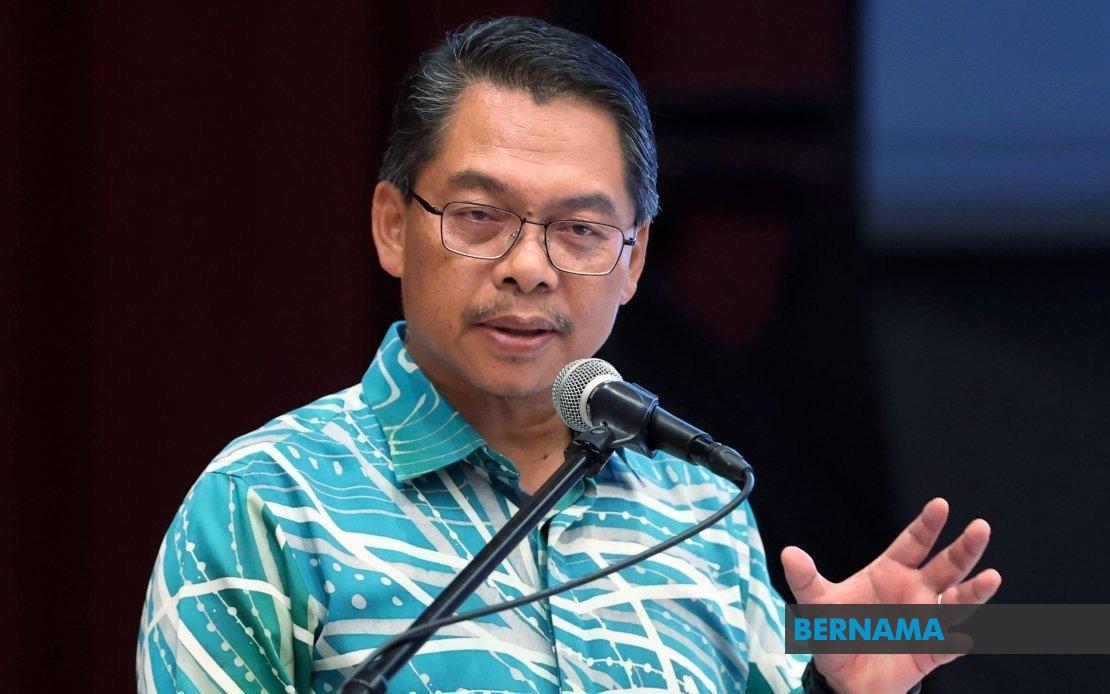
The attendance of Sabah Chief Minister Datuk Seri Hajiji Noor and a delegation of Gabungan Rakyat Sabah (GRS) leaders at the 2026 PKR National Congress in Melaka signals a pragmatic realignment of regional politics in East Malaysia, where state and federal administrations are prioritizing shared economic and development objectives over partisan differences. Sabah PKR Leadership Council chairman Datuk Mustapha Sakmud framed the high-profile presence as a reflection of deepened cooperation between the state government and Prime Minister Datuk Seri Anwar Ibrahim's MADANI administration, extending well beyond routine political courtesy into substantive policy coordination.
The visible unity demonstrated at the congress, held at the Melaka International Trade Centre, carries particular significance for Sabah's political landscape. Despite GRS remaining outside the federal coalition and maintaining its independent governing status, the willingness of its top officials to participate prominently in a PKR-led national forum suggests a calculated shift toward collaborative federalism. This approach acknowledges the practical reality that Sabah's development aspirations increasingly depend on accessing federal resources, infrastructure programmes, and policy frameworks that only the central government can provide, regardless of formal coalition membership.
Mustapha articulated a clear development-first agenda during his remarks, emphasizing that political cooperation must translate into tangible improvements in living standards. His statement positioning stability as a precondition for economic growth resonates with Sabah's ongoing challenges of infrastructure deficits, limited industrial diversification, and geographical isolation from major Malaysian economic hubs. The minister implicitly argued that ideological rigidity could impede the state's access to federal funding mechanisms, particularly those channeled through the MADANI framework which prioritizes inclusive development across all Malaysian regions.
The presence of Deputy Chief Minister Datuk Seri Dr Joachim Gunsalam, Rural Development Minister Datuk Rubin Balang, and Youth, Sports Development and Creative Economy Minister Datuk Nizam Abu Bakar Titingan demonstrated that GRS commitment to federal cooperation extends across multiple policy portfolios. This breadth of ministerial representation suggests coordination on infrastructure projects, youth employment initiatives, and creative sector development—areas where federal and state programs must align to be effective. Similarly, the attendance of Education, Science and Technology Minister Datuk James Ratib indicated engagement on human capital development, a sector where federal research initiatives and funding channels substantially influence state-level outcomes.
Mustapha's specific emphasis on Malaysia Agreement 1963 (MA63) implementation signals that while GRS maintains cooperative relations with the federal administration, the state has not abandoned pursuit of its constitutional rights. MA63, which governs Sabah's relationship with the federal government and established specific protections for state autonomy in designated areas, remains a contested framework. By invoking MA63 within the context of federal cooperation, Mustapha articulated a position that Sabah's interests can be advanced through collaborative engagement rather than confrontation, provided the federal government respects the state's special constitutional status and negotiates implementation of the agreement within a framework that acknowledges these historical arrangements.
The participation of GRS leaders in a PKR congress presided over by Anwar carries broader implications for Malaysian federalism and coalition politics. It demonstrates that the traditional binary between federal and state-level opposition has become more fluid, replaced by issue-based collaboration and regional interest advocacy that transcends formal party alignment. For Sabah specifically, this pragmatism offers potential advantages: the state can leverage federal resources while retaining governing independence and maintaining distinct political identity through GRS, a structure that has proven relatively stable despite regional volatility in Malaysian politics.
From a Southeast Asian perspective, Sabah's approach offers lessons in managing center-periphery relations within large, geographically dispersed nation-states. The state's willingness to separate coalition politics from development cooperation reflects recognition that economic integration and infrastructure connectivity increasingly require coordination across administrative boundaries. This model contrasts with more confrontational approaches in other parts of Malaysia and Southeast Asia, where regional governments have sometimes prioritized political autonomy over collaborative development initiatives.
The MADANI government's embrace of this cooperative approach also reflects the administration's stated commitment to inclusive development that accommodates diverse regional interests. By welcoming GRS participation in party congresses and maintaining substantive dialogue channels, the federal government signals that MADANI policies are not exclusively PKR-defined but rather aspire to incorporate perspectives from across the political spectrum. For Sabah specifically, this creates space for advocating state-specific policies on economic development, indigenous land rights, and infrastructure investment without requiring formal coalition membership.
However, this arrangement carries inherent tensions. GRS must balance cooperation with the federal government against maintaining sufficient political distance to justify its independent status to Sabah voters. The party's appeal rests partly on its positioning as a distinctly Sabahan political force protecting state interests, a narrative that becomes complicated if cooperation with federal authorities becomes too close or appears to subordinate state autonomy. Mustapha's careful framing of cooperation as conditional on federal respect for MA63 and Sabah's special status reflects this delicate balancing act, emphasizing that collaboration serves state interests rather than merely enabling federal objectives.
Looking forward, the sustainability of this cooperative model depends on delivering concrete development outcomes in Sabah. Federal programmes must translate into visible improvements in rural infrastructure, economic opportunities, and basic services; otherwise, the political costs of collaboration will outweigh its benefits for GRS leaders. Conversely, the federal government benefits from GRS cooperation in maintaining political stability in East Malaysia and demonstrating MADANI's capacity to build broad-based support across diverse Malaysian constituencies. The presence of Sabah's top officials at the PKR congress thus represents not merely a ceremonial gesture but rather a pragmatic compact centered on shared development objectives and mutual political advantage.

