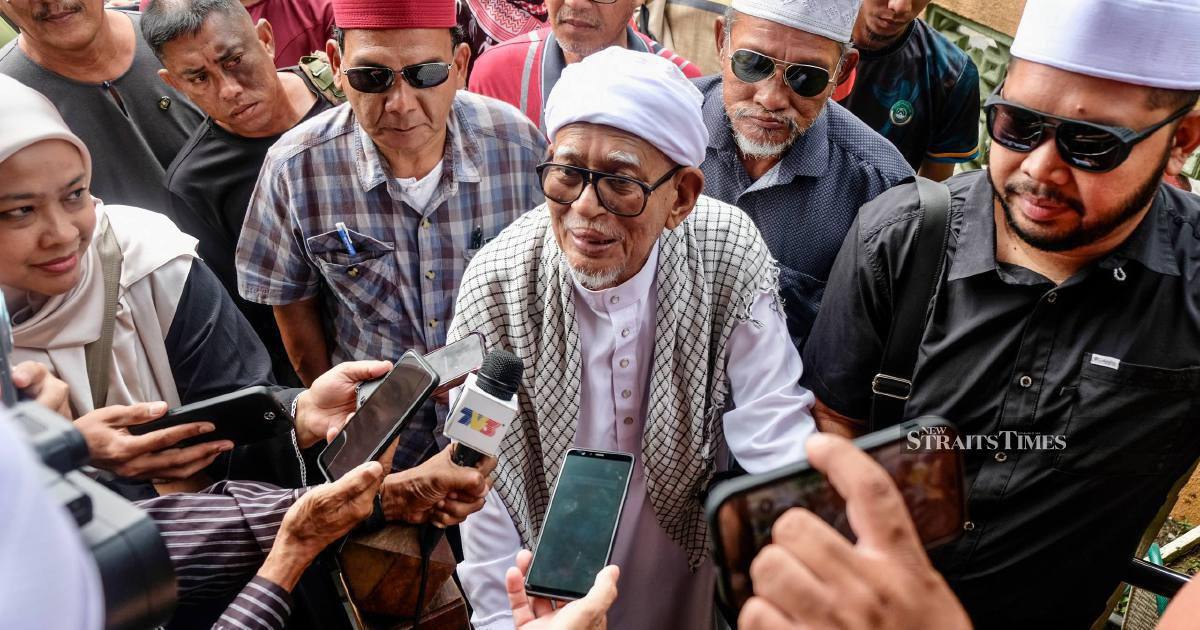
PAS president Tan Sri Abdul Hadi Awang has publicly questioned Prime Minister Datuk Seri Anwar Ibrahim's decision to absent himself from a special parliamentary sitting dedicated to reviewing the Royal Commission of Inquiry report concerning Lembaga Tabung Haji, the state-backed Islamic pilgrimage savings fund. Speaking in Marang, Hadi suggested that the premier's non-attendance undermined the significance of the occasion and raised questions about executive accountability during proceedings of considerable national importance.
The parliamentary session in question was convened specifically to discuss findings from the RCI investigation into TH, an institution that manages savings accounts for Malaysian Muslims preparing for the hajj pilgrimage to Mecca. The inquiry had examined matters of governance, financial management, and administrative conduct within the organisation, which serves hundreds of thousands of Malaysians. The special sitting represented a formal mechanism through which Parliament could scrutinise the commission's conclusions and recommendations before the government formulated its response.
Hadi's remarks reflect broader concerns within the opposition and some government quarters about ministerial engagement with legislative business. In Westminster-style parliaments, prime ministerial attendance at significant sittings—particularly those addressing special inquiries into institutions of public concern—carries symbolic weight and demonstrates the executive's commitment to transparency. The absence of the head of government during such proceedings can be interpreted as diminishing the perceived urgency or importance that the administration assigns to the matter.
The Tabung Haji inquiry itself had attracted considerable public attention, given the fund's significance within Malaysia's Islamic financial ecosystem and its role in serving a vulnerable demographic—ordinary Malaysians setting aside savings for religious obligations. Any governance concerns identified by the RCI carried implications not merely for institutional management but for public confidence in how state-linked entities safeguard citizen funds. The parliamentary sitting thus represented an opportunity for legislators across party lines to address these concerns directly and for the government to articulate its remedial strategy.
Hadi's criticism comes within a context of ongoing tensions between the current administration and PAS, despite their formal alliance within the Perikatan Nasional coalition that provides parliamentary support to the government. While PAS supports the Anwar administration at the federal level, the relationship remains transactional rather than seamless, with both parties maintaining distinct platforms and occasionally advancing divergent priorities. Hadi's public commentary on ministerial conduct suggests that PAS is prepared to hold the government accountable on matters of parliamentary procedure and executive responsibility, even when supporting it on confidence votes.
The question of prime ministerial attendance at parliamentary sittings reflects evolving standards of governmental engagement with legislatures. In recent years, Malaysian prime ministers have faced criticism for irregular attendance, with analysts arguing that such absences weaken Parliament's role as a site of genuine executive accountability. When senior ministers, particularly the prime minister himself, consistently delegate parliamentary duties to junior ministers or deputies, it can create an impression that the executive views the legislature as a subordinate forum rather than a co-equal branch of government warranting direct engagement at the highest levels.
The Tabung Haji institution carries additional symbolic weight within Malaysian political discourse. As a pillar of Islamic financial services and a trusted custodian of aspirational savings among working-class and middle-class Muslim Malaysians, any scandal or mismanagement affecting TH resonates across electoral constituencies and religious communities. The RCI's investigation presumably touched on sensitive matters of institutional integrity, and a thorough parliamentary review afforded an opportunity for public reassurance that governance issues had been identified and would be rectified.
Government sources might argue that the prime minister's schedule involves unavoidable commitments and that deputy ministers or senior parliamentary secretaries can adequately represent the executive during legislative proceedings. However, Hadi's intervention suggests that such explanations may not satisfy lawmakers concerned about the precedent set by executive disengagement. In systems where ministerial accountability depends substantially on parliamentary questioning and scrutiny, the prime minister's willingness to attend significant sittings validates the importance of those proceedings and reinforces legislative prerogatives.
Looking forward, Hadi's criticism may prompt discussions within government circles about recalibrating prime ministerial attendance patterns, particularly for special sittings addressing Royal Commissions or other inquiries of national consequence. For the Anwar administration, balancing a demanding executive agenda with visible parliamentary engagement remains an ongoing challenge, one that is complicated by the coalition politics necessitating careful cultivation of allies like PAS. The issue underscores how procedural questions of ministerial presence carry substantive implications for governance standards and institutional relationships in Malaysia's constitutional system.

