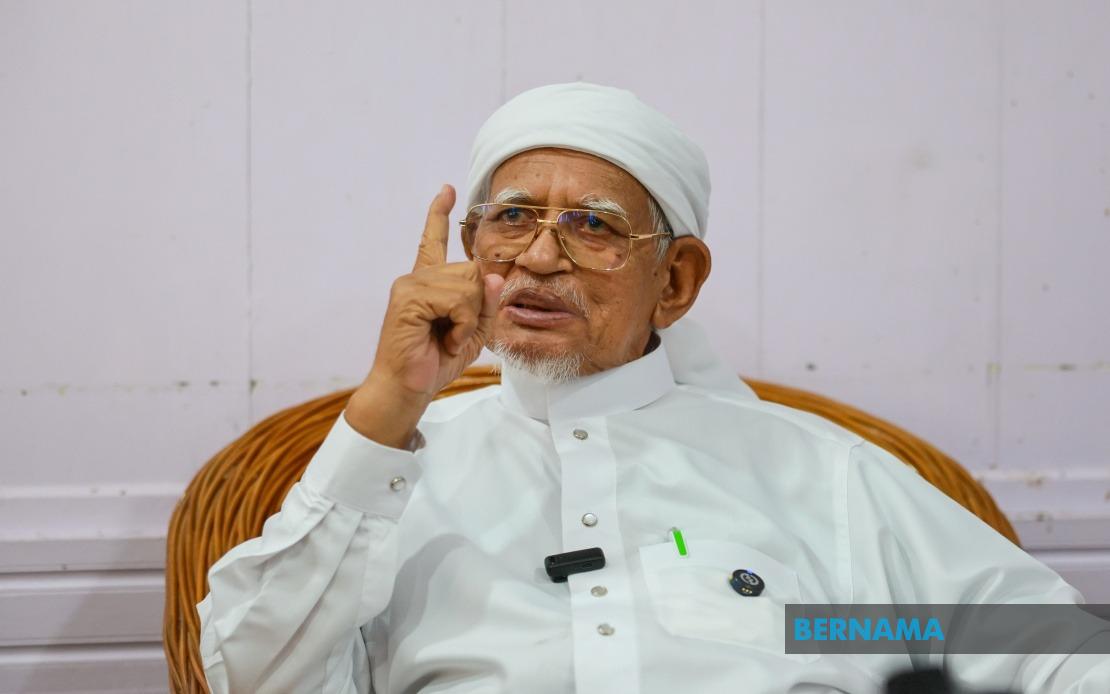
Tensions within Malaysia's Perikatan Nasional coalition escalated sharply when PAS president Tan Sri Abdul Hadi Awang declared that Bersatu has effectively lost its membership status, claiming the party's move to establish an alternative alliance triggered automatic expulsion from the bloc. Speaking after delivering a duha lecture at the Rusila Mosque in Marang on August 7, Hadi asserted that no formal notification was necessary because Bersatu's departure had already occurred upon the party's public intention to form a separate coalition. His statement marked a significant hardening of positions within the increasingly fractious opposition grouping.
The underlying dispute stems from earlier reports that Bersatu president Tan Sri Muhyiddin Yassin had signalled the party's intention to establish a new coalition with other political parties in the wake of the Negeri Sembilan state election. This announcement, perceived as a departure from PN's collective interests, prompted Hadi's interpretation that Bersatu had voluntarily stepped outside the coalition framework. The PAS president's logic suggested that by pursuing independent coalition-building, Bersatu had inherently abandoned its standing within PN, rendering further procedural steps unnecessary.
Hadi's position, however, faced immediate and forceful rejection from Bersatu's senior leadership. Bersatu secretary-general Datuk Seri Mohamed Azmin Ali issued a detailed rebuttal, contending that his party retained full legitimacy as a PN component member. Azmin emphasized that the PN Constitution contains no automatic membership revocation clause, directly contradicting Hadi's interpretation of coalition rules. He insisted that Bersatu's constitutional status could only be altered through proper institutional channels, specifically invoking Clause 7A of the Perikatan Nasional Constitution, which vests such decisions with the presidential council.
Azmin's clarification highlighted a fundamental procedural disagreement between the two sides. According to his statement, the presidential council—the governing body responsible for major coalition decisions—had not been convened to review or determine Bersatu's membership standing. This absence of formal presidential council action, Azmin argued, meant that Bersatu remained legally positioned within PN regardless of rhetorical assertions or unilateral declarations by other coalition members. The distinction between political posturing and constitutional reality became the crux of the dispute.
The confrontation also exposed a deeper power struggle within Perikatan Nasional. By asserting that only the presidential council possessed authority over membership matters, Azmin effectively challenged Hadi's claim to unilateral influence over coalition affairs. The implicit message was clear: individual party presidents, regardless of their standing or influence, could not unilaterally determine another component party's membership status. This principle carries significant weight in a coalition where multiple parties hold competing interests and seek to prevent any single leader from wielding disproportionate control.
Azmin went further by escalating the dispute to formal institutional channels. Bersatu announced plans to lodge an official complaint with the Registrar of Societies, signalling that the party viewed Hadi's statements as constituting potential violations of coalition governance principles. This move represented a deliberate choice to shift the controversy from informal political rhetoric to documented legal and administrative processes, creating an official record of the disagreement and potentially constraining Hadi's ability to act unilaterally.
The broader implications of this PN schism extend beyond internal coalition mechanics. For Malaysian opposition politics, the conflict illustrates the fragility of multi-party alliances built primarily on opposition to the ruling coalition rather than on shared ideological platforms or institutional cohesion. Perikatan Nasional has long struggled to maintain unity among parties with divergent interests, geographic strongholds, and political calculations. The emergence of coalition-building initiatives by component parties signals deepening fissures that may prove difficult to repair through procedural arguments or constitutional citations.
From a Southeast Asian perspective, this Malaysian political turbulence reflects broader challenges facing opposition coalitions across the region. In Thailand, Indonesia, and the Philippines, opposition groupings have similarly fractured over competing interests and personality-driven conflicts. The Hadi-Azmin dispute demonstrates how quickly such alliances can deteriorate when component parties pursue independent strategies, undermining the collective strength that initially motivated coalition formation.
For Malaysian voters and political observers, the confrontation raises questions about the viability of Perikatan Nasional as a credible electoral alternative. If the coalition cannot maintain internal discipline or resolve disputes through established procedures, its capacity to govern effectively—should it win power—becomes questionable. The resort to public accusations and threats of external institutional complaints suggests that personal animosities and political calculations now supersede collective coalition interests, a dynamic that typically portends further deterioration.
The timeline of this dispute also matters significantly. Occurring in the aftermath of the Negeri Sembilan state election and amid broader restructuring of Malaysian opposition politics, it coincides with other coalition realignments and strategic repositioning. Bersatu's apparent willingness to explore alternative alliances may reflect calculations about its political viability, suggesting leadership doubts about PN's long-term prospects or electoral competitiveness. For Hadi and PAS, attempting to enforce coalition discipline through constitutional interpretation may represent an effort to prevent further defections that could accelerate PN's fragmentation.
Looking ahead, several scenarios could unfold depending on how this constitutional dispute resolves. A presidential council meeting could either validate Azmin's interpretation by maintaining Bersatu's membership or endorse Hadi's position by formally reviewing the party's status. Alternatively, the Registrar of Societies intervention might establish clearer governance frameworks for future coalition operations. Whatever emerges, the current rift demonstrates that Perikatan Nasional's structural weaknesses remain unresolved, continuing to limit its effectiveness as a unified political force in Malaysian electoral competition.

