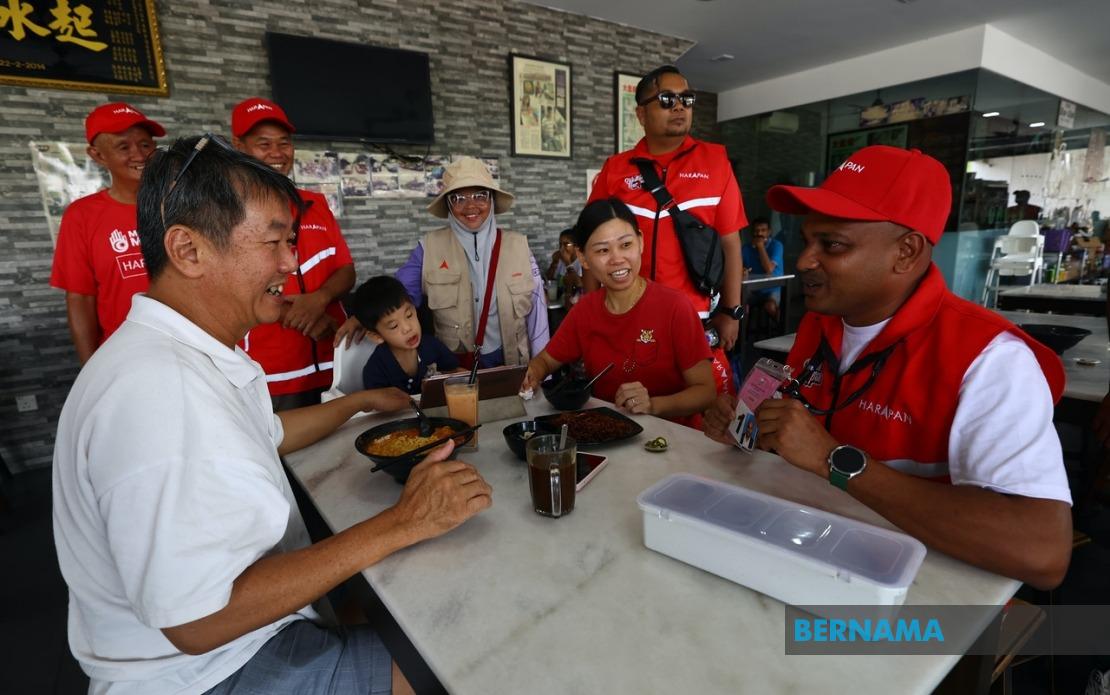
Pakatan Harapan's Guna Balakrishnan is making a final push to connect with voters in the Layang-Layang state constituency in Johor, with just five days remaining before polling day on July 11. The candidate has acknowledged that his campaign machinery has already blanketed approximately four-fifths of the electoral division, but is determined to leave no voter uncontacted in the closing phase of what is shaping up to be a closely contested three-way battle.
Speaking at the PH operations centre in Kluang, Guna stressed the urgency of maximising every remaining hour to reach the approximately one-fifth of the constituency he has not yet visited. His metaphor about elevating campaign intensity from one hundred to two hundred per cent underscores the competitive pressure in a seat where voter persuasion will likely prove decisive. The Layang-Layang division encompasses 25,181 registered voters, a substantial electorate that demands sustained organisational effort in the final stretch.
The central thrust of Guna's outreach revolves around presenting Pakatan Harapan as an agent of meaningful change in national governance. He is banking on the coalition's historical record of policy achievements to convince fence-sitting voters that backing his candidacy represents an investment in better governance for Johor. This messaging strategy reflects the broader PH narrative in the Johor contest—that voters should judge the coalition based on tangible outcomes rather than abstract promises.
Guna's manifesto addresses infrastructure deficiencies that have long frustrated Layang-Layang residents. Flood mitigation emerges as a priority, reflecting the seasonal challenges that affect many communities in the northern Johor region. He is also committing to systematic upgrades of road networks and street lighting, issues that directly impact quality of life and economic activity in suburban and semi-rural areas. These pledges resonate particularly in constituencies where aging infrastructure has not kept pace with population growth and urbanisation pressures.
Digital connectivity represents another cornerstone of his platform. Guna recognises that reliable broadband access has become essential for education and commerce, particularly in areas where residents lack proximity to urban centres. This commitment to closing the digital divide acknowledges a gap that the pandemic starkly exposed across Malaysia's less urbanised regions. For a constituency of Layang-Layang's characteristics, improved internet coverage could catalyse remote work opportunities and online entrepreneurship.
Human capital development initiatives round out his policy offerings. Guna is promoting women's entrepreneurship programmes, expansion of Technical and Vocational Education and Training (TVET) pathways for young people, and enhanced provision for senior citizens. The proposed Pusat Aktiviti Warga Emas (PAWE), or Senior Citizen Activity Centre, signals attention to demographic ageing—a concern becoming increasingly pressing across Malaysia as the population structure shifts. These measures frame Guna as a candidate concerned with inclusion across generational and gender lines.
Local trader Tan Ah Kiat, 55, has thrown his support behind Guna, crediting the candidate with understanding community needs beyond superficial campaign rhetoric. Tan's endorsement specifically highlights the manifesto's emphasis on flood management and drainage improvements, concerns that directly affect his livelihood and business operations. His backing suggests that Guna's platform is resonating with the working-class demographics who form a significant portion of the electorate in this constituency.
Tan also commended Guna's commitment to addressing internet connectivity gaps, framing this as a practical necessity for residents in less developed areas who wish to participate fully in the digital economy. This observation points to how infrastructure investments can have outsized impact in constituencies where basic services remain uneven. For rural and semi-rural voters, tangible improvements to connectivity represent genuine advancement rather than cosmetic development.
R. Kalaiselvan, 48, echoed similar sentiments while emphasising the human capital components of Guna's platform. Kalaiselvan's particular enthusiasm for TVET expansion and women's entrepreneurship programmes reflects how targeted investment in skills development and business opportunity can appeal to voters concerned about youth employment and economic mobility. His approval of the PAWE proposal suggests that Guna's manifesto demonstrates consideration for vulnerable populations across the age spectrum.
The three-cornered contest in Layang-Layang adds complexity to the electoral dynamics. Guna faces competition from Barisan Nasional's Chua Jian Boon and Perikatan Nasional incumbent Abd Mutalip Abd Rahim. The incumbent's presence complicates PH's narrative of change, as voters must decide whether they prefer continuity under PN or a shift to Pakatan Harapan's alternative direction. Guna's intensive final campaign push aims to convince voters that his vision for holistic development—spanning infrastructure, connectivity, and social welfare—offers a more comprehensive pathway forward than the incumbent administration has provided.
The timing of Guna's acceleration comes as early voting takes place on Tuesday, July 7, providing an additional tactical element to campaign planning. Candidates must balance efforts to mobilise their core supporters through early ballots while simultaneously pursuing undecided voters in the final days. For Guna, this dual challenge makes the claimed achievement of reaching eighty per cent coverage noteworthy, though the remaining fifth of voters may well prove decisive in a closely divided constituency.
The Johor state election carries broader implications for Malaysian politics beyond individual seat contests. Results will influence the trajectory of federal politics and test whether Pakatan Harapan can rebuild support in a state where it previously enjoyed significant backing. Seats like Layang-Layang, where candidates must articulate practical development agendas, will ultimately be decided by voters' assessment of who can genuinely deliver on infrastructure and social investments that improve daily life.

