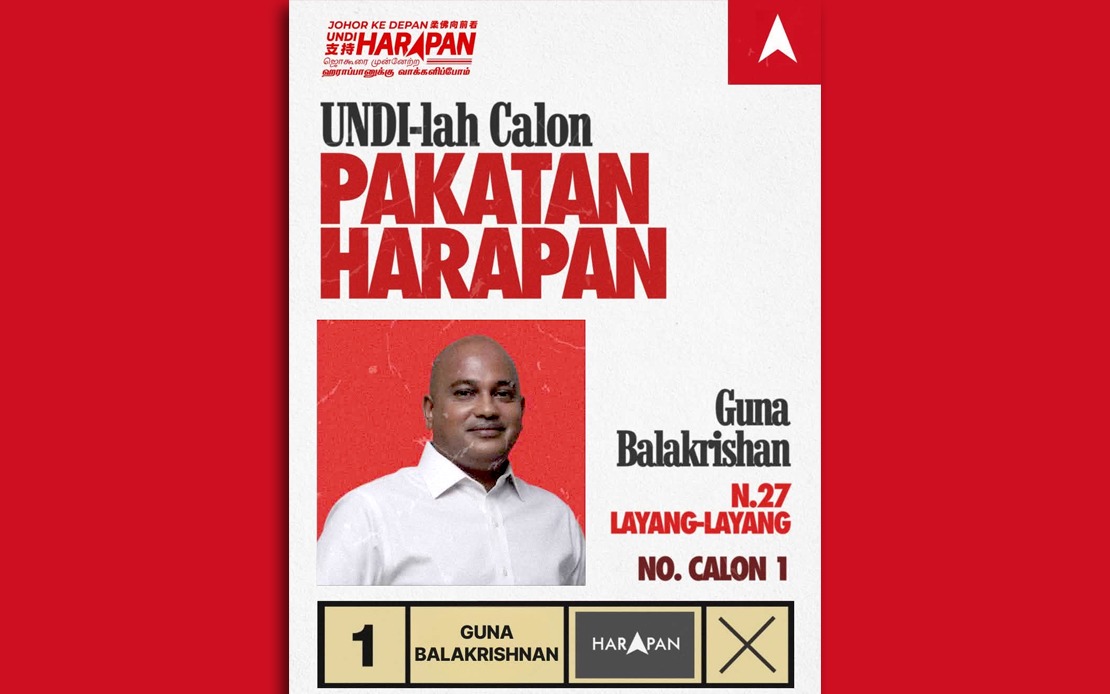
Guna Balakrishnan, the Pakatan Harapan contender for the Layang-Layang state seat, has presented an ambitious six-point manifesto designed to address longstanding grievances within the constituency whilst positioning himself as a representative genuinely invested in grassroots concerns. Speaking in Kluang, the candidate framed his pledges not as typical campaign rhetoric but as implementable commitments born from direct engagement with constituent communities, signalling an intent to maintain close ties with voters beyond election day.
The manifesto's centrepiece addresses the chronic flooding that has plagued multiple settlement areas within the constituency. Kampung Senda, Sungai Sayong, Kampung Tengah Renggam, Ulu Benut, Simpang Renggam, and Kampung Chokro have all experienced recurring inundation, causing property damage and disrupting daily life. Guna's response involves accelerating flood mitigation infrastructure projects whilst simultaneously upgrading drainage systems and implementing scheduled maintenance protocols for roads and public amenities. This dual approach suggests recognition that preventing future disasters requires both structural improvements and preventative care of existing installations—a distinction often overlooked in Malaysian electoral pledges.
Rural infrastructure development constitutes the second pillar of his agenda, with particular emphasis on digital access disparities. Many residents in Johor's interior regions struggle with inadequate internet connectivity, a barrier that extends beyond entertainment to fundamentally limit educational opportunities and small-business development. By committing to expand rural broadband coverage, Guna addresses a constraint that has become increasingly relevant post-pandemic, where digital literacy and e-commerce access correlate directly with household economic mobility. Additionally, improved street lighting represents a practical safety enhancement often neglected in state-level policy discussions despite its impact on community security and quality of life.
Economic diversification emerges as another strategic focus, particularly through supporting local traders and leveraging Renggam's tourism potential. Many Malaysian constituencies depend on a narrow economic base, making them vulnerable to sectoral downturns. By encouraging tourism development and small-enterprise growth, the candidate articulates a vision of economic resilience where residents possess multiple income pathways. This approach acknowledges the reality that state assemblyman-level interventions, though limited in scope, can meaningfully shape local business environments through facilitation and coordination.
Youth development receives dedicated attention through proposed expansion of Technical and Vocational Education and Training (TVET) access and the establishment of a motorsports facility. The TVET component addresses Malaysia's persistent skills gap, wherein vocational pathways remain underutilised despite strong employment demand in technical sectors. The motorsports facility proposal, meanwhile, attempts to channel youth energy into organised competitive frameworks, a response to concerns about unstructured leisure activities in smaller towns. Such specificity suggests campaign input from local stakeholders rather than generic manifestos recycled across constituencies.
Women's economic empowerment and senior citizen welfare form the fourth major commitment area. Supporting female entrepreneurship addresses documented disparities in business access and capital availability affecting women in rural regions, whilst the proposed Senior Citizens Activity Centre (PAWE) recognises that demographic ageing requires proactive policy responses beyond basic healthcare. These initiatives reflect contemporary social policy thinking increasingly prevalent in Malaysian electoral discourse, moving beyond infrastructure-focused promises toward human-development priorities.
Guna positioned himself as a structural bridge between community concerns and governmental machinery, a framing that carries particular weight in Malaysia's federal system where state representatives must navigate coordination between multiple administrative levels. By emphasising collaborative engagement with the Johor state government, local authorities, and relevant agencies, he acknowledged the inherent limitations of an individual assemblyman's power whilst highlighting the multiplicative effect of coordinated advocacy and resource mobilisation.
The Layang-Layang contest involves three-way competition among Guna representing Pakatan Harapan, Barisan Nasional's Chua Jian Boon, and incumbent Abd Mutalip Abd Rahim from Perikatan Nasional. With 25,181 registered voters, the constituency maintains sufficient size to influence broader state-level outcomes whilst remaining intimate enough for direct candidate engagement. This electoral configuration reflects Malaysia's contemporary political fragmentation, with no single coalition commanding overwhelming dominance even in traditional strongholds.
The Johor state election scheduled for July 11, with early voting on July 7, arrives during a period of significant political realignment within the state. Johor's electoral trajectory has shifted dramatically since 2022, creating unpredictable dynamics that favour candidates capable of articulating fresh visions whilst demonstrating genuine community investment. Guna's emphasis on consultation-based governance and locally-tailored solutions contrasts with broader national messaging, potentially resonating among voters fatigued by generic party rhetoric.
For Malaysian observers tracking federal coalition dynamics, Johor state elections serve as crucial bellwethers indicating voter sentiment regarding Pakatan Harapan's governance performance at federal and state levels. The party's ability to retain or expand representation here directly influences its bargaining capacity within federal power-sharing arrangements. Consequently, individual constituency campaigns, whilst appearing parochial, carry implications rippling through national political structures.
Guna's manifesto notably emphasises systematic implementation rather than transformative disruption, suggesting strategic positioning for a candidate entering state assembly politics. This measured approach appeals to constituencies experiencing infrastructure inadequacy and economic stagnation, where incremental improvements often represent genuine progress compared to historical neglect. The six pledges, taken collectively, outline a development vision grounded in resident consultation and inter-agency coordination—governance frameworks aligned with contemporary best practices in participatory democracy and integrated policy-making.

