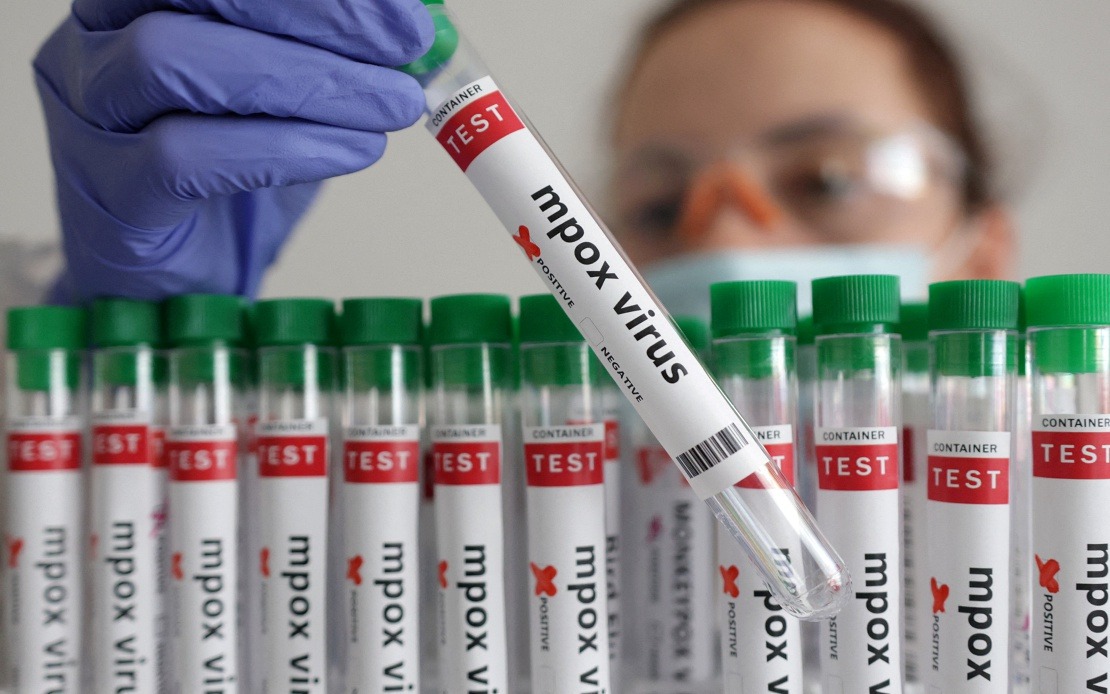
Guinea-Bissau has documented its inaugural case of mpox, marking a significant moment for the West African nation's public health system as it mobilises containment protocols to prevent further transmission. Public Health Minister Quinhin Nantote announced the detection on Saturday evening, revealing that the infected individual is a 27-year-old woman who initially presented to medical facilities on June 24 with symptoms requiring investigation and sample collection.
The diagnostic pathway followed established epidemiological procedures, beginning with health workers extracting samples from characteristic skin lesions displayed by the patient. These specimens were submitted to Guinea-Bissau's National Institute of Public Health for initial laboratory analysis, which detected the presence of mpox viral material. To ensure diagnostic precision and meet international standards, the samples underwent confirmatory testing at the Institut Pasteur in Dakar, Senegal, where scientists independently verified the mpox diagnosis before official announcement.
In response to this confirmation, Guinea-Bissau's health system has shifted into heightened alert status, implementing comprehensive protocols aligned with the International Health Regulations framework and guidance from the World Health Organisation. These mechanisms represent the institutional scaffolding that West African nations have developed following previous disease outbreaks, enabling rapid coordination between central authorities, regional health offices, and border control points. The activation of these systems demonstrates Guinea-Bissau's commitment to managing the outbreak systematically rather than allowing ad hoc responses that could compromise containment efforts.
Epidemiological investigations have commenced immediately to trace individuals who came into contact with the confirmed patient during the infectious period. This contact-tracing operation represents one of the most labour-intensive but crucial elements of disease control, requiring health workers to identify, locate, and monitor every person who had close interaction with the patient. Such investigations typically extend across households, workplaces, and community settings, with particular attention to healthcare workers and family members who may have encountered the patient during the symptomatic phase.
Surveillance systems across Guinea-Bissau have been intensified at both internal and border monitoring points, creating layered detection mechanisms designed to identify additional cases before they spread further. Border surveillance is especially critical for Guinea-Bissau given its position as a transit point in West Africa and its proximity to other nations where mpox may circulate. Enhanced screening protocols at entry and exit points can help prevent cross-border transmission while maintaining the mobility necessary for regional trade and movement.
The health minister has issued comprehensive public health guidance emphasising preventive behaviours that individuals can adopt immediately to reduce transmission risk. These recommendations centre on standard infection control practices: frequent and thorough handwashing using soap and clean water, maintaining physical distance from symptomatic individuals, and exercising caution when in contact with people displaying fever or unexplained skin rashes. Such messaging is crucial for regions where health literacy varies and where traditional beliefs about disease transmission may compete with scientific guidance.
Mpox represents a persistent public health concern across Africa, spreading through multiple transmission routes that make containment challenging in community settings. The virus propagates via direct contact with body fluids from infected individuals, through respiratory droplets expelled during close interaction, and via contact with contaminated materials such as clothing or bedding. Understanding these transmission mechanisms is essential for both health workers and the general public, as targeted prevention relies on interrupting these specific pathways rather than applying broad, disruptive restrictions.
Clinically, mpox manifests through a constellation of systemic and dermatological symptoms that healthcare providers must recognise quickly to enable prompt isolation and testing. Affected individuals typically experience fever, myalgia or muscle aches, and the characteristic skin lesions that define the disease presentation. Lymphadenopathy or enlarged lymph nodes frequently accompanies these manifestations, providing additional diagnostic clues. Early recognition and reporting of cases allows health systems to intervene before patients progress to severe illness or transmit the virus widely within their communities.
For Southeast Asian readers, Guinea-Bissau's case confirmation carries implications for regional disease surveillance networks. While mpox has circulated primarily in Central African contexts, the presence of confirmed cases across multiple African nations signals that health systems globally must maintain vigilance against importation. Malaysia's experience with infectious disease management and its robust laboratory infrastructure position the nation to support regional partners through knowledge sharing and technical cooperation, particularly regarding laboratory confirmation protocols and contact-tracing methodologies that have proven effective in tropical settings.
The broader regional context matters significantly here. West Africa's epidemiological landscape has shifted considerably since 2014's Ebola crisis, with many nations now possessing enhanced surveillance capacity and cross-border cooperation mechanisms. However, resources remain stretched, and competing health priorities—including ongoing efforts to control malaria, tuberculosis, and waterborne diseases—mean that mpox response must integrate with existing health systems rather than functioning as an isolated intervention.
Guinea-Bissau's response demonstrates how even resource-limited settings can implement evidence-based disease control when international support networks function effectively. The involvement of Institut Pasteur in confirmatory testing illustrates the importance of regional laboratory networks that can provide technical verification without requiring samples to travel to distant destinations. Such arrangements ensure diagnostic accuracy while maintaining rapid turnaround times essential for public health response.
Moving forward, Guinea-Bissau faces the challenge of sustaining heightened alert status across its health system while managing case detection and containment at an early stage. Success will depend on sustained commitment from health workers, political leadership, and public cooperation with preventive measures. The coming weeks will prove critical in determining whether this initial case represents an isolated incident or the beginning of sustained transmission that requires intensified regional response. For West Africa and indeed for global health security, monitoring this situation closely remains essential as mpox continues to evolve in its epidemiology and distribution patterns.

