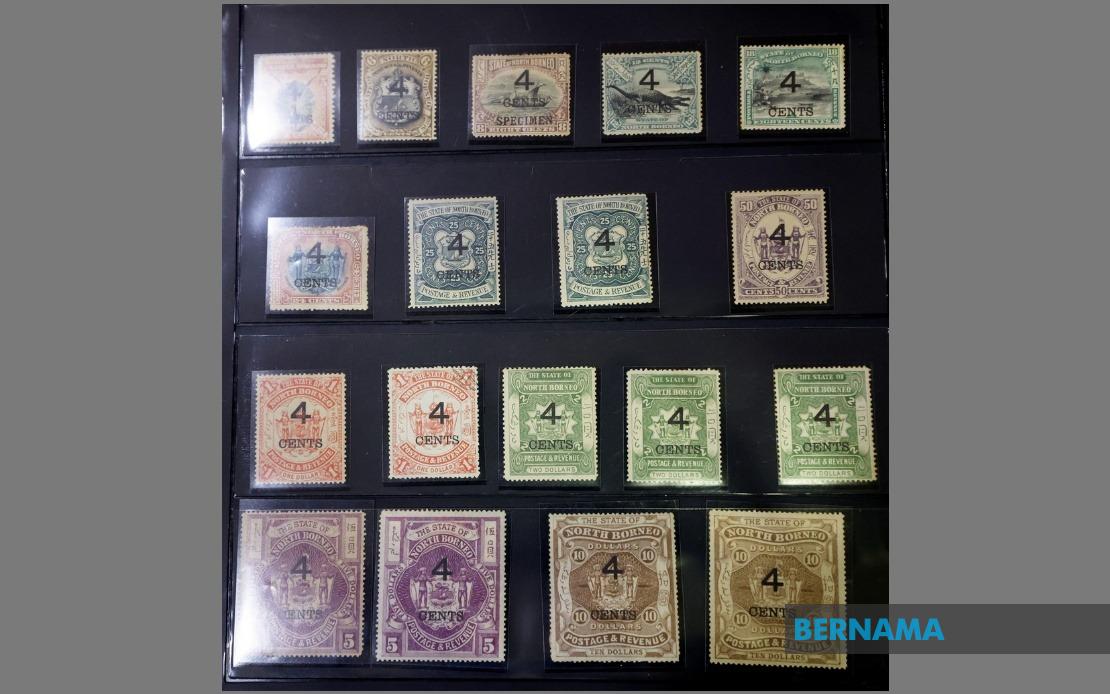
The search for historical artefacts in Kota Kinabalu's antique quarters reveals an urgent conservation challenge: North Borneo stamps issued between 1883 and 1963 are vanishing from circulation, their stories threatened with obscurity. Dr Shari Jeffri, president of the Borneo History Association, argues compellingly that these philatelic pieces constitute far more than decorative collectibles—they function as documentary evidence of Sabah's transformation across multiple colonial administrations, and their preservation has become vital as acquisition grows increasingly difficult and costly.
The decline in stamp collecting enthusiasm, particularly among Malaysians under 40, presents a cultural watershed. What once captivated generations has now contracted to a small cadre of dedicated hobbyists, with recruitment to the hobby slowing dramatically. Dr Shari, 56, articulated the generational gap plainly: contemporary audiences lack exposure to the meditative practice of building collections, and fewer individuals possess both the knowledge and passion required to appreciate the historical and artistic dimensions embedded in each specimen. This attrition threatens to interrupt an unbroken thread of grassroots historical documentation.
A systematic survey of Kota Kinabalu's antique dealers illuminated the harsh economics of preservation. Specimens command escalating prices determined by age, physical condition, and scarcity—a market dynamic that places ownership beyond reach for casual enthusiasts but also incentivises hoarding and speculation over scholarly access. The investigation did locate noteworthy examples, including a six-cent issue from 1954–1961 depicting Queen Elizabeth II beside a Dusun woman, and a ten-cent denomination illustrating logging operations, both windows into Sabah's mid-century economy and British colonial aesthetics.
Dr Shari's personal journey illuminates how philatelic passion transmits across generations and institutions. His grandfather, employed at the Recreation Club Jesselton during the 1920s, absorbed the hobby from British officers whose leisure pursuits defined colonial social hierarchies. That inherited collection became the foundation for Dr Shari's own four-decade engagement with stamp research and history. Introduced to collecting at seven years old, he intensified his involvement during secondary school years, transforming inherited materials into a platform for serious historical inquiry into the territory's postal systems and imperial administration.
The crown jewels of his holdings represent remarkable rarity: two two-cent stamps from the foundational 1883 issue, each bearing a brown sailing vessel motif and authentic postal cancellations. Within the philatelic community, possessing the 1883 denomination signals completeness and legitimacy—these are not mere postage indicators but narrative artefacts preserving governmental decisions, artistic choices, and commercial transactions from a specific historical moment. Each cancelled stamp carries embedded metadata: posting dates, office locations, times, and routes that collectively reconstruct communication networks and commercial patterns.
The British North Borneo Chartered Company introduced stamps in 1883, maintaining this system for approximately 52 years until territorial administration changed hands. The visual language evolved markedly across this period, reflecting shifting representations of colonial identity and economic activity. Early designs employed symbolic fauna—lions, boats, tigers—before transitioning around 1894 towards naturalistic depictions of Borneo's distinctive ecology: indigenous flora, fauna, and wildlife. A significant redesign in 1935 sharpened Sabah's visual identity while maintaining denominations spanning from two sen to one dollar, creating a complex taxonomy of value and circulation.
Authenticity verification has become increasingly sophisticated, requiring expertise that extends beyond Southeast Asian boundaries. Dr Shari consulted specialists Voon Kyam Foh and Tan Chun Lim based in Singapore, while cross-referencing authoritative catalogues such as Commonwealth & British Empire Stamps. Technical knowledge proves essential: genuine North Borneo specimens display specific paper compositions featuring gummed backing layers that counterfeiters struggle to replicate convincingly. The physical properties—fiber content, adhesive chemistry, printing techniques—constitute an authenticating language that separates historical documents from modern forgeries.
Conservation standards present another preservation imperative often overlooked by casual collectors. Acid-free storage albums represent the absolute minimum requirement, as conventional archival materials accelerate chromatic degradation and paper deterioration. Stamps bearing complete postal cancellations command premium valuations precisely because their preserved markings document comprehensive postal information: mailing dates, post office nomenclature, temporal sequences, and geographic origins. These cancelled specimens function as micro-archives, each one capturing bureaucratic operations and communication flows from vanished eras.
The historiographical significance extends beyond nostalgia or aesthetic appreciation. North Borneo's philatelic record documents the territory's progression through British chartered company administration, Japanese occupation during the Second World War, post-war restoration, and eventual integration into Malaysian federation. Stamp designs simultaneously reflect imperial ideology, commercial priorities, and evolving representations of the territory and its peoples. The imagery of native populations, natural resources, and colonial infrastructure communicates governmental messaging about development, exploitation, and identity during distinct temporal phases.
Digital communication has fundamentally displaced postal correspondence, rendering the functional purpose of stamps obsolete within contemporary Malaysian life. Yet this technological displacement paradoxically increases the historical value of extant specimens: they become purely documentary, valued for what they reveal rather than how they function. The transition from communication tool to historical artefact creates a preservation imperative, since nobody requires these stamps operationally and commercial demand depends entirely on historical consciousness and collecting culture.
The broader challenge confronting Malaysian heritage preservation mirrors this philatelic predicament: how does a modernising society maintain institutional memory when the technologies and practices that encoded that memory become obsolete? Stamp collecting once constituted a mass leisure activity that simultaneously educated participants about geography, history, imperial administration, and aesthetic design. As this cultural practice contracts, the knowledge frameworks it transmitted atrophy, leaving specialists like Dr Shari increasingly isolated in their effort to interpret and valorise these materials.
Reverting the decline requires multifaceted intervention. Educational institutions could integrate postal history into history curricula, demonstrating how visual culture and bureaucratic systems encode historical information. Museum exhibitions might present thematic collections contextualising stamps within broader narratives of colonial economy, indigenous representation, and territorial transformation. Digital archiving projects could democratise access to specialist knowledge, enabling researchers and enthusiasts globally to study specimens without requiring physical handling that risks deterioration. Without such initiatives, the remarkable historical archive contained within North Borneo's stamps risks fragmentation and loss as remaining collectors age and specialist knowledge passes unrecorded to younger generations.

