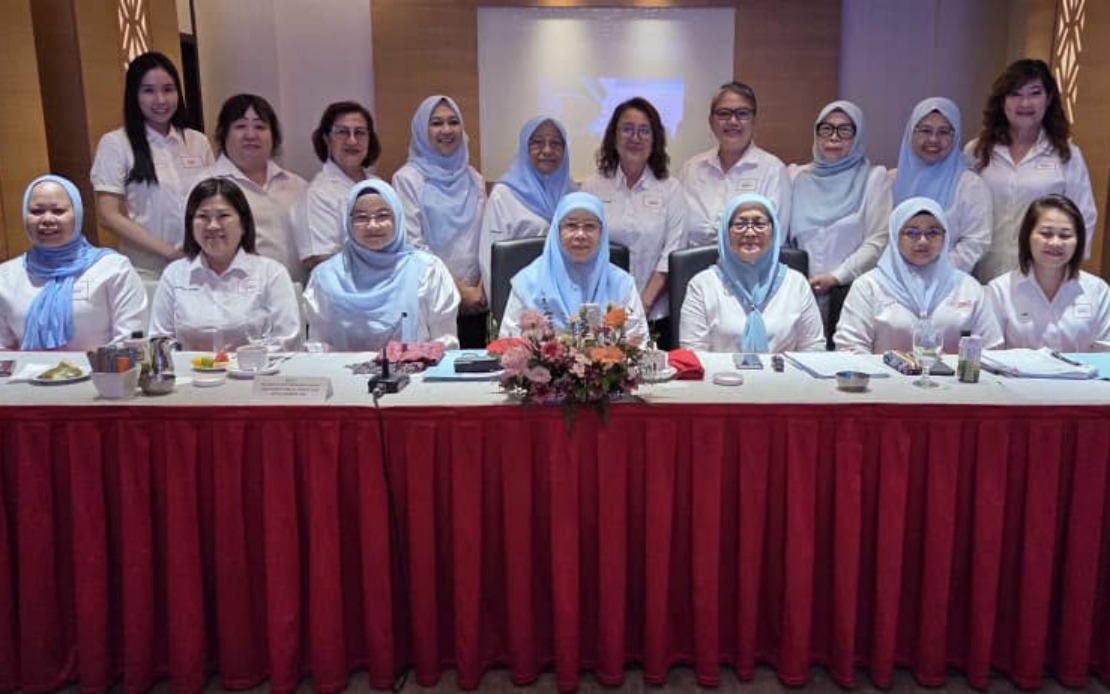
The Gabungan Rakyat Sabah (GRS) Women's wing has formalised its organisational structure by establishing five dedicated units aimed at fortifying the coalition's campaign machinery and deepening its grassroots presence in preparation for the forthcoming general election. The decision emerged from a meeting convened in Kota Kinabalu on July 22, where the wing's chief Datuk Seri Azizah Mohd Dun outlined the strategic rationale behind the restructuring initiative.
This organisational move signals a deliberate shift towards more compartmentalised and specialised operations within the women's wing, reflecting a broader trend among Malaysian political coalitions to segment their advocacy work by thematic focus rather than maintain a monolithic structure. By dividing responsibilities across clearly demarcated functional areas, GRS aims to ensure that each unit can develop expertise and execute targeted initiatives with greater precision and efficiency than a single centralised body might achieve.
The Policy and Strategy Unit, which Azizah herself will oversee, represents the apex of this new hierarchy, positioning the women's wing leadership at the centre of coalition-wide strategic thinking. Datuk Surinam Sadikun has been assigned to lead the Economic Unit, a portfolio increasingly vital as cost-of-living concerns dominate household conversations across Malaysian households. Simi Linggom's appointment to direct the Health Unit reflects the gendered nature of health advocacy, where women often serve as primary healthcare gatekeepers within families and communities. Datin Atin Belynda Buntot will manage the Information Unit, a particularly consequential role in an era where narrative control and rapid communication substantially influence electoral outcomes. Datin Wong Siow Lee @ Mary Wong takes charge of the Welfare Unit, overseeing constituency-level social assistance programmes that frequently determine voter perception of political parties' grassroots commitment.
Azizah's comments regarding the need to abandon complacency carry weight in Sabah's volatile political environment, where electoral coalitions have historically fragmented and reformed with regularity. The peninsula's experience with stable dominant coalitions does not fully translate to East Malaysian politics, where personality-driven factionalism and shifting intercommunal interests create perpetual uncertainty. Her emphasis on maintaining preparedness and flexibility suggests GRS leadership recognises that the next election cycle will likely present unexpected complications requiring nimble organisational responses.
The structured approach outlined through these five units represents a departure from informal women's wing activities that traditionally relied on volunteer enthusiasm and personal relationships between leaders and supporters. By establishing formal units with defined mandates, GRS positions its women's division to function more like a professional political apparatus capable of sustained campaign operations rather than periodic mobilisation efforts. This professionalisation becomes particularly relevant in urban constituencies where voter expectations increasingly favour parties demonstrating institutional sophistication.
The timing of this announcement carries significance, arriving at a point when Malaysian political observers anticipate the next general election within the coming years. By establishing these structures now, GRS Women's wing aims to bed in operational practices, clarify accountability chains, and allow regional coordinators to develop expertise before intensive campaign activity begins. Such advance preparation frequently translates to electoral advantages during the compressed timelines of official campaign periods.
The economic unit's prominence within this framework warrants particular attention given Malaysia's ongoing economic pressures and the specific challenges facing Sabah, where poverty rates exceed the national average and younger professionals increasingly migrate to peninsula destinations seeking better career prospects. Programming developed by this unit may ultimately prove decisive in determining whether GRS can maintain its electoral coalition in constituencies where economic grievances simmer beneath surface political alignments.
The information unit similarly reflects contemporary political realities, where digital communication, social media presence, and rapid fact-checking capacity dramatically influence electoral competitiveness. Malaysian parties that invested early and systematically in digital infrastructure and messaging consistency have generally outperformed rivals relying on traditional mass media and word-of-mouth networks. GRS Women's wing's elevation of this function suggests the coalition recognises this paradigm shift and seeks to ensure its female membership can engage effectively across contemporary communication channels.
Welfare programming administered through the fifth unit addresses the tangible service delivery that frequently determines whether voters perceive political organisations as genuinely invested in community wellbeing or primarily focused on election cycles. In Sabah constituencies particularly, where government infrastructure remains unevenly distributed and private sector development concentrates in limited urban areas, women's groups have traditionally functioned as informal safety nets assisting vulnerable households. Formalising this role through a dedicated unit potentially enhances capacity while simultaneously generating visible evidence of party contribution to constituent welfare.
The GRS Women's wing restructuring also reflects broader recognition that female political participation, when systematically organised and resourced, produces meaningful electoral outcomes. Malaysian research consistently demonstrates that women voters respond positively to parties demonstrating structured women's programming and female leadership visibility, particularly in policymaking roles. By establishing clear hierarchies and functional specialisation within its women's wing, GRS signals to female voters that the coalition takes women's political representation seriously rather than regarding it as ceremonial or peripheral.
Looking forward, the effectiveness of these units will largely depend on whether GRS allocates commensurate budgetary resources, provides ongoing training opportunities for unit leaders and volunteers, and integrates their outputs into coalition-wide strategic decision-making rather than treating them as parallel structures. Coalition politics in Malaysia frequently falters when component parties or functional wings develop independent agendas disconnected from broader coalition objectives. Maintaining alignment between these five units' activities and GRS's overall political direction will prove essential to converting structural reform into electoral advantage.

