Sustainable finance has graduated from niche banking practice to mainstream commercial strategy across Southeast Asia, driven by explosive consumer demand for electric vehicles, renewable energy installations, and low-carbon housing. Regional financial institutions are racing to expand their green lending portfolios, recognising that the shift towards clean energy and sustainable infrastructure represents not merely an environmental imperative but a significant commercial opportunity with strong underlying demand from households and businesses alike.
The transformation is most visibly reflected in the region's automotive sector, where adoption of electric vehicles is accelerating faster than many analysts predicted. According to the International Energy Agency, Malaysia's electric car sales doubled during 2025, whilst Indonesia's market more than doubled year-on-year, signalling a genuine shift in consumer preferences towards lower-emission transport. This trajectory is fundamentally reshaping how financial institutions structure their lending operations, as banks compete to capture share in the rapidly expanding EV financing segment.
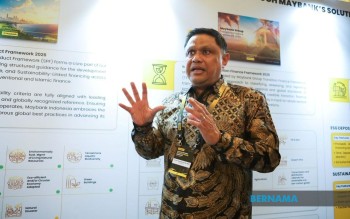
Maybank Group's aggressive expansion of its sustainable finance ambitions exemplifies this strategic pivot. The banking conglomerate has committed to mobilising RM300 billion across ASEAN between 2026 and 2030, with Group Chief Sustainability Officer Datuk Shahril Azuar Jimin emphasizing that implementation is running ahead of schedule despite the programme launching less than six months earlier. This acceleration reflects something more important than mere corporate enthusiasm: it signals that sustained, genuine demand from customers exists for financing products that support the energy transition, contradicting earlier concerns that sustainable finance might struggle to achieve commercial viability.
Sahril's remarks revealing that demand has significantly outpaced initial expectations point to a fundamental reorientation in how Malaysian and Southeast Asian consumers and businesses view sustainable investments. The group's previous five-year commitment, announced in 2021 with a target of RM80 billion, ultimately mobilised RM176 billion by the end of 2025—more than doubling that initial projection. Rather than representing a one-off surge, this pattern suggests that sustainable finance is capturing genuine, durable market demand that extends well beyond environmental advocates and conscious consumers into mainstream banking relationships across the region.
In Malaysia specifically, policy measures are reinforcing market momentum. The Energy Transition and Water Transformation Ministry's decision to increase the residential quota under the Net Energy Metering Rakyat programme by 100 megawatts in May 2025 reflects how rapidly household demand for rooftop solar photovoltaic systems has outpaced available allocations. This regulatory response creates favourable conditions for banks to deploy capital into residential renewable energy financing, turning what was once a specialised product into everyday banking business.
Maybank's sustainability framework now encompasses a far broader scope than traditional green infrastructure projects. The bank's Sustainable Product Framework now spans transition finance—helping carbon-intensive sectors restructure—alongside EV financing, green homes, green mortgages, social finance targeting lower-income communities, and green bond issuances. This diversification reflects the reality that sustainable finance has become embedded across virtually every consumer banking relationship and investment product.
Yet this commercial expansion carries profound implications for how banks operate and train their staff. Relationship managers have moved beyond simply arranging financing to becoming advisors on climate risk and sustainability strategy for clients. This transformation demands substantial investment in staff capabilities and sustainability knowledge. Maybank has committed significant resources to capacity-building programmes and sustainability certification for its relationship managers, recognising that commercial success in green finance depends on staff being able to educate clients about climate impacts, social implications of projects, and long-term transition strategies rather than merely structuring transaction mechanics.
Indonesia's market dynamics further illustrate how deeply sustainable finance has penetrated the region's financial systems. Maybank Indonesia mobilised approximately Rp17 trillion in sustainable financing during the previous commitment period, with Head of Sustainability Maria Triffany Fransiska confirming that new initiatives are progressing despite early implementation stages. Transportation has emerged as the strongest sustainable financing segment, driven by accelerating EV demand, but the bank's portfolio extends to affordable housing and low-cost electric two-wheelers targeting lower-income communities. This breadth demonstrates that sustainable finance is not confined to wealthy customers or large corporate projects but increasingly serves everyday consumer banking needs.
Maybank Indonesia's launch of environmental, social and governance deposit products—the first such offering within the group—signals how banks are expanding beyond lending into savings and investment products that align with customer values around sustainability. Malaysia is expected to follow suit, indicating that sustainable finance integration is becoming standard practice rather than differentiation. The bank is simultaneously developing green bond platforms, creating infrastructure to mobilise capital markets for sustainable projects at scale.
For Malaysian and Southeast Asian economies, this mainstream integration of sustainable finance carries significant implications. Banks deploying substantial capital into green infrastructure, renewable energy, and EV charging ecosystems essentially accelerate the region's energy transition beyond what government policy alone could achieve. The commercial competitiveness of this financing reduces costs for households and businesses adopting clean technologies, creating a virtuous cycle where lower financing costs drive faster adoption, generating larger volumes that further reduce unit costs.
However, the expansion of sustainable finance also raises questions about greenwashing and genuine impact verification. As products proliferate and competition intensifies, maintaining robust standards for what qualifies as genuinely sustainable—distinguishing between marginal improvements in existing business models and transformative shifts—becomes increasingly critical. The region's financial regulators and international standard-setting bodies will face growing pressure to clarify expectations and prevent dilution of sustainability claims.
The acceleration of sustainable finance also reflects broader recognition that energy transition and climate adaptation represent permanent economic forces reshaping investment patterns, rather than temporary regulatory pressures that might pass. Banks positioning themselves as leaders in green financing are essentially positioning for the long-term direction of capital flows across the region, betting that sustainable projects will generate superior returns and lower risks than carbon-intensive alternatives. This confidence, evident in the speed of commitment increases and the rapid scaling of products, suggests that Southeast Asian financial institutions see sustainable finance not as corporate responsibility but as strategic necessity for competitive positioning in a carbon-constrained future.

