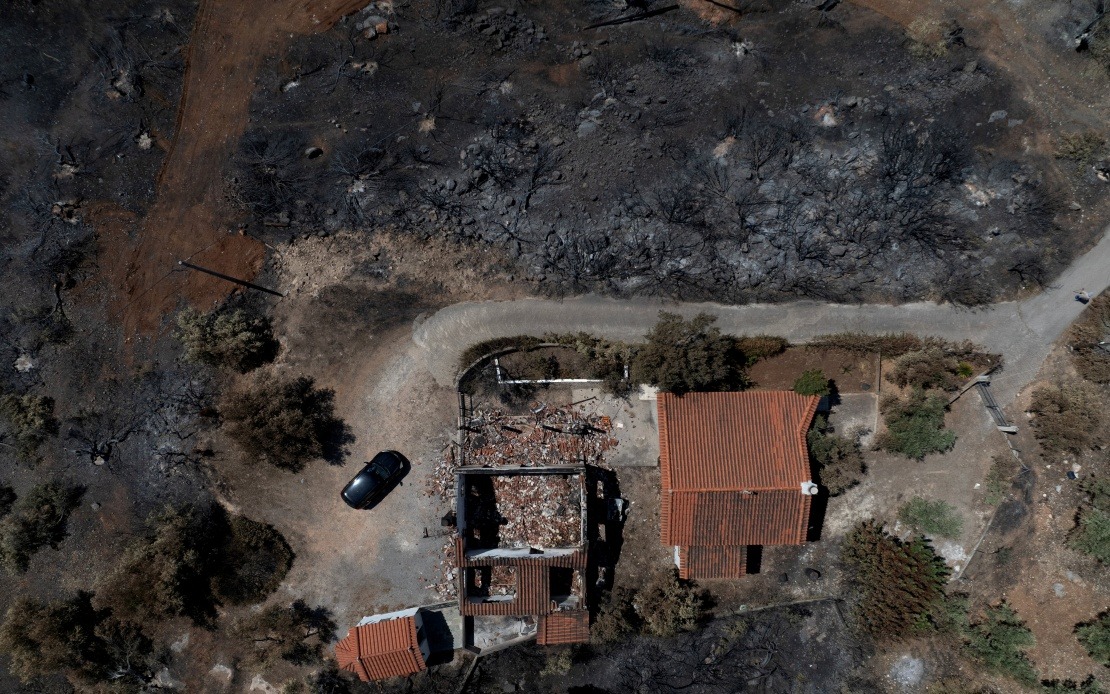
Greece's government issued its most severe wildfire warning on Wednesday for three regions including the capital Athens, signalling an exceptionally dangerous fire season that poses immediate threats to hundreds of thousands of residents and critical infrastructure. The Climate Crisis and Civil Protection Ministry elevated the alert status for Attica, Viotia, and Evia to Category 4—the maximum threat level—effective Thursday, triggering comprehensive emergency protocols and deployment of extraordinary resources across multiple agencies and military units.
The timing of this red alert reflects the perilous convergence of meteorological and seasonal factors gripping southern Greece. The regions facing Category 4 designation experience scorching summer temperatures, parched vegetation, and conditions that transform forests and scrublands into tinderboxes requiring only minimal ignition to explode into conflagrations. The alert system represents years of institutional learning from previous catastrophic wildfire seasons that have devastated communities and claimed lives. Activating the National Civil Protection Mechanism at full operational capacity mobilises thousands of personnel and specialised equipment positioned for rapid response.
The operational response to wildfire threats in Greece now encompasses a coordinated multi-agency approach that did not exist in previous decades. Ground and aerial patrols conducted by fire service, police, and armed forces personnel operate continuously throughout designated high-risk zones. This visible security presence serves multiple purposes: identifying emerging fires at earliest stages, reassuring residents that authorities are actively managing risks, and deterring activities that might inadvertently trigger blazes. The comprehensive nature of these operations reflects how Greece, like many Mediterranean nations, treats wildfire management as a national security concern demanding resources comparable to other critical infrastructure protection.
Preventive traffic restrictions and visitor limitations imposed on forests and vulnerable areas during red alerts represent significant constraints on civilian movement that authorities impose only when danger becomes genuinely existential. These restrictions prevent well-intentioned but potentially reckless recreational access that could generate sparks through vehicle malfunctions, discarded cigarettes, or uncontrolled campfires. While restrictive measures inevitably frustrate residents and tourists accustomed to summer forest activities, Greek authorities have consistently prioritised preventing catastrophic fire spread over preserving convenience during peak danger periods.
Wednesday's alert came as firefighting teams achieved containment of a significant blaze near Koropi, located southeast of Athens in Attica's vulnerable southern reaches. That fire, originating in low vegetation near the Driggia area around mid-afternoon, demonstrated how rapidly conditions can escalate during high-risk periods. The response deployed 52 firefighters including three specialised forest commando units—elite personnel trained for the most extreme terrain and dangerous conditions—alongside 14 vehicles providing ground support. The aerial dimension involved four helicopters and two water-dropping aircraft, multiplying response capacity and enabling rapid escalation or de-escalation based on fire behaviour.
The Koropi incident exemplified modern wildfire suppression coordination that has evolved throughout the Mediterranean region. Thermal and optical drone cameras allowed operations centres to monitor fire behaviour in real-time, providing commanders with information that improved targeting of aerial water drops and ground movements. Local authorities contributed water tankers that supplemented centralised resources, reflecting how wildfire response depends on cooperation across governmental levels and jurisdictions. Critically, investigators specialising in arson detection were immediately dispatched, recognising that determining fire origins—whether accidental or deliberately set—matters for both accountability and prevention of recurring incidents.
More ominously, firefighters simultaneously battled a vastly larger conflagration that erupted in Viotia the previous week and subsequently spread into western Attica, compounding resource demands across the affected regions. According to data from the European Union's Copernicus satellite monitoring system, which provides objective measurement of fire extent through advanced remote sensing technology, that blaze had already consumed approximately 14,424 hectares—equivalent to roughly 35,642 acres or an area larger than many Southeast Asian towns. The sheer scale of this ongoing fire demonstrates why authorities treat current conditions as genuinely catastrophic rather than merely concerning.
These escalating wildfire emergencies carry implications extending far beyond Greece's borders, particularly for Southeast Asian nations experiencing similar climate patterns and seasonal fire risks. Mediterranean and tropical regions share fundamental vulnerabilities to increasingly severe fire seasons driven by warming temperatures, altered precipitation patterns, and extended drought periods. The institutional responses Greece has developed—satellite monitoring, multi-agency coordination, aerial firefighting assets, and graduated alert systems—represent models that Malaysia and neighbouring countries might adapt for their own fire management frameworks. The economic and human costs of inadequate wildfire preparedness, measured in lives lost and property destroyed, create compelling incentives for knowledge transfer across regions.
The tragedy that underscored the genuine peril of current operations occurred on Sunday when two firefighting helicopters collided midair during operations against the Viotia-Attica blaze, killing a Danish pilot and a Greek aerial coordinator. That catastrophe illustrated how aggressively firefighting operations necessarily proceed when fires threaten populated areas and critical infrastructure, and how such intensity inherently carries fatality risks even among highly trained specialists operating state-of-the-art aircraft. The incident prompted both memorial tributes and renewed examination of aerial coordination procedures, recognising that human error or equipment failure during complex operations can rapidly transform routine responses into tragedies.
Greece's wildfire emergency occurs within the broader context of Mediterranean climate change impacts intensifying across southern Europe. Rising baseline temperatures create conditions where fire seasons lengthen, fire intensity increases, and areas previously considered relatively safe from major blazes become vulnerable. The nation's experience managing these escalating threats through technological innovation, institutional coordination, and substantial resource deployment offers both encouraging evidence that civilised societies can develop effective responses and sobering reminders that prevention and preparation remain perpetually inadequate compared to the destructive potential of major wildfires. For regional neighbours including Malaysia facing similar climate pressures, Greece's institutional investments in wildfire management merit careful study and adaptation.

