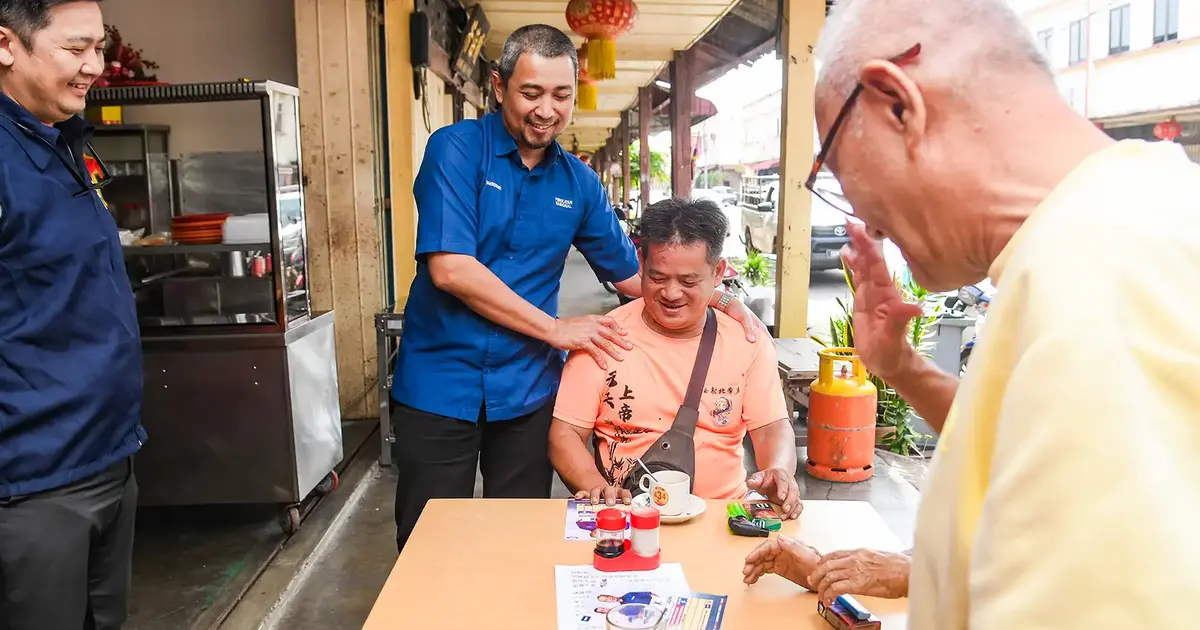
The Bersatu-PAS partnership that forms the backbone of the Perikatan Nasional (PN) coalition continues to function at the ground level in Johor, according to Dr Sahruddin Jamal, the state's PN chairman, suggesting that friction at the national leadership tier has not yet fractured the movement's operational machinery. Speaking on the state of intra-coalition relations, Dr Sahruddin noted that despite recent tensions between the two parties' central commands, rank-and-file members remain willing to work together, particularly evident in collaborative campaign efforts for contested seats.
The Bukit Kepong parliamentary seat has become a testing ground for this grassroots cooperation. Dr Sahruddin, who is contesting the seat, has received active campaign support from PAS party machinery and volunteers, despite the broader tensions that have played out in public statements and policy disagreements between Bersatu and PAS leadership at the national level. This distinction between top-level friction and ground-level functionality reveals a common pattern in Malaysian coalition politics, where ideological or personal disputes among party elites do not always translate into immediate breakdown at the membership level.
The Perikatan Nasional coalition has weathered several months of visible strain between its two major components. Disagreements over policy direction, resource allocation, and political positioning have created headlines and raised concerns about the coalition's durability. Yet the persistence of collaborative grassroots activity suggests that the rupture, while real, remains compartmentalized within leadership circles. Many party members, particularly those engaged in local politics and electoral campaigns, appear to view the partnership as functionally necessary and remain committed to its success at the state and constituency level.
Johor's political landscape makes such cooperation strategically important. The state remains a critical battleground for both Bersatu and PAS, and maintaining electoral competitiveness against the ruling Pakatan Harapan coalition and other opposition players requires unified deployment of resources and volunteer effort. Dr Sahruddin's comments suggest that local party leaders recognize this imperative and are conscious of the risks posed by allowing national-level disputes to paralyze campaign machinery where contests are closely fought.
The Bukit Kepong seat itself carries symbolic weight. As a parliamentary constituency where PN has electoral ambitions, the ability to run a coordinated campaign using the strengths of both Bersatu and PAS represents a test case for coalition functionality. The fact that Dr Sahruddin, a Bersatu figure, is receiving PAS support indicates willingness from the PAS grassroots to prioritize PN's collective electoral interests, at least in selected contexts. This arrangement reflects pragmatism: both parties benefit from winning additional parliamentary seats, and the mathematics of Malaysian electoral politics often requires such cooperation.
However, the qualified nature of Dr Sahruddin's observations—noting that cooperation persists despite tensions rather than denying tensions exist—reveals the fragility underlying this arrangement. Cordial relations at the grassroots typically depend on consistent messaging from leadership and on the absence of dramatic escalations at the top. Should central disputes intensify or become personalized, the willingness of ordinary members to cooperate could erode quickly. Malaysian political coalitions have frequently collapsed when leadership conflicts metastasized into organizational breakdowns, suggesting that the current arrangement remains contingent rather than assured.
The distinction between different levels of political organization also reflects broader patterns in how Malaysian parties function. Unlike more centralized political structures, Malaysian political parties maintain considerable autonomy at the state and division levels. This can create situations where official policy from national headquarters receives selective implementation or reinterpretation at lower levels. In this case, it appears that Johor PN leaders have tacitly decided to emphasize cooperation despite national-level discord, banking on electoral gains and organizational stability trumping ideological consistency with central directives.
For the broader PN coalition, the continued grassroots collaboration in Johor provides some reassurance about the partnership's resilience. The coalition cannot afford a complete breakdown—both Bersatu and PAS lack sufficient individual strength to mount serious federal challenges alone, and Malaysian voters have generally punished coalitions perceived as internally fractious. Yet the fact that cooperation is described as persisting "despite" tensions, rather than having fully resolved those tensions, indicates that the current state represents a managed crisis rather than a genuine restoration of harmony.
The implications extend beyond Johor. If the coalition's ground-level structures continue functioning despite leadership disputes, it suggests that other state-level operations may similarly maintain operational capacity. This could buy time for national leadership to resolve outstanding differences before they damage electoral performance in a general election. Conversely, if tensions escalate further, even these localized cooperation arrangements could become untenable as party members face pressure to take sides in central disputes.
Dr Sahruddin's assessment ultimately presents a picture of a coalition under stress but not yet broken. The Bukit Kepong campaign will likely provide important signals about whether this temporary equilibrium can be sustained through the electoral cycle or whether the organization will follow the trajectory of previous Malaysian coalitions in which leadership breakdown eventually undermined cooperation at all levels. For now, Bersatu and PAS members in Johor appear committed to proving that pragmatism can override disagreement, though this arrangement's durability remains uncertain.

