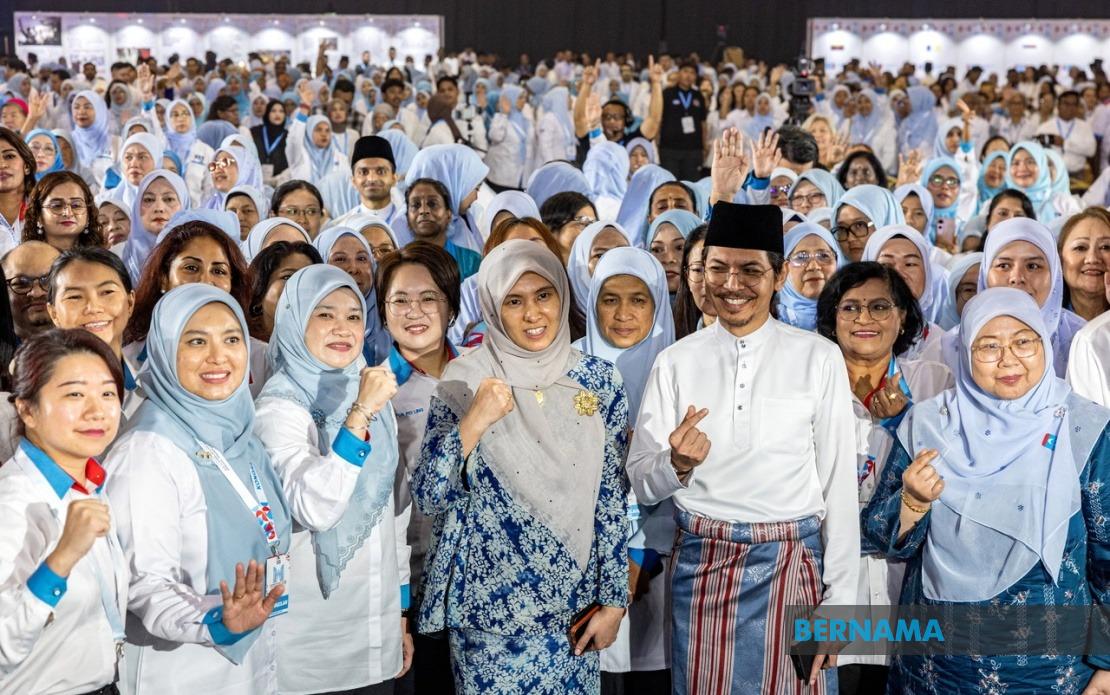
Muhammad Kamil Abdul Munim, chief of Angkatan Muda Keadilan (AMK), has underscored a critical challenge facing Malaysia's political landscape: the need for elected representatives to cultivate and maintain robust grassroots networks that keep them genuinely connected to the communities they serve. Speaking during the 2026 AMK National Congress in Melaka, Kamil articulated a vision of political engagement that extends far beyond the traditional mechanics of campaigning, touching instead on the foundational relationship between parties and their constituents that determines long-term political sustainability.
The emphasis on grassroots connectivity reflects a growing recognition within Malaysian political circles that electoral success increasingly depends on the ability to shape narratives at the local level. According to Kamil, the presence of political machinery and the quality of communication channels matter considerably, but these elements lose their potency if they are disconnected from the lived experiences and immediate concerns of ordinary citizens. This perspective suggests a recalibration of how parties approach their engagement strategies, particularly in an era when misinformation and counter-narratives can spread rapidly through social media and informal networks.
Kamil pointed to the strategic value of maintaining strong community relationships as a bulwark against negative perceptions initiated by political rivals. In the Malaysian context, where multiparty competition is intense and coalition politics often shifts dramatically, the ability to control one's narrative at the grassroots level becomes a significant competitive advantage. When a party enjoys genuine goodwill and regular interaction with community members, it creates a buffer against externally manufactured controversies and allows leaders to directly address accusations or misrepresentations before they take root in public consciousness.
The AMK chief's remarks carry particular weight as the nation approaches the next electoral cycle. He stressed that preparation for elections cannot rely solely on messaging crafted at the national or strategic level. Instead, parties must demonstrate attentiveness to the specific challenges, aspirations, and cultural contexts of individual communities. This devolved approach to political communication acknowledges the reality that voters across Malaysia's diverse regions and neighbourhoods face markedly different circumstances, and cookie-cutter political messaging often rings hollow when applied indiscriminately.
Central to Kamil's argument is the relationship between grassroots engagement and institutional integrity. He voiced concern that without deliberate effort to deepen members' understanding of party principles and historical struggles, younger and newer recruits risk becoming disconnected from the ideological foundations that supposedly bind the organisation together. This represents a tangible worry about organisational drift, where parties gradually abandon their core missions in pursuit of electoral gains or factional advantage. The phenomenon is not unique to Malaysian politics but has proven particularly acute during periods of rapid coalition realignment.
Kamil called on local-level leaders to substantially increase their programming and interactive activities with party members, especially those who have recently joined. These initiatives should be designed to create a coherent understanding of why the party exists, what it stands for, and what responsibilities members assume by participating in its structures. Without this foundational knowledge transfer, new members become merely campaign volunteers or vote mobilisers rather than committed ideological advocates who can articulate their party's vision independently.
The distinction Kamil draws between polishing idealism and mere operational efficiency reflects a deeper anxiety about what happens when parties neglect their educational and mentoring functions. When leaders invest insufficient effort in helping members internalise party values and historical context, the organization becomes vulnerable to fragmentation, defection, and the gradual erosion of distinctive identity. Members who do not understand the rationale for their party's positions are more likely to abandon the party when circumstances change or when attractive alternative offers materialise.
From a regional perspective, Kamil's observations resonate across Southeast Asia, where political parties in Indonesia, Thailand, and the Philippines have all grappled with similar questions about institutional coherence and grassroots relevance. The Malaysian experience, with its sophisticated multiparty system and a relatively educated electorate, illuminates the challenges that emerge when political organisations lose touch with their foundational constituencies. The rise of independent candidates and single-issue movements in recent years partly reflects voter frustration with parties that appear remote, disconnected, or fundamentally uninterested in local concerns.
The practical implications of Kamil's argument extend to campaign strategy and resource allocation. If grassroots networks and community relations are indeed as important as national messaging machinery, then parties should reconsider how they distribute funding, personnel, and organisational attention. Many Malaysian parties have historically concentrated resources on central-level operations and candidate recruitment, potentially leaving local party structures under-resourced and inadequately equipped to execute sustained community engagement programmes.
Kamil's emphasis on narrative control at the grassroots level also highlights the vulnerability of political parties to coordinated digital misinformation campaigns. When communities have direct, regular contact with party representatives and members, they are better positioned to evaluate claims against what they observe and know about those representatives. Conversely, communities isolated from regular partisan engagement become more susceptible to outside narratives, including false or misleading information designed to undermine a particular party's standing.
The timing of these remarks, delivered during a party congress rather than a campaign setting, suggests that AMK leadership views grassroots renewal as an ongoing strategic imperative rather than an election-cycle afterthought. This perspective potentially positions the youth wing as a laboratory for developing sustainable engagement models that could eventually be scaled across the broader Keadilan structure. For Malaysian voters and political observers, Kamil's message serves as a useful reminder that the quality of democracy depends substantially on the depth of connection between political organisations and the communities they aspire to represent.

