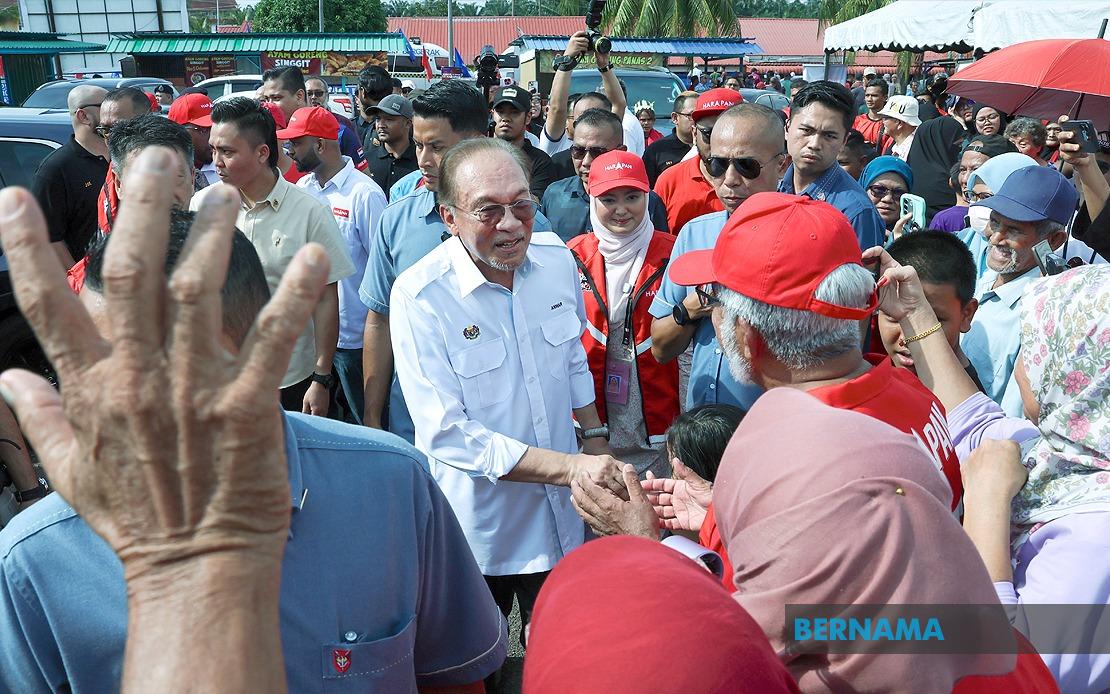
A grandmother's determination to see her grandson's dream realised has become an unexpected lesson in perseverance and the human touch that resonates with ordinary Malaysians. Rosimah Mohammad, 58, from Kampung Pudu in Segamat, Johor, made the decision to ride a motorcycle through the oil palm estates with her nine-year-old grandson Muhammad Afif Ikhwan to a programme at Felda Palong Timur on a Sunday last July. The journey itself, crossing through working agricultural landscapes, underscores the lengths a grandparent will travel and the physical commitment required when family aspirations meet rural geography.
Muhammad Afif had long harboured a wish to meet Prime Minister Datuk Seri Anwar Ibrahim, a desire that had occupied his thoughts to the point of disrupting his sleep in the nights leading up to the event. The anticipation was palpable; for a child, meeting a national leader represents not merely a encounter with a public figure but an affirmation that his admiration for that person matters and deserves recognition. His grandmother recognised this longing as something worth pursuing, regardless of the logistical hurdles involved in arranging transport and navigating the venue as attendees arriving from a small village.
When they arrived at the Felda Palong Timur venue, Rosimah and Muhammad Afif positioned themselves strategically near the pathway to the stage, hoping for a clearer view of the Prime Minister. Their patience and positioning paid off in a manner neither could have anticipated. As Anwar made his way towards the stage while engaging with members of the public gathered for the event, the young boy summoned the courage to push through the crowd and extend his hand in greeting. In that split second, a simple handshake was about to transform into something more memorable.
What began as a brief physical acknowledgement evolved into an unexpected invitation. The Prime Minister, upon seeing the boy's enthusiasm, did not simply shake his hand and move on. Instead, Anwar invited Muhammad Afif to accompany him onto the stage while he delivered his speech to the assembled crowd. For a nine-year-old, being elevated to the stage beside the nation's leader represents a profound moment of inclusion and validation that many adults never experience. Rosimah witnessed her grandson's expression shift from excited anticipation to genuine astonishment and joy, a transformation she describes as emotionally overwhelming.
The gesture extended beyond the moment of the event itself. After learning about the circumstances of Muhammad Afif's visit and the effort his grandmother had undertaken, the Prime Minister's office took special notice. Rather than allowing the encounter to fade into memory, Anwar requested that a representative visit the boy's home to deliver a personal token of appreciation. This follow-up visit transformed a chance meeting at a public event into something more intentional and touching, signalling that the Prime Minister had taken genuine interest in the child's story.
PKR deputy information chief Siti Aishah Shaik Ismail, representing Anwar, visited Kampung Pudu the following day to present gifts that reflected both thoughtfulness and practicality. The bicycle, school bag, and pair of shoes were not generic gifts but items selected for a child's everyday needs and aspirations. Such presents carry implicit messages about education, mobility, and growth—values that align with the Prime Minister's public positioning. The visit itself, however, may have been equally significant as the material gifts, as it conveyed that leaders can remain accessible and responsive to citizens, even those in rural areas.
What makes this story particularly resonant for Malaysian readers is how it illustrates the persistence of traditional family bonds in an era of rapid modernisation. A grandmother choosing to ride a motorcycle through oil palm estates, rather than dismissing her grandson's wish as impractical, reflects values that remain central to Malaysian and Southeast Asian culture. The willingness to make sacrifices for a child's happiness and aspirations transcends economic class and geography, and Rosimah's actions demonstrate that such dedication can occasionally intersect with public figures in meaningful ways.
Muhammad Afif's response to his encounter further underscores the emotional weight of such meetings for young people. According to his grandmother, the boy now hugs the shirt he wore during the event each night before sleep, transforming a piece of clothing into a tangible connection to a formative experience. This nightly ritual suggests that the memory has become part of his developing identity and sense of possibility about his place in Malaysian society. For a child, such moments can crystallise into touchstones that influence how he views leadership, accessibility, and the responsiveness of public institutions.
The story also subtly reflects broader questions about how political leaders interact with constituencies beyond formal channels and prepared settings. The Prime Minister's willingness to include an unknown child on stage, and subsequently to request a follow-up visit to the boy's home, demonstrates a political calculus that values human connection and informal engagement. In an era when much political communication occurs through managed media and controlled environments, such spontaneous moments of genuine interaction carry heightened significance and authenticity.
For rural communities in Johor and across Malaysia, narratives like this one serve as reminders that geographic remoteness need not equate to invisibility or disconnection from national leadership. The fact that a child from Kampung Pudu, Segamat, could travel to a Felda event and encounter the Prime Minister speaks to the relatively open nature of Malaysian public political gatherings. Unlike in more restrictive political environments, citizens can still position themselves to see and potentially interact with elected leaders at public functions.
The grandmother's motorcycle journey has thus become more than a story about a child's dream; it exemplifies the everyday resilience and ingenuity of Malaysian families who navigate infrastructure and distance to access opportunities. Rosimah's decision to make that ride, the boy's courage to reach out, and the Prime Minister's responsiveness in return all contribute to a narrative that affirms the possibility of connection across hierarchies and geographies. In a region where many citizens feel distant from their leaders and institutions, such stories carry disproportionate cultural and political weight.

