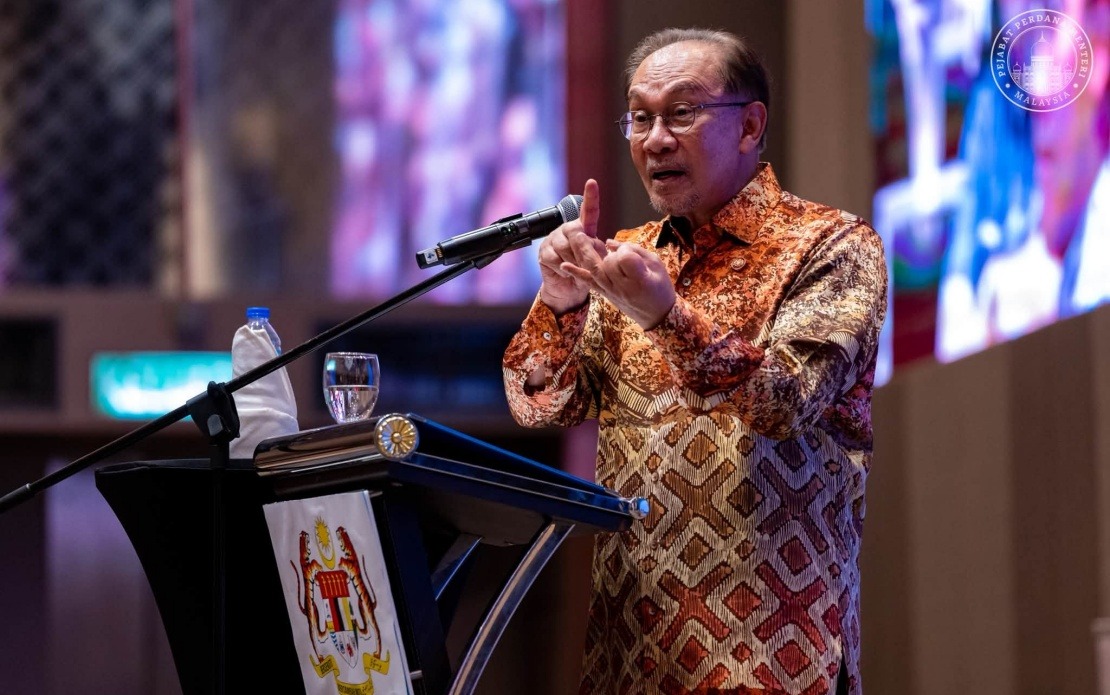
Prime Minister Datuk Seri Anwar Ibrahim has reaffirmed the government's commitment to mobilizing its full capacity in addressing the mounting pressures confronting Malaysia's younger generation. Speaking after a series of intensive consultations with youth leaders, the premier underscored the administration's resolve to provide substantive support as young people grapple with an increasingly intricate landscape of social, economic, and ideological complexities.
The Prime Minister's reassurance emerged following two significant youth-focused events held in Selangor: the "Temu Anwar" engagement session and the inaugural ceremony for the 2026 International Youth Assembly, commonly known as HAMKA, held in Klang. These platforms provided Anwar with direct access to youth perspectives on pressing national issues, creating a channel through which young Malaysians could articulate their concerns and expectations from the federal government.
In his assessment of the contemporary youth landscape, Anwar acknowledged that today's young people inhabit a world marked by profound complexity and persistent disagreement. He observed that differences in perspective and ideological friction have become unavoidable features of modern discourse. However, the Prime Minister emphasized that such contestation must be anchored in intellectual rigor, evidence-based reasoning, and civil conduct rather than driven by emotion, prejudice, or factional allegiance. This framing suggests a government perspective that views youth-oriented policy not merely as welfare provision, but as an investment in cultivating a generation capable of thoughtful civic engagement.
The scope of issues raised during the engagement sessions spans the breadth of youth concerns, though the government statement does not enumerate specific policy areas in detail. This ambiguity reflects a broader pattern in Malaysian political communication, where prime ministerial pronouncements often establish general commitments while leaving implementation details to subsequent departmental announcements. For Malaysian youth advocates and observers, the challenge lies in translating such pledges into concrete programmatic outcomes across education, employment, mental health, environmental sustainability, and political participation.
Anwar's invocation of HAMKA's namesake—the early 20th-century Indonesian Islamic scholar, poet, and social commentator Abdul Malik Karim Amrullah—carries symbolic weight within the Malaysian context. The historical figure represented a synthesis of intellectual depth, oratorical prowess, and written advocacy, embodying qualities that Anwar seemingly wishes to associate with contemporary youth development. By linking HAMKA to this intellectual heritage, the Prime Minister frames youth assembly participation not as mere consultation theatre, but as connection to a tradition of rigorous thought and courageous expression.
The historical Abdul Malik Karim Amrullah's legacy emphasized the centrality of knowledge acquisition, the courage to articulate unconventional views, and intellectual openness in the generation of novel ideas. These principles, Anwar suggested, remain pertinent to navigating present-day challenges. The implicit message carries significance for Malaysian youth policy: an effective government response should facilitate spaces where young people can develop critical thinking, express dissenting viewpoints without fear of retribution, and participate actively in shaping national discourse.
For Malaysia's broader developmental context, youth engagement represents a strategic imperative. The nation's demographic profile still skews relatively young, yet youth unemployment, underemployment, and skills mismatches persist as stubborn structural challenges. Additionally, Malaysia's sociopolitical fabric increasingly demonstrates generational divides over issues ranging from religious pluralism to democratic governance to economic justice. A government that can credibly engage young people across these fault lines while demonstrating responsiveness to their concerns may gain significant political capital and social stability benefits.
The timing of these youth-focused initiatives occurs within a broader context of Malaysian governance transitions and political realignment. Prime Minister Anwar's administration has positioned itself as a reformist force committed to institutional renewal and inclusive policymaking. Youth engagement rhetoric aligns with this broader narrative, signaling to both domestic and international audiences that Malaysia's leadership takes seriously the imperative of generational inclusion and democratic participation.
However, the transformation of governmental commitment into effective policy outcomes remains contingent on resource allocation, institutional capacity, and sustained political will. Youth advocates in Malaysia have historically noted gaps between political promises and implementation in areas such as youth employment initiatives, mental health services, and meaningful participation in governance structures. The degree to which the current government closes these implementation gaps will substantially determine the credibility of Anwar's pledges among younger Malaysians.
The reference to conducting discourse through knowledge and argument rather than sentiment and hatred resonates with contemporary Southeast Asian preoccupations regarding social cohesion in pluralistic societies. As digital platforms amplify divisive messaging and ideological polarization intensifies across the region, governments increasingly recognize that youth formation toward constructive civic engagement represents both a developmental necessity and a bulwark against extremism and societal fracture. Malaysia's strategic position within Southeast Asia makes its approach to youth engagement potentially consequential for regional stability patterns.
Moving forward, the substantive test of government commitment will manifest through budget allocations to youth-facing programs, institutional reforms that expand genuine youth participation in decision-making processes, and tangible improvements in employment prospects and social services. The government's capacity to deliver across these dimensions will determine whether the prime ministerial commitment articulated at HAMKA's opening ceremony translates into the transformative support that Malaysia's youth increasingly demand and deserve.
The International Youth Assembly itself, as a continuing institutional platform, may serve as a mechanism through which government responsiveness can be monitored and accountability mechanisms sustained. If HAMKA evolves into a genuine forum where youth voice shapes policy rather than merely receives ministerial platitudes, it could represent a meaningful structural innovation in Malaysian governance. Conversely, if the assembly becomes primarily ceremonial, the current government's professed commitment to youth support will face credibility challenges among the demographic it seeks to influence.

