Prime Minister Datuk Seri Anwar Ibrahim has taken direct action to address the mounting financial strain facing Malaysia's manufacturing sector amid turbulent global supply conditions. In a statement posted on X on Monday, he revealed that he has instructed both the Ministry of Investment, Trade and Industry (MITI) and the Ministry of Economy to initiate substantive discussions with domestic manufacturers grappling with escalating cost burdens stemming from international supply chain instability.
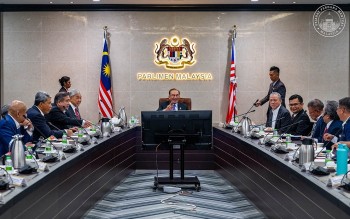
The directive emerged following a morning session of the National Economic Action Council (MTEN), which Anwar chairs in his capacity as both prime minister and finance minister. During the meeting, council members examined an array of policy instruments aimed at fortifying Malaysia's manufacturing resilience in the face of persistent global headwinds. The focus reflects growing anxiety within the domestic business community about the ripple effects of worldwide supply disruptions on production costs and competitiveness.
The plastics manufacturing sector has emerged as a particular concern for policymakers evaluating the health of Malaysia's industrial base. This industry segment underpins several critical downstream sectors that form the backbone of Malaysia's export economy and employment. The government's targeted attention on plastics reflects the sector's critical position as a supplier to food packaging manufacturers, makers of electrical and electronics (E&E) components, automotive suppliers, and medical device producers—all industries that depend on stable, affordable plastic feedstock and intermediate materials.
Economy Minister Akmal Nasrullah Mohd Nasir provided detailed context on the plastics industry's economic significance during a public briefing streamed through the ministry's Facebook channel. According to his presentation, the sector generated sales valued at RM62.69 billion during 2025, representing a decline from RM64.78 billion recorded in the previous year. This contraction signals tangible economic pressure within the industry, even as it continues to serve as a cornerstone supplier for downstream manufacturing.
The composition of the plastics market illustrates how this industry's challenges cascade through the broader economy. Packaging applications account for nearly half of sector revenue at 45 per cent, making the food and beverage industry particularly vulnerable to cost increases. The electrical and electronics sector follows closely, representing 29 per cent of demand, underscoring the link between plastics pricing and Malaysia's globally competitive E&E manufacturing base.
The ripple effects of plastics industry strain extend far beyond these primary customers. When plastic producers face margin compression from elevated raw material costs or logistics expenses, the consequences spread rapidly through interconnected supply chains. Food packaging manufacturers face higher input costs that they struggle to pass on to customers in competitive global markets. Automotive suppliers experience similar pressures, as plastic components have become integral to modern vehicle design and manufacturing. Medical device manufacturers, operating in heavily regulated and margin-sensitive markets, find themselves squeezed between rising material costs and stable pricing from customers. Construction firms, agricultural processors, and export-oriented manufacturers all experience downstream impacts when plastics become more expensive.
The government's recognition of these cascading effects demonstrates sophisticated understanding of how supply chain vulnerabilities in one sector can undermine competitiveness across multiple industries. By directing MITI and the Economy Ministry to engage directly with industry stakeholders, the government signals its commitment to finding solutions rather than allowing market forces to work without policy intervention. The engagement process will likely involve detailed fact-finding about specific bottlenecks, cost drivers, and potential policy responses.
For Malaysia's manufacturing ecosystem, the timing of government attention is significant. The country has worked to position itself as a reliable, cost-competitive manufacturing destination for multinational companies seeking alternatives to China-dependent supply chains. Global supply chain realignment following recent geopolitical tensions and pandemic disruptions has created opportunities for Malaysia to attract additional investment and production capacity. However, these opportunities can only be captured if local manufacturers maintain cost competitiveness and supply reliability.
The engagement between government agencies and manufacturers will likely explore multiple intervention avenues. These could include tariff adjustments on imported plastic raw materials, logistics infrastructure improvements to reduce transport costs, refinancing or credit facility enhancements to improve cash flow for manufacturers navigating price volatility, or coordination mechanisms to improve information sharing and demand forecasting across supply chains. The specific solutions will emerge through dialogue between policymakers and industry representatives.
The broader context underscores Malaysia's economic vulnerability to external supply shocks. As a trading nation heavily dependent on manufactured exports, Malaysia's prosperity depends on maintaining cost-competitive production while ensuring stable access to essential inputs. The government's proactive approach to the plastics sector challenge reflects lessons learned from previous supply disruptions and recognition that waiting for market self-correction can impose unnecessary economic costs.
Looking ahead, the effectiveness of government intervention will depend on coordination between different policy tools and sustained dialogue with industry. The declining sales value in plastics from 2024 to 2025 indicates that market conditions are already creating hardship. Manufacturers unable to absorb cost increases or adjust pricing will face margin compression that could trigger investment deferrals, hiring freezes, or in severe cases, relocation to lower-cost jurisdictions. The government's intervention aims to prevent such outcomes while strengthening Malaysia's position as a preferred manufacturing hub in Southeast Asia.

