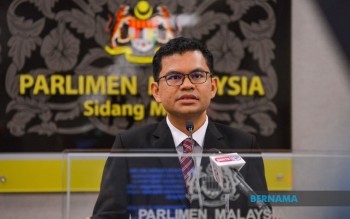
The National Economic Action Council has flagged for detailed examination a range of proposals brought forward by the Malaysian Plastics Manufacturers Association, with Economy Minister Akmal Nasrullah Mohd Nasir announcing that responsibility for the review will fall to the Ministry of Investment, Trade and Industry and the Economy Ministry. The decision reflects government recognition of mounting pressures on an industry that underpins numerous sectors across the Malaysian economy, from packaging to electrical and electronics manufacturing.
The plastics sector finds itself navigating turbulent waters, confronting dual headwinds of destabilised global supply chains and escalating raw material costs that have squeezed profit margins and strained competitiveness. When industry representatives presented their case to the NEAC, they highlighted specific grievances centring on cost disparities between Malaysia and rival manufacturing nations, concerns that resonate particularly in an increasingly competitive regional landscape where proximity to feedstock and production efficiency determine survival.
The industry's significance to the broader economy warrants careful attention. With 2025 sales valued at RM62.69 billion—though down from RM64.78 billion the previous year—plastics manufacturing constitutes a critical pillar supporting downstream production across multiple sectors. The composition of this market reveals its diverse applications: packaging alone accounts for 45 per cent of demand, while the electrical and electronics segment claims 29 per cent, underscoring how weakness in plastics production could ripple across manufacturing supply chains.
Government evaluation must balance several competing considerations, according to Akmal Nasrullah's statement. Any relief measures or policy adjustments must account for the health of the entire industrial ecosystem rather than benefiting a single tier, maintain fiscal sustainability, and ensure Malaysia preserves its economic competitiveness over the long term. This cautious framing suggests the government recognises that subsidies or protectionist measures, while temporarily easing industry pain, could carry hidden costs that ultimately harm broader economic health.
Among the proposals under examination is the voluntary implementation of Extended Producer Responsibility, a framework that would assign manufacturers greater accountability for their products' entire lifecycle, including end-of-life management and recycling. The government indicated it will analyse the financial burden this would impose, the capacity of smaller enterprises to absorb additional compliance costs, and whether Malaysia possesses adequate recycling infrastructure to support such a transition. These implementation details matter enormously for small and medium-sized plastics firms that lack economies of scale.
The EPR discussion points toward a longer-term strategic opportunity. If executed thoughtfully, circular economy principles could reshape the industry's economics by boosting demand for recycled plastics, reducing reliance on virgin feedstock imports, and creating a domestic materials supply stream more resistant to geopolitical disruptions. For a nation dependent on global commodity markets, building such resilience carries strategic value extending far beyond any single industry.
The government has offered reassuring signals about overall economic momentum even as it examines sectoral challenges. Malaysia achieved 5.4 per cent growth in the first quarter of 2026, with expansion anchored in domestic consumption, robust services and manufacturing performance, and resilient electrical and electronics exports—the latter particularly important given how closely it ties to plastics demand. The preliminary second-quarter GDP figure was scheduled for announcement on July 17, with official data to follow on August 14.
Price stability has also held firm, with inflation recorded at 2.0 per cent in May 2026, barely above April's 1.9 per cent and well within acceptable parameters for policymakers managing an increasingly complex economic environment. Trade figures paint a picture of an economy firing on multiple cylinders: from January through May 2026, total trade reached nearly RM1.5 trillion, with exports expanding 24.3 per cent to RM793.8 billion and imports growing 11.8 per cent to RM661.1 billion, generating a surplus of RM132.8 billion.
These positive macro indicators provide the government some fiscal space to consider targeted support for the plastics industry without triggering broader economic concerns. However, the decision to route proposals through MITI and the Economy Ministry for detailed study—rather than announcing immediate assistance—suggests a measured approach, prioritising evidence-based policymaking over reactive relief.
For Malaysian manufacturers caught in the vice of elevated raw material costs and global supply volatility, government attention represents a necessary first step. The review process will likely prove lengthy, as officials must weigh competing interests and model various scenarios. Yet the formal acknowledgement that the plastics sector faces genuine structural challenges signals receptiveness to finding solutions, whether through tariff adjustments, incentive schemes for domestic recycling, or other mechanisms that emerge from the forthcoming analysis.

