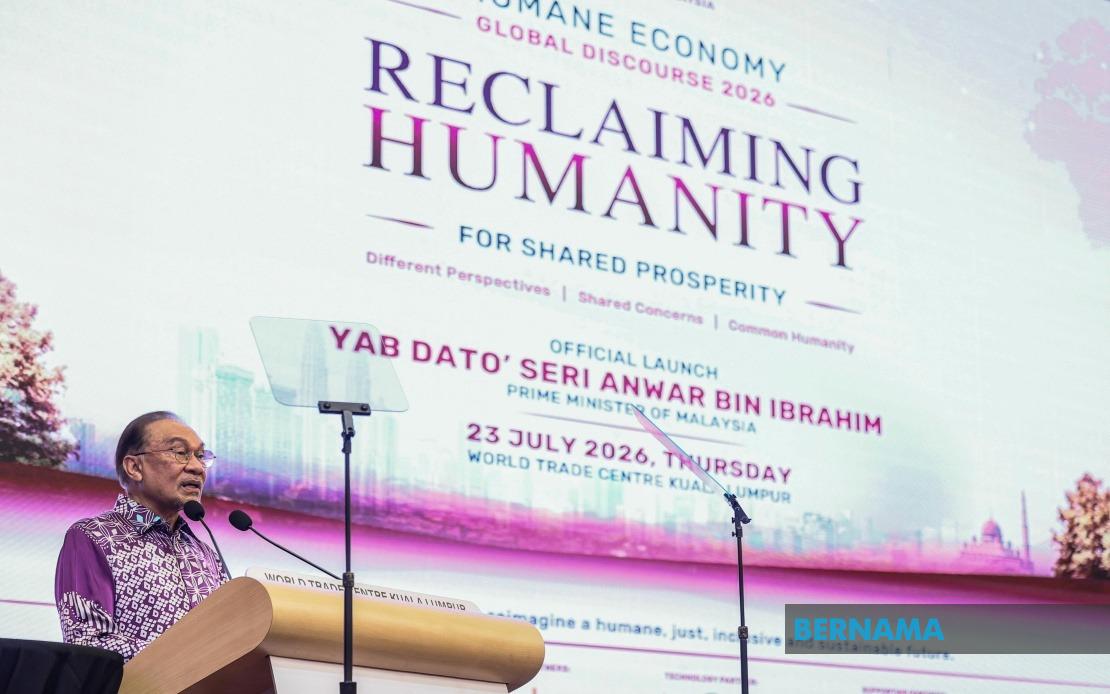
Prime Minister Datuk Seri Anwar Ibrahim has signalled that the long-awaited final report from the Royal Commission of Inquiry into Tabung Haji will be made public in the immediate future, marking a significant milestone in the government's transparency efforts regarding the pilgrimage fund's troubled recent history. Speaking at the launch of the Humane Economy Global Discourse 2026 in Kuala Lumpur on July 23, Anwar indicated he was prepared to expedite the release process, suggesting the document could potentially be disclosed the same day if procedural requirements permitted.
The timing of the disclosure hinges on a technical consultation with Chief Secretary to the Government Tan Sri Shamsul Azri Abu Bakar regarding whether the report must first be formally presented to the Cabinet before public release. Should the Cabinet referral prove unnecessary, Anwar stated his readiness to proceed immediately with publication. If Cabinet consideration is required, the government would advance the timeline to the following Wednesday, underscoring the administration's commitment to swift and meaningful transparency on the matter.
This commitment reflects a broader acknowledgment that Malaysian citizens possess a fundamental entitlement to understand the findings of the inquiry, particularly given the substantial public interest surrounding Tabung Haji's operational challenges and recovery trajectory. The emphasis on the public's right to information appears central to the government's decision-making calculus, positioning transparency as an essential element of rebuilding confidence in the institution that manages savings for millions of Malaysian Muslims seeking to perform the Hajj pilgrimage.
Tabung Haji has faced considerable scrutiny in recent years following revelations about financial mismanagement and operational difficulties that prompted the establishment of the Royal Commission of Inquiry. The fund, which holds the deposits and aspirations of countless Malaysians planning their sacred journey, became the focus of intensive investigation aimed at uncovering the root causes of its problems and establishing accountability for past failings. The anticipated release of the RCI's comprehensive findings represents a critical juncture in the institution's efforts to restore public trust and demonstrate genuine commitment to reform.
Anwar's reference to the fund's progress in recovery efforts suggests that Tabung Haji has taken meaningful steps toward stabilising its operations and financial position during the period since the inquiry commenced. This trajectory appears to have influenced the government's calculation that now represents an opportune moment to release findings, allowing the report to be understood within the context of demonstrable improvement rather than solely as a recitation of past failures. Such contextualisation could facilitate public discussion focused on forward-looking reform rather than dwelling exclusively on historical grievances.
The forthcoming disclosure also signals the government's broader approach to institutional accountability and governance reform. By prioritising public access to the RCI report, the administration underscores its conviction that informed citizenry represents an essential element of democratic governance and effective institutional oversight. This stance carries implications beyond Tabung Haji itself, potentially establishing precedent for transparency regarding other sensitive government inquiries and investigations.
For Malaysian Muslims who have entrusted their savings to Tabung Haji, the imminent release of findings offers opportunity to gain comprehensive understanding of what transpired, how management failures occurred, and what safeguards the institution has implemented to prevent recurrence. This transparency may prove instrumental in restoring confidence among individuals contemplating whether to resume contributions to the fund or proceed with existing commitments to the pilgrimage programme. Trust, once damaged, requires consistent demonstration of institutional integrity and accountability to fully rebuild.
From a regional perspective, Malaysia's approach to managing this transparency challenge may influence how other Southeast Asian governments handle comparable situations involving public funds and institutional failures. The region has witnessed various high-profile cases of financial mismanagement at state institutions, and Malaysia's methodical pursuit of inquiry-based accountability followed by transparent disclosure offers a model for balanced governance that acknowledges both the need for thorough investigation and public enlightenment.
The report's eventual release will likely prompt detailed scrutiny from multiple quarters including parliament, media outlets, civil society organisations, and affected depositors seeking to evaluate whether the inquiry's recommendations sufficiently address the fund's vulnerabilities. This public examination may generate constructive policy discussion regarding enhanced regulatory frameworks, governance structures, and oversight mechanisms applicable not only to Tabung Haji but potentially to other government-linked institutions managing public resources.
Anwar's announcement arrives at a moment when Tabung Haji management and government stakeholders are endeavouring to chart a credible recovery path. The timing reinforces official messaging that the administration regards transparency and accountability not as obstacles to overcome but as essential components of institutional rehabilitation. By committing to prompt disclosure of findings, the government demonstrates confidence that the path forward, informed by the inquiry's conclusions, can effectively serve the interests of millions of Malaysian pilgrims dependent on Tabung Haji's sound operation.

