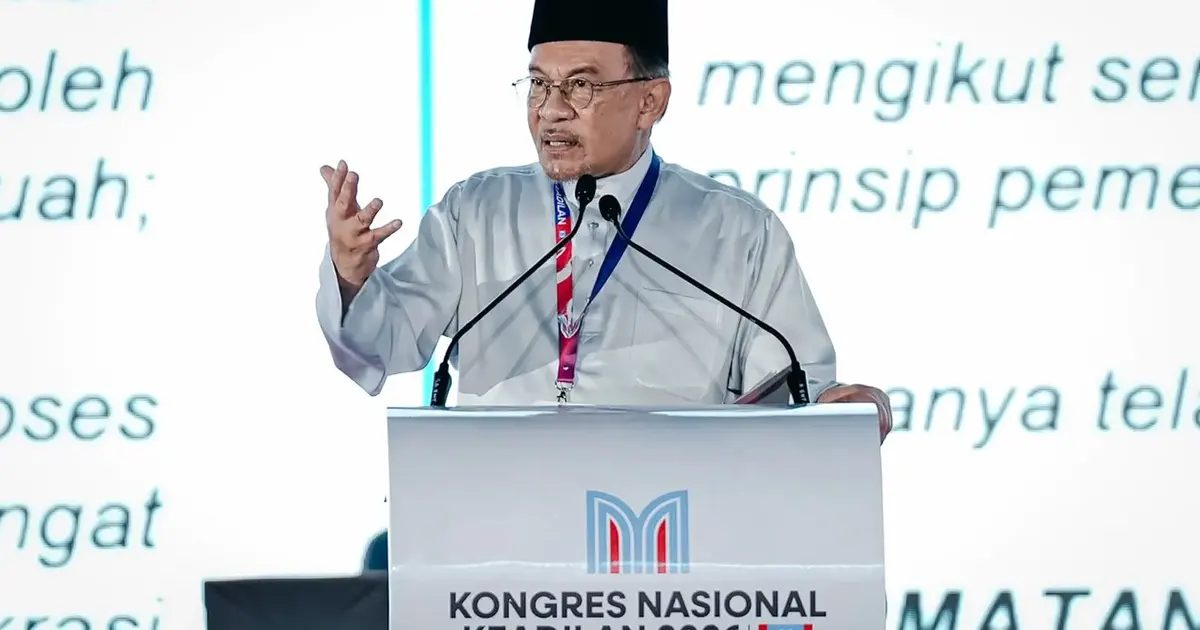
Prime Minister Anwar Ibrahim has indicated that investigative efforts into Malaysia's struggling statutory bodies will extend beyond Tabung Haji, with the Federal Land Development Authority (Felda) emerging as the next focus of government scrutiny. Speaking on the broader agenda for institutional oversight, Anwar conveyed that the Yang di-Pertuan Agong does not view the Tabung Haji inquiry as the conclusion of efforts to examine problems within state-controlled entities, signalling royal backing for a more comprehensive review of governance across such organisations.
The signal represents a notable escalation in the government's approach to accountability within the public sector. While Tabung Haji, the pilgrims' fund, has dominated headlines due to its financial difficulties and operational challenges, officials now recognize that systemic weaknesses are not confined to a single institution. The decision to cast a wider net suggests recognition that multiple statutory bodies may harbour similar governance deficiencies, mismanagement issues, or operational problems that warrant formal investigation and remedial action.
Felda, which oversees vast agricultural land holdings and plays a crucial role in rural development and smallholder livelihoods across Malaysia, has faced mounting criticism over recent years regarding its financial performance and strategic direction. The organisation manages land settlement schemes that were established to provide economic opportunities for rural communities, yet reports have increasingly pointed to operational inefficiencies, marketing challenges, and difficulties in adapting its business model to contemporary market conditions. Many settlers have expressed frustration over returns and support mechanisms, making Felda a natural candidate for government review.
The government's intention to conduct deeper investigations into Felda comes at a time when agricultural sector reform remains high on the national agenda. With climate change, shifting commodity prices, and evolving consumer preferences reshaping agricultural economics, Felda's role in supporting smallholder farmers has become more critical and more complex. An investigation could reveal necessary structural reforms, changes to operational procedures, or policy adjustments required to ensure the organisation remains relevant and effective in serving its intended beneficiaries.
Anwar's comments underscore the administration's broader commitment to institutional reform and clean governance. Since taking office, the government has prioritised transparency and accountability measures across the public sector, with the Tabung Haji review representing one of several initiatives to address systemic issues. The expansion of such scrutiny to Felda and potentially other bodies reflects a recognition that restoring public confidence in state institutions requires rigorous examination and willingness to confront institutional problems directly.
The royal endorsement noted by Anwar carries significant constitutional weight in Malaysia's political system. The Yang di-Pertuan Agong's apparent support for broader investigations suggests that institutional reform has backing at the highest levels, providing political cover for the government to pursue potentially contentious inquiries without accusations of partisan motivation. This royal dimension may also lend legitimacy to any findings and recommendations that emerge from Felda investigations.
For Felda settlers and rural communities dependent on the organisation, the prospect of investigation brings both promise and uncertainty. A comprehensive review could lead to improvements in operational efficiency, better financial management, or enhanced support services. Conversely, investigations may reveal uncomfortable truths about misallocation of resources or governance failures that have persisted over extended periods. The approach taken to addressing any findings will be crucial in determining whether investigations translate into meaningful reform.
The emphasis on examining multiple statutory bodies also reflects lessons learned from previous financial crises and mismanagement scandals within Malaysia's public sector. Officials have acknowledged that ad hoc responses to individual institutional failures are insufficient; instead, a more systematic approach to governance oversight across the board offers better prospects for preventing similar problems in the future. This philosophy underpins the current initiative to expand investigative efforts beyond Tabung Haji.
The timing of this announcement carries particular significance given Malaysia's ongoing efforts to stabilise its fiscal position and enhance economic competitiveness. Statutory bodies control substantial assets and resources; ensuring their effective and efficient management directly impacts national economic performance and public sector credibility. Investigations that lead to genuine improvements in how such organisations operate can yield both financial returns and broader confidence in government institutions.
Looking forward, the government faces the challenge of balancing thorough investigation with operational continuity. Felda, unlike Tabung Haji, remains essential to ongoing agricultural production and rural income generation. Any investigative process must therefore be conducted in ways that do not destabilise the organisation or undermine its service delivery during the review period. Careful management of the inquiry timeline and scope will be essential to achieving reform objectives without creating unintended disruption.
The expanded investigative agenda also raises questions about which other statutory bodies may come under scrutiny. Multiple Malaysian institutions have faced scrutiny over recent years regarding governance standards and financial performance. The government's willingness to extend investigations beyond Tabung Haji suggests that a broader assessment of the public sector may be underway, potentially affecting numerous organisations and triggering institutional soul-searching across the statutory sector.

